California Sea Lion
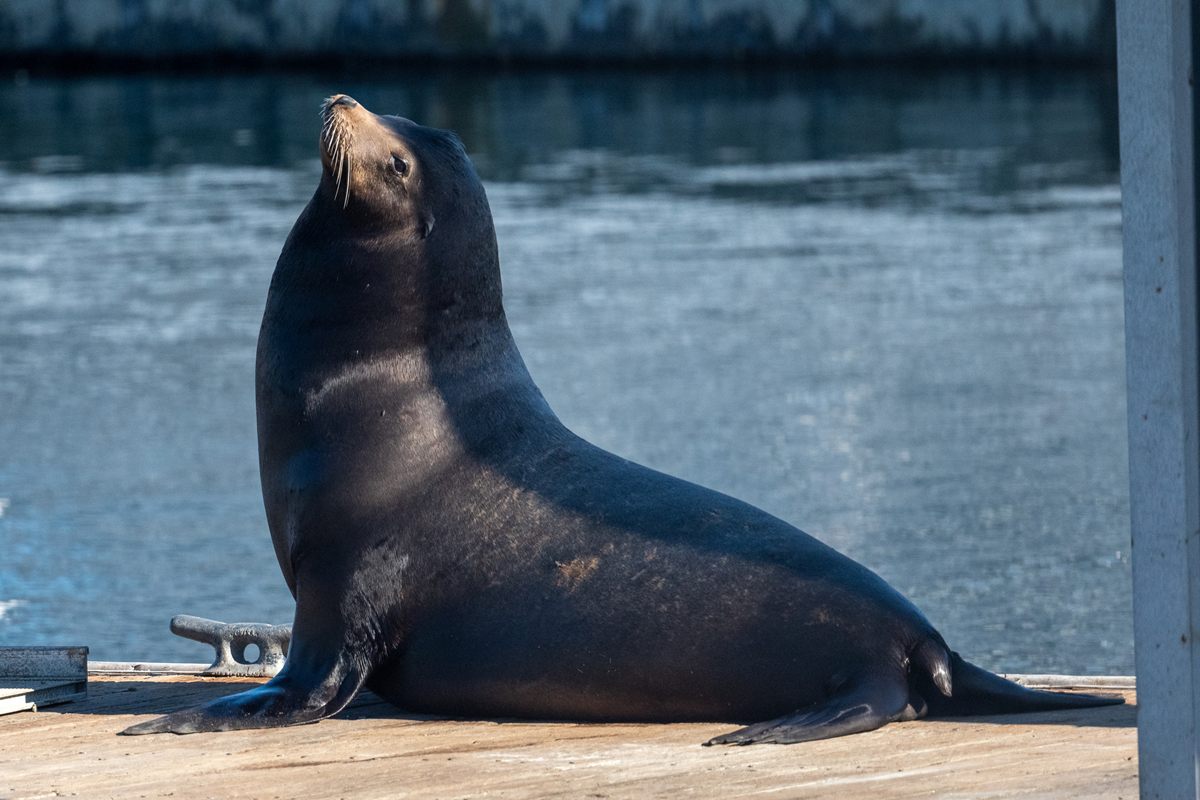
The California sea lion (Zalophus californianus) is an eared seal that breeds along the Pacific coast from the Channel Islands to Baja California and ranges north to British Columbia.
The California sea lion (Zalophus californianus) is an eared seal that breeds along the Pacific coast from the Channel Islands to Baja California and ranges north to British Columbia. It is listed as Least Concern with a healthy overall population, though it suffers mass strandings in some years.
🧬 Field Guide Specimen: Open California Sea Lion in the CRV Science Field Guide to log the specimen, see its place among the Mammals lineages in the Cladogram Explorer, and test your recall in the Red List conservation game.
California Sea Lion at a Glance
| Property | Value |
|---|---|
| Scientific name | Zalophus californianus |
| Kingdom | Animalia |
| Phylum | Chordata |
| Class | Mammalia |
| Order | Carnivora |
| Suborder | Caniformia |
| Field Guide group | Mammals: Eutheria (Placentals) |
| Diagnostic feature (Field Guide) | External pinnae ears, rotating hind flippers for land locomotion, single-chambered tympanic bullae. |
| IUCN Red List status | Least Concern (LC), assessed 2015 |
| Range | Pacific coast of North America |
Taxonomy, Phylogenetics, and Evolutionary History
The California sea lion (Zalophus californianus) is an eared seal classified in the family Otariidae (sea lions and fur seals), clade Pinnipedia, suborder Caniformia, order Carnivora. Together with the true or earless seals (Phocidae) and the walrus (Odobenidae), the Otariidae form a monophyletic amphibious clade that diverged from arctoid carnivoran ancestors (most closely related to Musteloidea—weasels, otters, and red pandas—and Ursidae, the bears) in the North Pacific during the Late Oligocene (~27 to 24 million years ago). Within Otariidae, molecular clock analyses indicate that the genus Zalophus diverged from the lineage leading to the Steller sea lion (Eumetopias jubatus) during the Late Miocene (~6 to 8 million years ago).
Historically, three geographic populations were treated as subspecies of Z. californianus, but mitochondrial DNA and nuclear microsatellite divergence now support recognizing three distinct species within the genus Zalophus:
- California sea lion (Zalophus californianus): Breeds along the eastern North Pacific from the California Channel Islands south to Baja California and the Gulf of California, with non-breeding males migrating seasonally northward to Oregon, Washington, British Columbia, and southeastern Alaska.
- Galápagos sea lion (Zalophus wollebaeki): An endangered equatorial sister species endemic to the Galápagos Archipelago that diverged ~2.3 million years ago.
- Japanese sea lion (Zalophus japonicus): Formerly inhabited the Sea of Japan and coastal waters of Japan and the Korean Peninsula, driven to extinction in the 1950s by commercial hunting and wartime persecution.
Comparative Anatomy, Diving Physiology, and Domoic Acid Neurotoxicosis
Otariid Locomotor Biomechanics and Extreme Sexual Dimorphism
Unlike phocid seals (such as harbor seals and elephant seals), which lack external ear flaps, swim via pelvic lateral undulation of the hind flippers, and move on land by dorsoventral abdominal undulations ("galumphing"), Zalophus californianus displays classic otariid traits: rolled cartilaginous external ear pinnae, a single-chambered tympanic bulla dominated by the ectotympanic bone, and the ability to rotate the pelvis and astragalus-calcaneum ankle joint so the hind flippers point forward beneath the body, enabling rapid quadrupedal galloping on land. In the water, thrust is generated entirely by the elongated, wing-like foreflippers (pectoral oscillation), powered by massive pectoralis and latissimus dorsi muscles inserting onto a robust deltopectoral crest of the humerus; the hind flippers act purely as passive steering rudders. Swimming speeds routinely reach 15 to 25 kilometers per hour, with bursts exceeding 35 kilometers per hour.
Zalophus californianus exhibits marked sexual dimorphism connected to its polygynous mating system. Adult females measure 1.5 to 2.0 meters in length, weigh 70 to 110 kilograms, and maintain a slender, tawny-tan profile. Adult males reach 2.2 to 2.7 meters in length and weigh 250 to 400 kilograms, developing a dark chocolate-brown pelage, a thickened neck and chest that shields against canine bites during territorial fights, and a prominent bony sagittal crest along the midline of the cranium. Beginning around 4 to 5 years of age, the sagittal crest elevates by up to 4 centimeters to anchor the hypertrophied temporalis jaw-closing muscles and becomes covered by a diagnostic patch of pale blond or whitish hair in socially mature bulls.
| System or Adaptation | Anatomical / Physiological Basis | Functional Role in Zalophus californianus |
|---|---|---|
| Foreflipper propulsion | Elongated radius/ulna and phalanges acting as hydrofoils; rotatable ankle joint on hindlimbs | Generates lift-based pectoral thrust underwater and quadrupedal walking on land |
| Male sagittal crest | Elevated median cranial ridge covered by light blond hair in bulls >= 5 years old | Anchors enlarged m. temporalis for territorial jaw-sparring and serves as a visual maturity signal |
| Alveolar collapse & O2 stores | Cartilaginous reinforcement of terminal bronchioles; high myoglobin (~45–55 g/kg muscle) | Collapses alveoli at ~70–100 m depth to prevent N2 narcosis and decompression sickness |
| Glomerular reniculate kidneys | Multilobed kidneys with hundreds of discrete cortical-medullary reniculi | Concentrates urinary urea and electrolytes to maintain water balance exclusively from fish prey |
| Hippocampal kainate/AMPA receptors | High density of GluK1–5 and AMPA glutamate receptors in CA1/CA3 pyramidal cells | Vulnerable target of algal domoic acid, causing status epilepticus and hippocampal sclerosis |
Diving Physiology and Alveolar Collapse
While foraging in epipelagic and mesopelagic waters, California sea lions typically perform routine dives lasting 2 to 5 minutes to depths of 50 to 150 meters, with maximum recorded dives reaching 10 to 12 minutes and depths of 480 to 536 meters. During dive descent, activation of the mammalian dive response triggers vagally mediated bradycardia (slowing heart rate from 95–120 beats per minute at the surface to 15–30 beats per minute at depth) and selective peripheral vasoconstriction that conserves oxygenated blood for the central nervous system and myocardium while skeletal muscles metabolize oxygen bound to dense intracellular myoglobin stores (~45 to 55 grams per kilogram of muscle tissue).
To prevent decompression sickness ("the bends") and nitrogen narcosis during repetitive deep dives, the small airways and terminal bronchioles of Z. californianus are reinforced down to the alveolar sacs by rings and plates of hyaline cartilage. As hydrostatic pressure increases during descent, the compliant alveoli compress first, forcing residual pulmonary gas upward into the non-exchange cartilaginous dead space of the bronchi and trachea. Complete alveolar collapse occurs at depths of approximately 70 to 100 meters, halting further diffusion of inert nitrogen (N2) into the pulmonary capillaries until the animal ascends.
Pseudo-nitzschia Blooms and Domoic Acid Toxicosis
Since 1998, California sea lions along the California Current have served as primary clinical sentinels for harmful algal blooms of pennate marine diatoms in the genus Pseudo-nitzschia (especially Pseudo-nitzschia australis). During spring upwelling transitions and warm Sea surface temperature anomalies, Pseudo-nitzschia blooms synthesize domoic acid (DA), a water-soluble tricarboxylic amino acid structurally analogous to L-glutamate and kainic acid. Planktivorous baitfish such as northern anchovies (Engraulis mordax) and Pacific sardines (Sardinops sagax) filter-feed on the diatoms, accumulating high concentrations of DA in their viscera without showing acute toxicity, and transfer the toxin to foraging sea lions.
Once absorbed across the sea lion gastrointestinal tract, domoic acid crosses the blood-brain barrier and binds with high affinity to ionotropic AMPA and kainate glutamate receptors concentrated on pyramidal neurons in the CA1, CA3, and dentate gyrus subfields of the hippocampus. Persistent receptor activation drives massive influx of Na+ and Ca2+ ions, triggering excitotoxic neuronal swelling, uncontrolled glutamate release, and acute status epilepticus (manifesting clinically as head weaving, scratching, ataxia, and grand mal seizures). Animals that survive acute sublethal exposures frequently develop chronic epileptic syndrome characterized by bilateral hippocampal atrophy and gliosis, impairing spatial memory and navigation in the wild.
Reproductive Life History, Trophic Ecology, and Conservation
California sea lions are gregarious and breed from May through August on sandy beaches and rocky haul-outs across the California Channel Islands (notably San Miguel, San Nicolas, and Santa Barbara Islands, which support over 80% of U.S. pup production), Guadalupe Island, Cedros Island, and islands within the Gulf of California. Adult bulls establish contiguous aquatic and terrestrial territories along the water's edge through loud, repetitive barking vocalizations, head-shaking displays, and physical chest-pushing bouts, fasting for 25 to 45 days while relying on subcutaneous blubber reserves.
Pregnant females haul out in dense aggregations and give birth to a single precocial pup (weighing 6 to 9 kilograms) 4 to 5 days after arrival. Approximately 21 to 28 days postpartum, the female enters estrus and mates with a territorial bull. Although fertilization occurs immediately, the blastocyst undergoes embryonic diapause (delayed implantation) for roughly 2.5 to 3 months before implanting in the uterine wall to begin an 8.5-to-9-month active gestation, synchronizing parturition with the following summer upwelling season. Throughout a 6-to-11-month lactation period, the mother alternates between 2-to-4-day offshore foraging trips (feeding on anchovies, sardines, Pacific whiting Merluccius productus, market squid Doryteuthis opalescens, and rockfishes) and 1-to-2-day nursing bouts ashore, locating her pup among thousands of conspecifics via mutual mother-pup vocal recognition calls and olfactory checks.
Following the passage of the U.S. Marine Mammal Protection Act of 1972, the eastern North Pacific population of Z. californianus rebounded from fewer than 50,000 individuals to approximately 250,000 to 300,000 individuals, earning a global IUCN status of Least Concern. Nevertheless, the species experiences severe episodic pup mortality and mass strandings during strong El Niño events and Marine heatwave anomalies (such as the 2013–2016 Unusual Mortality Event), when deepening of the coastal thermocline depresses lipid-rich anchovy and sardine stocks, forcing nursing mothers to travel farther offshore and leave pups to starve at the rookeries.
Frequently Asked Questions
How can you distinguish a California sea lion from a harbor seal?
California sea lions (Zalophus californianus) belong to the family Otariidae ("eared seals") and possess visible external ear flaps (pinnae), uniform brown coats, long hairless foreflippers used to "fly" through the water, and hind flippers that rotate forward so the animal can walk or gallop on all fours on land; they are also highly vocal, emitting loud, resonant barks. Harbor seals (Phoca vitulina) belong to the family Phocidae ("true seals"): they lack external ear flaps (showing only a small ear canal opening), have spotted coats and short, clawed foreflippers, cannot rotate their hind flippers forward (moving on land by inchworm-like belly bouncing), and are mostly silent ashore.
Why do adult male California sea lions develop a pale bump on top of their heads?
Around 4 to 5 years of age, male California sea lions undergo a secondary sexual growth spurt driven by rising testosterone levels. The bones along the top midline of the skull fuse and grow upward into a pronounced bony ridge called the sagittal crest, which reaches up to 4 centimeters high in mature bulls. This ridge provides a broad skeletal attachment surface for the massive temporalis muscles needed to deliver powerful bites during territorial fights at breeding rookeries, while the patch of blond hair covering the crest acts as a visual badge of social dominance.
Why does domoic acid poisoning cause California sea lions to become disoriented and strand on beaches?
Domoic acid is an excitatory neurotoxin produced by marine Pseudo-nitzschia diatoms that mimics the neurotransmitter glutamate. When a sea lion eats contaminated anchovies or sardines, domoic acid selectively binds to kainate and AMPA receptors in the hippocampus—the brain region responsible for spatial navigation and place memory. The resulting excitotoxic damage destroys hippocampal pyramidal neurons and triggers recurrent temporal lobe seizures, leaving surviving sea lions unable to navigate along the coast or remember productive foraging grounds.
References
- Wolf, J. B. W., Tautz, D., & Trillmich, F. (2007). Galápagos and Californian sea lions are separate species: Genetic analysis of the genus Zalophus and its implications for conservation management. Frontiers in Zoology, 4(1), 20. https://doi.org/10.1186/1742-9994-4-20
- Scholin, C. A., Gulland, F., Doucette, G. J., Benson, S., Busman, M., Chavez, F. P., ... & Van Dolah, F. M. (2000). Mortality of sea lions along the central California coast linked to a toxic diatom bloom. Nature, 403(6765), 80–84. https://doi.org/10.1038/47481
- McDonald, B. I., & Ponganis, P. J. (2012). Lung collapse in the diving sea lion: Hold the nitrogen and save the oxygen. Biology Letters, 8(6), 1047–1049. https://doi.org/10.1098/rsbl.2012.0743
- Cook, P. F., Reichmuth, C., Rouse, A. A., Libby, L. A., Dennison, S. E., Carmichael, O. T., ... & Ranganath, C. (2015). Algal toxin impairs sea lion memory and hippocampal connectivity, with implications for strandings. Science, 350(6267), 1545–1547. https://doi.org/10.1126/science.aac5675