Abstract and Executive Overview
Measles, caused by the single-stranded RNA morbillivirus Measles morbillivirus (rubeola), is among the most contagious human pathogens known to medical science[1]. Prior to the introduction of a licensed vaccine in the twentieth century, the virus was a persistent feature of childhood morbidity in the United States, resulting in approximately 48,000 hospitalizations and 400 to 500 fatalities annually[3]. Following decades of coordinated immunization campaigns utilizing the live-attenuated measles, mumps, and rubella (MMR) vaccine, the United States officially achieved measles elimination status in the year 2000[5]. As defined by the World Health Organization (WHO), elimination denotes the absence of continuous, endemic viral transmission within a defined geographic jurisdiction for a period of 12 months or more in the presence of a high-performing epidemiological surveillance system[7]. For over two decades following this milestone, domestic measles incidence remained restricted to sporadic international importations and localized, self-limiting transmission chains[3].
Between 2024 and 2026, however, the epidemiological landscape of measles in the United States underwent a significant structural shift[6]. Driven by a post-pandemic decline in routine childhood immunization coverage, an increase in nonmedical school vaccine exemptions, and a concurrent rise in global measles incidence, the nation has experienced a sustained expansion of domestic outbreaks[4]. Annual confirmed cases climbed from 58 in 2023 to 284 in 2024, before reaching 2,289 cases across 48 outbreaks in 2025[3]. Rather than subsiding, viral transmission increased by 181 percent during the first 42 weeks of 2026 compared to the equivalent period in 2025, reaching 4,410 confirmed cases by mid-October 2026 according to Centers for Disease Control and Prevention (CDC) surveillance—and 4,603 cases in academic tracking databases—marking the highest annual burden recorded since 1991[9]. Because a substantial proportion of 2026 cases stem from transmission chains initiated in 2025, the United States faces its most significant risk of losing official measles elimination status since 2000[6].
Beyond the immediate clinical morbidity of acute febrile rash illness, dehydration, and viral or bacterial pneumonia, molecular immunology has demonstrated that measles infection inflicts long-term damage on the host immune system[2]. By targeting signaling lymphocyte-activation molecule (SLAM) receptors on preexisting memory B and T lymphocytes, the virus physically depletes the host's immunological repertoire, erasing between 40 and 60 percent of preexisting antibodies against unrelated pathogens[2]. This phenomenon, termed immune amnesia, leaves survivors vulnerable to secondary opportunistic infections for years following acute recovery and alters the epidemic dynamics of concurrent respiratory and enteric pathogens[2]. Examining the intersection of viral pathogenesis, molecular epidemiology, immunological memory depletion, and sub-national vaccination gaps provides an analytical framework for understanding the contemporary resurgence of measles in the United States[2].
Historical Trajectory and the Erosion of Elimination Status
From the 2000 Elimination Milestone to the 2025–2026 Resurgence
At a macro-epidemiological level, the post-elimination era in the United States from 2000 to the present can be divided into three distinct phases: a period of stable containment from 2000 to 2013, an era of episodic cluster amplification from 2014 to 2023, and the current phase of widespread multi-state transmission from 2024 to 2026[3]. When endemic transmission was halted in 2000, national two-dose MMR coverage among school-aged children consistently met or exceeded the 95 percent threshold required to prevent sustained community propagation[5]. Consequently, when unvaccinated travelers contracted the virus abroad and returned to the United States, the surrounding immunological barrier rapidly extinguished secondary spread, keeping annual national totals below 100 cases in ten of the twelve years between 2002 and 2013[3]. Specifically, annual confirmed cases stood at 44 in 2002, 56 in 2003, 37 in 2004, 66 in 2005, 55 in 2006, 43 in 2007, 140 in 2008, 72 in 2009, 63 in 2010, 220 in 2011, 55 in 2012, and 187 in 2013[3].
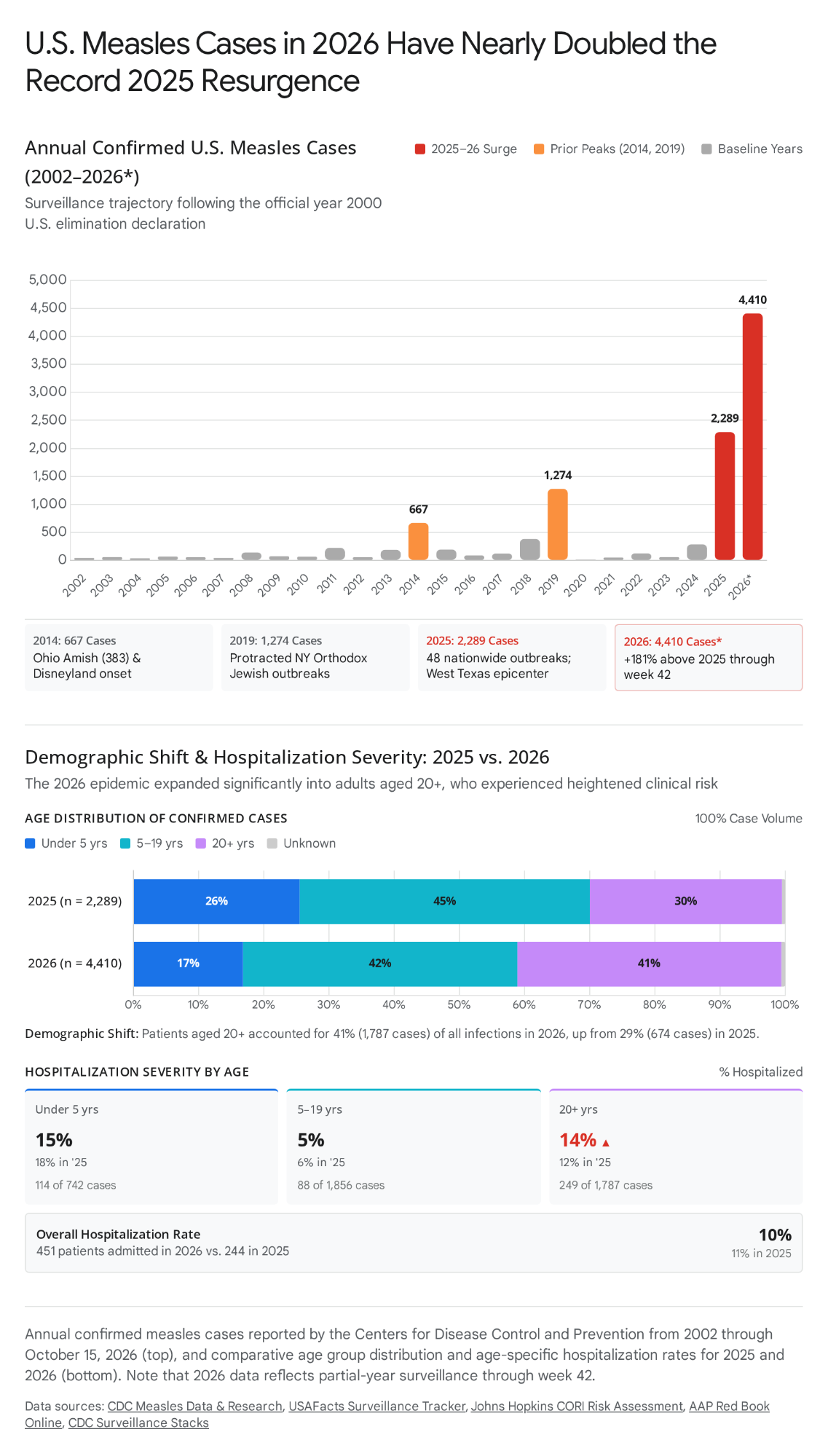
A closer examination of the surveillance records illustrates how localized pockets of underimmunization began to weaken this containment regime in the mid-2010s[3]. In 2014, the national case count rose to 667, driven predominantly by an outbreak of 383 cases within an undervaccinated Amish community in Ohio, followed in late 2014 and early 2015 by a multi-state outbreak linked to Disneyland theme parks in California that contributed to 191 cases in 2015[3]. After recording 86 cases in 2016, 120 cases in 2017, and 381 cases in 2018 (including an outbreak in Clark County, Washington, spanning 2018 and 2019), the United States recorded 1,274 confirmed cases across 31 states in 2019—the highest tally since 1992 at that time[3]. The 2019 resurgence was heavily concentrated in two prolonged outbreaks among close-knit communities in New York State and New York City, alongside an outbreak in Ohio, which persisted for nearly a year and challenged the nation's elimination status[6].
The onset of the COVID-19 pandemic in early 2020 temporarily suppressed measles transmission due to restrictions on international travel and domestic social mixing[8]. In 2020, only 13 cases were confirmed across eight jurisdictions, with 12 of those 13 cases occurring prior to the implementation of pandemic mitigation measures in March 2020[8]. As global mobility resumed, cases gradually rebounded: 49 cases were reported across five jurisdictions in 2021 (47 of which, or 96 percent, occurred among evacuees from Afghanistan housed temporarily at U.S. military bases during Operation Allies Welcome), followed by 121 cases across six jurisdictions in 2022 (with 86 cases, or 71 percent, associated with an outbreak in central Ohio) and 58 cases across 20 jurisdictions in 2023[8]. Across the combined surveillance window of January 1, 2020, through March 28, 2024, the CDC was notified of 338 confirmed measles cases across 30 jurisdictions, with 97 of those cases occurring during the first quarter of 2024 alone—representing a more than seventeenfold increase over the mean of five cases reported during the first quarters of 2020 through 2023[8].
While non-pharmaceutical interventions temporarily reduced measles circulation between 2020 and 2023, pandemic-related healthcare disruptions and growing vaccine hesitancy eroded routine pediatric immunization rates across the United States and globally[6]. Between March 2020 and December 2021, 18 planned international vaccination campaigns were postponed or missed, amounting to an estimated 61 million missed vaccine doses worldwide and leaving nearly 25 million children without even a single dose of measles-containing vaccine[21]. Global measles incidence consequently rose by 18 percent in 2022 compared to 2021 (with global deaths rising 43 percent to over 136,000, mostly in unvaccinated children under five years of age in lower-income nations) and increased another 20 percent from 2022 to 2023 to reach 10.34 million reported cases worldwide[1]. This expanding global reservoir increased the frequency of viral importations into the United States precisely as domestic herd immunity fell below critical thresholds[11]. In April 2024, CDC modeling projected approximately 300 cases and fewer than 19 outbreaks for the year; final reported figures for 2024 aligned closely with these projections at 284 (or 285) confirmed cases and 16 outbreaks across 32 jurisdictions[13]. In 2025, transmission expanded to 2,289 confirmed cases across 48 outbreaks, and by October 15, 2026, confirmed cases reached 4,410, altering the baseline epidemiology of the disease in North America[6]. Looking at the broader WHO Region of the Americas, between epidemiological weeks 1 and 53 of 2025 and epidemiological week 6 of 2026, a total of 19,235 measles cases were recorded across the hemisphere, while provisional global surveillance data reported to the WHO in Geneva reflected 4,285 cases between March and August 2026 alone[24].
Demographic Transitions and Clinical Burden Across Recent Waves
Analyzing the demographic stratification and clinical severity of measles cases from 2023 through 2026 reveals a structural shift in how the virus is propagating through the American population[3]. Historically, post-elimination measles outbreaks in the United States disproportionately affected infants and toddlers under five years of age—either because they were too young to receive routine MMR immunization (recommended at 12 to 15 months) or because their parents delayed early childhood vaccinations[8]. During the January 2020 through March 2024 surveillance window, the median patient age was three years (range 0 to 64 years), with 58 percent of cases (191 of 338) occurring in persons aged 16 months to 19 years[8]. Similarly, in retrospective military healthcare surveillance from 2019 to 2024, zero cases occurred among vaccinated active-duty service members, while 50.0 percent of confirmed cases and 57.7 percent of possible cases among non-service member beneficiaries occurred in children aged five years or younger[28]. In the full-year 2024 national data, children under five years of age accounted for 42 percent of all confirmed cases[13].
| Epidemiological Parameter | 2023 Full Year | 2024 Full Year | 2025 Full Year | 2026 (Through Oct 15) |
|---|---|---|---|---|
| Total Confirmed Cases (CDC) | 58 (or 59)[3] | 284 (or 285)[13] | 2,289[6] | 4,410 (4,603 in JHU Tracker)[9] |
| Reporting Jurisdictions | 20[20] | 32[13] | 45+[29] | 47+[6] |
| Confirmed Outbreaks (3 or More Linked Cases) | 4[3] | 16[13] | 48 (or 49)[6] | Ongoing (49 from 2025 plus new 2026 chains)[6] |
| Outbreak-Associated Case Proportion | 48%–49% (28 of 58 or 29 of 59)[3] | 69%–70% (198 of 284)[13] | 90% (2,066 of 2,289)[6] | 95% (as of Sept 24)[6] |
| Age Distribution: Under 5 Years | ~45%–50%[3] | 42% (45% in mid-year data)[3] | 26% (584 cases)[14] | 17% (742 cases)[14] |
| Age Distribution: 5–19 Years | ~23%[3] | ~23%–31% (87 of 284 cases)[3] | 44% (1,018 cases)[14] | 42% (1,856 cases)[14] |
| Age Distribution: 20 Years and Older | ~32%[3] | ~27%–32% (77 of 284 cases)[3] | 29% (674 cases)[14] | 41% (1,787 cases)[14] |
| Age Unknown | Not specified[3] | Not specified[3] | 1% (13 cases)[14] | 1% (25 cases)[14] |
| Unvaccinated or Unknown Status | ~91%[8] | 89%[13] | 93%[14] | 96%[14] |
| One MMR Dose / Two MMR Doses | ~9% (Combined)[8] | 7% / 4%[22] | 3% / 4%[14] | 2% / 2%[14] |
| Overall Hospitalization Rate | ~46% (2020–Q1 2024)[8] | ~35%–54%[3] | 11% (244 of 2,289 cases)[6] | 10% (451 of 4,410 cases)[9] |
| Confirmed Measles Deaths | 0[8] | 0[8] | 3[6] | 2–3 (CDC) / 5 in PA (State DOH)[9] |
As the epidemic expanded into larger community networks in 2025 and 2026, two critical epidemiological shifts emerged from the surveillance data summarized in the table above[6]. First, the proportion of cases linked to domestic outbreaks (defined by the CDC as three or more epidemiologically linked cases) rather than isolated importations climbed steadily from 48 percent in 2023 to 70 percent in 2024, 90 percent in 2025, and 95 percent in 2026[3]. As of September 24, 2026, out of 3,659 cases reported at that juncture across 47 jurisdictions, 95 percent were outbreak-associated, comprising 2,094 cases from outbreaks initiated in 2026 and 1,384 cases resulting from uninterrupted transmission chains that began in 2025[6]. This persistence of multi-month transmission across calendar years directly challenges the 12-month interruption criterion that underpins the nation's measles elimination status[6].
Second, the age distribution of measles patients has shifted upward toward school-aged adolescents and adults aged 20 years and older[9]. Between 2024 and 2026, the proportion of cases occurring in children under five years dropped from 42 percent to 26 percent in 2025 (584 cases) and 17 percent (742 of 4,410 cases) in 2026[13]. Conversely, children and adolescents aged 5 to 19 years accounted for 44 percent of cases (1,018) in 2025 and 42 percent (1,856) in 2026, meaning that patients aged 19 years or younger comprised 59 percent of the 2026 caseload[9]. Simultaneously, adults aged 20 years and older rose from 29 percent of cases (674) in 2025 to 41 percent (1,787) in 2026[14]. This upward age migration indicates that cohorts of children who went unvaccinated during the rising exemption waves of the 2010s and early 2020s have now aged into primary and secondary schools, universities, and the adult workforce, creating interconnected social networks capable of sustaining adult-to-adult and adolescent-to-adolescent transmission[12].
Simultaneously, the overall hospitalization proportion declined from 54 percent (82 of 151 cases) in mid-year 2024 surveillance to 11 percent (244 of 2,289 cases) in 2025 and 10 percent (451 of 4,410 cases) in 2026[3]. This reduction in the aggregate hospitalization percentage does not reflect an attenuation of viral virulence; rather, it is an artifact of two epidemiological factors: the shift in case distribution toward older children aged 5 to 19 years (who experience a lower age-specific hospitalization rate of 6 percent [58 of 1,018] in 2025 and 5 percent [88 of 1,856] in 2026, compared to 18 percent [106 of 584] in 2025 and 15 percent [114 of 742] in 2026 among children under five), and the transition away from mandatory inpatient hospital isolation during the 2024 Chicago migrant shelter outbreak (where 89 percent of cases were hospitalized partly for quarantine containment) toward outpatient home isolation during the large-scale community outbreaks of 2025 and 2026[14]. In the full-year 2024 data, age-specific hospitalization rates had reached 25 percent (22 of 87) among patients aged 5 to 19 years and 39 percent (30 of 77) among adults aged 20 years and older, whereas in mid-year 2024 data (151 cases), hospitalization rates were 65 percent (44 of 68) for children under five, 41 percent (14 of 34) for ages 5 to 19, and 49 percent (24 of 49) for adults 20 and older[3]. Even in the broader 2025 and 2026 waves, adults aged 20 years and older exhibited a severe clinical trajectory comparable to young toddlers, with age-specific hospitalization rates of 12 percent (80 of 674 adult cases) in 2025 and 14 percent (249 of 1,787 adult cases) in 2026[14]. Across both years, mortality has returned as a feature of domestic measles epidemiology: three confirmed deaths occurred in 2025, and by October 2026, the CDC had confirmed two to three deaths nationally (with additional fatal cases under investigation to determine the role of measles), while the Pennsylvania Department of Health reported five confirmed measles-associated fatalities within that state alone in 2026[6]. Throughout all recent waves, the disease has remained overwhelmingly restricted to unimmunized hosts, with 89 percent of cases in 2024, 93 percent of cases in 2025, and 96 percent of cases in 2026 occurring among individuals who were unvaccinated or had an unknown vaccination history[13].
Virology, Molecular Epidemiology, and Clinical Pathogenesis
Viral Architecture, Aerosol Dynamics, and Transmission Thresholds
To understand why minor declines in immunization coverage initiate rapid outbreaks, it is necessary to examine the biophysical and virological properties of the measles pathogen[4]. Measles morbillivirus is an enveloped, single-stranded RNA virus belonging to the genus Morbillivirus[1]. Despite being an RNA virus—a class of pathogens frequently associated with high mutation rates—the measles virus exhibits high genomic and antigenic stability across its structural proteins[2]. Because the functional domains of its surface proteins are constrained by the structural requirements of cellular receptor binding, all wild-type genotypes share a single antigenic type, and all licensed measles vaccines belong to genotype A, a lineage that no longer circulates as a wild-type virus[2]. Consequently, live-attenuated vaccines derived from genotype A strains (such as the Edmonston strain) continue to confer cross-protective neutralizing immunity against all contemporary wild-type strains circulating globally, suggesting that measles has the biological potential to be a candidate for global eradication following the variola (smallpox) and rinderpest viruses[2].
In human populations, the virus is transmitted via both direct person-to-person contact with large respiratory droplets and airborne spread of fine respiratory aerosols generated when an infected person coughs or sneezes[4]. Infectious respiratory aerosols remain viable and suspended in indoor air for several hours after an infectious individual has left an enclosed area[4]. Furthermore, infected hosts are contagious from four days prior to the appearance of the characteristic rash until four days following rash onset[4]. Because transmission occurs during the prodromal phase—before the diagnostic rash appears—presymptomatic and prodromal individuals routinely transmit the virus in public areas, with documented transmission occurring aboard international flights, within airport terminal waiting areas, at theme parks, at international sporting events, and inside healthcare and childcare facilities[4].
In epidemiological modeling, the contagiousness of an infectious agent is expressed by its basic reproductive number, which represents the expected number of secondary cases infected by a single index case in a completely susceptible population[4]. For measles, the estimated basic reproductive number ranges from 9 to 18, substantially exceeding the transmissibility of smallpox (estimated at 5 to 7) and influenza (estimated at 2 to 3)[4]. In household and close-contact exposures, this translates into a secondary attack rate of up to 90 percent, meaning that nine out of every ten susceptible individuals exposed to the rubeola virus will develop clinical disease[4].
From this high intrinsic reproductive number, epidemiological analysis establishes the critical herd immunity threshold: the minimum proportion of a population that must possess immunity to prevent sustained chains of transmission[4]. In the WHO Region of the Americas, population-level measles vaccination coverage must exceed 93 to 95 percent to maintain herd immunity and prevent outbreaks[4]. Furthermore, because one dose of the MMR vaccine administered at or after 12 months of age is estimated to be 93 percent effective at preventing measles and two doses are 97 percent effective, vaccination coverage itself must be maintained at or above 95 percent across communities to compensate for the small percentage of primary vaccine non-responders[11].
Molecular Genotyping and Micro-Evolutionary Tracking
Because all commercial measles vaccines utilize genotype A, molecular sequencing by public health laboratories is essential for outbreak investigation[4]. Health care personnel are required to report all suspected cases of measles to their local health department, and reference laboratories perform reverse transcription–polymerase chain reaction (RT-PCR) testing to detect viral RNA alongside immunoglobulin M (IgM) serology[4]. In addition to confirming viral RNA, public health laboratories sequence the 450 nucleotides coding for the carboxyl-terminal 150 amino acids of the nucleoprotein (the N-450 sequence) to monitor viral transmission pathways and confirm wild-type etiology[4].
Global elimination activities have substantially reduced the number of active wild-type measles genotypes circulating worldwide[11]. In contemporary surveillance across the United States, wild-type transmission is driven exclusively by two genotypes: genotype D8 and genotype B3[11]. Early genotype mapping showed that genotype B3 was historically indigenous to West Africa before spreading globally and causing the 2014–2015 Disneyland outbreak, whereas genotype D8 circulates widely across multiple continents[11].
The precision of N-450 genomic surveillance was demonstrated during the first 16 weeks of the 2025 U.S. resurgence (January 1 through April 17, 2025)[11]. Among the 800 confirmed cases reported during that period, 557 (70 percent) were laboratory-confirmed, and specimens from 251 cases (31 percent) were available for molecular sequencing[11]. Sequencing confirmed that 100 percent of these specimens were wild-type virus strains, with 225 (90 percent) identified as genotype D8 and 26 (10 percent) identified as genotype B3[11]. Notably, all 208 genotyped specimens obtained from measles patients in Kansas, New Mexico, and Texas belonged to genotype D8[11]. Within this regional group, 196 specimens (94 percent) shared identical N-450 sequences, while 12 specimens differed by exactly one nucleotide—a micro-evolutionary divergence expected during prolonged multi-generational outbreaks[11]. Even where traditional contact investigations could not identify definitive person-to-person epidemiological linkages between the large outbreak in Texas, New Mexico, and Oklahoma and the cases reported in Kansas, N-450 sequence identity confirmed that the clusters belonged to the same viral transmission network[11].
Clinical Manifestations and High-Risk Host Pathology
Following respiratory exposure and an incubation period of approximately 10 to 14 days (with two incubation periods defined epidemiologically as 42 days, or 21 days maximum per cycle), clinical measles manifests with a prodromal phase of fever, malaise, anorexia, and lymphadenopathy, accompanied by cough, coryza (runny nose and congestion), or conjunctivitis, followed by a maculopapular rash[4]. Patients may also experience nausea, vomiting, and diarrhea[4]. Routine clinical laboratory evaluations are notable for leukopenia and thrombocytopenia, while chest radiography frequently reveals interstitial infiltrates[4].
Clinical complications occur in more than half of pediatric patients during unvaccinated community outbreaks[33]. Diarrhea is the most common gastrointestinal complication of measles (affecting 26 percent of patients in the 2022 central Ohio outbreak), and the resulting dehydration serves as the most common admitting diagnosis for hospitalized patients[4]. Otitis media is also highly prevalent (affecting 39 percent of patients in the 2022 Ohio outbreak), while pneumonia—arising from either direct viral invasion of the lung parenchyma or secondary bacterial superinfection—is the leading cause of measles-related mortality and can produce long-lasting deficits in pulmonary function[4]. Neurological complications, such as encephalomyelitis, occur when systemic immune activation fails to clear central nervous system involvement[2].
Risk for severe measles infection and complications is highest among infants and children aged under five years, adults aged over 20 years, pregnant women (where perinatal measles transmission can occur), individuals with vitamin A deficiency, and persons with compromised immune systems[4]. The most severe pathology occurs in patients with profound immunosuppressive conditions, such as advanced HIV infection or malignancies like acute lymphoblastic leukemia[4]. Because cellular immunity mediates the cutaneous exanthem, clinical reports document the complete absence of rash in up to 40 percent of severely immunocompromised measles patients, complicating timely clinical diagnosis[4]. In these immunocompromised cohorts, overall complication rates reach 80 percent, and case fatality rates reach 40 percent for patients with HIV and 70 percent for patients with malignancies[4].
The Immunological Paradox and Measles-Induced Immune Amnesia
Receptor Tropism and Lymphocyte Depletion Dynamics
For decades, historical demographic studies noted that measles epidemics were followed by multi-year increases in overall childhood mortality from non-measles infectious diseases, and that the introduction of measles vaccination reduced overall childhood infectious disease mortality far beyond what could be explained by the prevention of acute measles deaths alone[2]. While some researchers hypothesized that the live-attenuated measles vaccine might exert beneficial non-specific immune training effects, foundational experimental work in non-human primates and human cohorts has demonstrated that wild-type measles virus directly destroys preexisting immunological memory—a mechanism termed "immune amnesia"[2].
At the core of this mechanism is the "measles paradox": the observation that acute measles infection is simultaneously associated with profound generalized immune suppression and strong immune activation that induces lifelong, virus-specific protective immunity against reinfection[2]. The proliferative phase of this immune response, measurable by the release of soluble interleukin-2 receptor in serum, begins prior to rash onset and continues for several weeks in uncomplicated cases[2]. The cellular explanation for why this vigorous anti-measles response coincides with generalized immunosuppression lies in the viral receptor tropism[2]. Human signaling lymphocyte-activation molecule (SLAM), a membrane glycoprotein expressed selectively on specific subsets of T and B cells, serves as the primary cellular receptor for wild-type and vaccine strains of the measles virus[2].
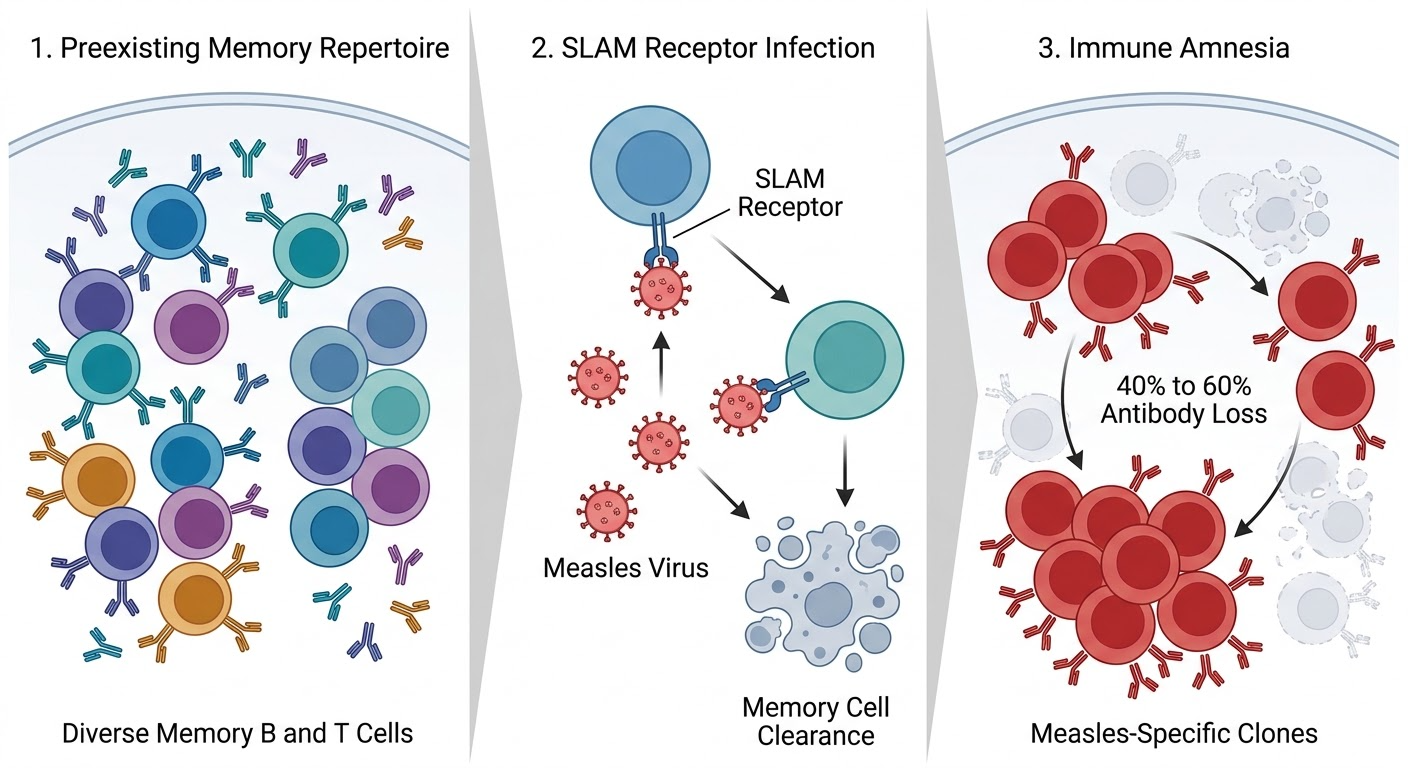
In experimentally infected non-human primates (macaques) and human patients, the measles virus infects and depletes preexisting CD45RA-negative memory T lymphocytes and follicular B lymphocytes within lymphoid tissues, alongside long-lived antibody-producing immune cells[2]. Subsequent immune-mediated clearance of these measles-infected memory T and follicular B lymphocytes produces acute peripheral lymphopenia[2]. Although total lymphocyte counts recover within weeks as new measles-specific lymphocytes proliferate to fill the lymphoid compartment, the destruction of preexisting B-cell and T-cell clones leaves the host with temporary immunological amnesia, explaining the short duration of clinical lymphopenia yet long duration of post-measles immune suppression[2].
Quantitative Profiling of Antibody Erasure and Co-Infection Synergies
In October 2019, studies published by Michael Mina, Stephen Elledge, and colleagues in Science and by Velislava Petrova and colleagues in Science Immunology quantified the extent of this immunological damage in humans[2]. Using VirScan—a comprehensive pathogen antibody profiling technology developed by Elledge in 2015—researchers analyzed paired blood samples collected from 77 unvaccinated children before and an average of 10 weeks after natural measles infection[16]. While VirScan detected strong post-infection anti-measles antibody responses, the overall collection of preexisting antibodies that the children had accumulated against other viral and bacterial pathogens shrank substantially[16]. In complementary experiments in rhesus macaques—where antibody decay could be tracked over a longer post-infection interval—infected animals lost an average of 40 to 60 percent of the preexisting antibodies that protected them from other pathogens[16]. Parallel B-cell receptor sequencing by Petrova and colleagues in the same cohort of 77 unvaccinated children demonstrated that the post-infection restocking of the B-cell pool was incomplete and that the physical depletion of B-cell clones compromised long-term humoral memory[17].
Because this lost antibody diversity does not recover on its own, survivors remain vulnerable to repeat infections by pathogens against which they were previously immune, either from prior natural exposure or prior vaccination[17]. Epidemiological time-series analyses by Mina and colleagues demonstrated that these long-term immunologic sequelae drive interannual fluctuations in non-measles childhood deaths[2]. Furthermore, when mathematical epidemiologists incorporate immune amnesia into network models of two concurrent pathogens—representing measles and a second generic infectious disease—immune amnesia alters the epidemic dynamics of the secondary pathogen[17]. By erasing prior immunity in recovering hosts, measles outbreaks modify the effective vaccination coverage required to achieve herd immunity for concurrent diseases and can induce novel propagating and endemic phases, including rapid phase transitions in secondary disease transmission[17].
Clinical observations from recent U.S. outbreaks align with these immunological models[33]. During the late 2022 central Ohio outbreak, 12 of the 36 hospitalized children (33 percent) presented with concurrent infections involving other respiratory pathogens, including respiratory syncytial virus (RSV), influenza A, SARS-CoV-2, adenovirus, rhinovirus, enterovirus, and group A Streptococcus[7]. Similarly, in experimental ferret models investigating morbillivirus-induced immune amnesia and exacerbated secondary respiratory viral disease, researchers led by Cox, Wolf, and Plemper confirmed the immune amnesia hypothesis in vivo and demonstrated that early direct-acting antiviral treatment offers an eight-day window of advantage over therapeutic post-exposure vaccination in preserving preexisting host immune memory[2].
Structural Drivers of Susceptibility: Vaccination Coverage and Policy Landscapes
Post-Pandemic Erosion of Kindergarten Immunization Coverage
While viral transmissibility and receptor tropism govern the clinical and immunological severity of measles, the primary driver of the 2024–2026 domestic resurgence is the post-pandemic decline in childhood MMR vaccination coverage[6]. From the 2019–2020 school year to the 2021–2022 and 2022–2023 school years, national coverage with state-required vaccines among kindergartners declined from approximately 95 percent to approximately 93 percent[12]. During the 2022–2023 school year—evaluating 3,832,381 kindergartners across 49 states and the District of Columbia—national two-dose MMR coverage stood at 93.1 percent (with DTaP at 92.7 percent and polio at 93.1 percent), leaving approximately 250,000 kindergartners at risk for measles infection[38].
During the 2023–2024 school year, national coverage declined further to under 93 percent across all reported vaccines, based on CDC surveillance of 3,560,047 kindergartners surveyed for vaccination coverage (93.1 percent of the 3,823,506 total children enrolled in kindergarten across 49 states and the District of Columbia)[12]. National coverage ranged from 92.3 percent for DTaP to 92.7 percent for two doses of MMR[12]. Consequently, approximately 280,000 kindergartners (7.3 percent of surveyed students) lacked documentation of two MMR doses upon school entry and remained susceptible to measles[12].
Because measles outbreaks propagate within localized community and school networks, state-level stratification of the 2023–2024 kindergarten immunization data—alongside the corresponding 2024 state-by-state case distribution—illustrates the geographic heterogeneity of population immunity across the United States[12]. In the 2023–2024 school year dataset reported by the CDC, jurisdictions fell into three distinct coverage tiers: those achieving the 95.0 percent and above herd immunity target (such as Connecticut at 97.7 percent, Maine at 97.5 percent, Mississippi at 97.5 percent, Maryland at 96.6 percent, Massachusetts at 96.3 percent, and California at 96.2 percent), those in the sub-threshold tier between 90.0 and 94.9 percent (such as Nebraska at 93.9 percent, Alabama at 93.8 percent, Delaware at 93.8 percent, the city of Houston at 93.6 percent, Arkansas at 92.5 percent, Louisiana at 92.4 percent, Michigan at 92.1 percent, the District of Columbia at 92.0 percent, Illinois at 91.6 percent, Indiana at 90.8 percent, Kansas at 90.4 percent, Missouri at 90.4 percent, and Kentucky at 90.0 percent), and high-risk jurisdictions falling below 90.0 percent coverage (including Hawaii at 89.8 percent, Arizona at 89.3 percent, Iowa at 89.1 percent, Georgia at 88.4 percent, Colorado at 88.3 percent, Florida at 88.1 percent, Minnesota at 87.0 percent, Alaska at 84.3 percent, and Idaho at 79.6 percent)[22].
| Epidemiological Risk Category | Jurisdiction | Estimated 2-Dose MMR Coverage (2023–24) | Kindergarten Population Size | Percent Surveyed | CDC Survey Methodology |
|---|---|---|---|---|---|
| Protected Tier (95.0% and Above) | Connecticut | 97.7% | 36,184 | 100.0% | Census[22] |
| Protected Tier (95.0% and Above) | Maine | 97.5% | 12,087 | 93.0% | Census[22] |
| Protected Tier (95.0% and Above) | Mississippi | 97.5% | 36,105 | 100.0% | Census[22] |
| Protected Tier (95.0% and Above) | Maryland | 96.6% | 63,224 | 100.0% | Census[22] |
| Protected Tier (95.0% and Above) | Massachusetts | 96.3% | 65,424 | 100.0% | Census[22] |
| Protected Tier (95.0% and Above) | California | 96.2% | 569,680 | 100.0% | Census[22] |
| Sub-Threshold Tier (90.0%–94.9%) | Nebraska | 93.9% | 23,118 | 100.0% | Census[22] |
| Sub-Threshold Tier (90.0%–94.9%) | Alabama | 93.8% | 54,565 | 100.0% | Census[22] |
| Sub-Threshold Tier (90.0%–94.9%) | Delaware | 93.8% | 11,043 | 11.5% | Stratified 2-Stage Cluster Sample[22] |
| Sub-Threshold Tier (90.0%–94.9%) | Houston (City) | 93.6% | 37,882 | 67.7% | Voluntary Response[22] |
| Sub-Threshold Tier (90.0%–94.9%) | Arkansas | 92.5% | 37,535 | 95.4% | Census (Public) / Vol. (Private)[22] |
| Sub-Threshold Tier (90.0%–94.9%) | Louisiana | 92.4% | 51,839 | 100.0% | Census[22] |
| Sub-Threshold Tier (90.0%–94.9%) | Michigan | 92.1% | 110,156 | 100.0% | Census[22] |
| Sub-Threshold Tier (90.0%–94.9%) | District of Columbia | 92.0% | 7,874 | 100.0% | Census[22] |
| Sub-Threshold Tier (90.0%–94.9%) | Illinois | 91.6% | 133,578 | 100.0% | Census[22] |
| Sub-Threshold Tier (90.0%–94.9%) | Indiana | 90.8% | 80,639 | 88.5% | Census (Public) / Vol. (Private)[22] |
| Sub-Threshold Tier (90.0%–94.9%) | Kansas | 90.4% | 34,178 | 37.1% | Stratified 1-Stage Cluster Sample[22] |
| Sub-Threshold Tier (90.0%–94.9%) | Missouri | 90.4% | 69,014 | 100.0% | Census[22] |
| Sub-Threshold Tier (90.0%–94.9%) | Kentucky | 90.0% | 52,609 | 100.0% | Census[22] |
| High-Risk Tier (Under 90.0%) | Hawaii | 89.8% | 13,995 | 8.2% | Stratified 2-Stage Cluster Sample[22] |
| High-Risk Tier (Under 90.0%) | Arizona | 89.3% | 74,834 | 99.6% | Census[22] |
| High-Risk Tier (Under 90.0%) | Iowa | 89.1% | 38,611 | 100.0% | Census[22] |
| High-Risk Tier (Under 90.0%) | Georgia | 88.4% | 136,943 | 100.0% | Census[22] |
| High-Risk Tier (Under 90.0%) | Colorado | 88.3% | 61,662 | 100.0% | Census[22] |
| High-Risk Tier (Under 90.0%) | Florida | 88.1% | 228,213 | 100.0% | Census[22] |
| High-Risk Tier (Under 90.0%) | Minnesota | 87.0% | 66,032 | 99.1% | Census[22] |
| High-Risk Tier (Under 90.0%) | Alaska | 84.3% | 8,644 | 88.9% | Census (Public) / Not Cond. (Private)[22] |
| High-Risk Tier (Under 90.0%) | Idaho | 79.6% | 22,376 | 100.0% | Census[22] |
The epidemiological consequences of these sub-95 percent coverage rates became evident across the 32 jurisdictions that reported measles cases in 2024[13]. Specifically, the East North Central region (83 cases) and West North Central region (72 cases) recorded the highest regional case counts in 2024, driven by large outbreaks of 57 cases in Chicago, Illinois (where state kindergarten coverage was 91.6 percent) and 52 cases in the Twin Cities metropolitan area of Minnesota (where state kindergarten coverage was 87.0 percent)[13]. Looking across the 2024 CDC jurisdictional case distribution, Illinois and Minnesota both fell into the 50 to 99 case bracket; Oregon recorded 20 to 49 cases; California, Florida, and New York City each recorded 10 to 19 cases; and 26 additional jurisdictions—Arizona, the District of Columbia, Georgia, Idaho, Indiana, Louisiana, Maryland, Massachusetts, Michigan, Missouri, New Hampshire, New Jersey, New Mexico, New York State, North Carolina, Ohio, Oklahoma, Pennsylvania, South Carolina, South Dakota, Tennessee, Vermont, Virginia, Washington, West Virginia, and Wisconsin—each recorded between 1 and 9 cases[13].
The Structural Mathematics of Nonmedical Exemptions and Grace Periods
To evaluate why state immunization rates have declined, public health analysts partition undervaccinated kindergartners into two distinct groups: students holding formal medical or nonmedical exemptions and nonexempt students who attend school under provisional enrollment or grace period policies while out of compliance[12]. During the 2023–2024 school year—based on 3,709,489 kindergartners surveyed for exemptions (97.0 percent of enrolled students)—the national exemption rate for one or more required vaccines rose to 3.3 percent, up from 3.0 percent in 2022–2023[12]. Exemptions increased in 41 reporting jurisdictions, with 14 jurisdictions reporting that more than 5 percent of kindergartners held an exemption from at least one vaccine[12]. More specifically, the number of jurisdictions where more than 5 percent of kindergartners were exempt specifically from the MMR vaccine increased from two states in 2021–2022 to 10 states in 2022–2023 and 13 jurisdictions in 2023–2024[38].
The 5 percent MMR exemption threshold represents a strict mathematical boundary for disease control: any jurisdiction with an MMR exemption rate exceeding 5 percent is structurally unable to achieve the 95 percent two-dose MMR coverage target, even if 100 percent of nonexempt kindergartners are fully vaccinated[38]. In states where nonmedical religious and philosophical exemptions are widely accessible (including states such as Washington, where deduplication between religious and philosophical exemption categories requires lower-bound estimation), local clustering of exemptions inside specific communities and school districts creates pockets of susceptibility where measles can establish sustained transmission[11].
Simultaneously, among the 31 states reporting provisional enrollment or grace period attendance during the 2023–2024 school year (covering 2,748,308 kindergartners, or 71.9 percent of total enrollment), 2.6 percent of students were attending school under grace period or provisional enrollment status, with state rates ranging from 0.3 percent in Delaware to 8.0 percent in Arkansas[12]. Because national MMR coverage was 92.7 percent and total exemptions stood at 3.3 percent, roughly 4.0 percent of kindergartners nationally were neither fully vaccinated nor exempt[12]. Enforcing school-entry vaccine requirements, auditing provisional enrollment catch-up schedules, and eliminating lingering pandemic-related barriers to clinical access provide actionable mechanisms for the 37 jurisdictions with MMR exemption rates below 5 percent to reach the 95 percent herd immunity threshold[12].
Comparative Case Studies of Post-Elimination Transmission Networks
Comparing three major post-elimination outbreaks—the 2022–2023 central Ohio outbreak, the 2024 Chicago migrant shelter outbreak, and the 2025–2026 West Texas and national resurgence—illustrates how local contact structures, age distributions, and community vaccine acceptance dictate outbreak trajectories[11].
| Outbreak Archetype & Location | Primary Timeframe | Confirmed Cases & Demographics | Vaccination Status of Cases | Clinical Severity & Hospitalizations | Dominant Transmission & Response Dynamics |
|---|---|---|---|---|---|
| Central Ohio (Columbus & 6 Adjacent Counties) | Oct 22, 2022 – Feb 4, 2023[7] | 85–90 cases; median age 1 yr (range 6 mos–15 yrs); 100% pediatric[27] | 94% unvaccinated (80 of 85); only 3 of 60 age-eligible children had any MMR dose[33] | 42%–52% hospitalized (36 of 85); 52% had complications (39% otitis media, 26% diarrhea, 8% pneumonia); 0 deaths[4] | Healthcare facilities (38%) and childcare centers (26%); 59 contacts given PEP; post-outbreak coverage rose only 0.6%[7] |
| Chicago, Illinois (Congregate Migrant Shelter A) | Feb 26, 2024 – May 13, 2024[31] | 57 cases (52 shelter residents, 3 staff, 2 community); index case aged 1 yr[31] | 72% unvaccinated or unknown (41 of 57); 28% (16 of 57) had 1 or more prior MMR doses[31] | 89% hospitalized (51 of 57) for isolation or complications; 0 deaths[31] | High-density congregate shelter (~2,100 residents); 3-day mass vaccination of 882 residents raised coverage to 93%[31] |
| West Texas / Southwest Corridor & 2025–2026 National Surge | Jan 2025 – Oct 2026 (TX ended Aug 18, 2025; national chains ongoing)[6] | 2,289 cases in 2025; 4,410 cases in 2026 (through Oct 15); 41% adults (20+ yrs) in 2026[9] | 93% unvaccinated or unknown in 2025; 96% in 2026[14] | 11% hospitalized in 2025 (244 cases, 3 deaths); 10% in 2026 (451 cases, 2–5+ deaths)[6] | Clonal genotype D8 spread in close-knit communities; 62+ contagious flight exposures; multi-state persistence[6] |
The 2022–2023 Central Ohio Outbreak: Nosocomial Amplification and Entrenched Hesitancy
In late 2022, central Ohio experienced a pediatric measles outbreak that demonstrated the consequences of persistent immunity gaps among young children[27]. While a broader cross-sectional study of the regional pediatric primary care network identified 90 confirmed cases between June 12 and December 24, 2022, the core community outbreak reported by Columbus Public Health, the Ohio Department of Health, and the CDC comprised 85 confirmed cases across seven central Ohio counties with rash onset between October 22 and December 24, 2022[7]. Most cases occurred in Franklin County (Columbus), with two cases in Madison County and single cases in Clark, Fairfield, Richland, Ross, and Union counties[33]. The outbreak was identified on November 5, 2022, when two unvaccinated two-year-old children were admitted to a Columbus hospital with fever, cough, congestion, and rash, leading local authorities to declare a community outbreak on November 9[7]. During the investigation, the Ohio Department of Health Public Health Laboratory performed RT-PCR testing on specimens from 193 individuals, confirming 74 cases (87 percent)—71 via RT-PCR and three via IgM positive serology—while the remaining 11 cases (13 percent) were confirmed via epidemiological linkage[7]. The outbreak was officially declared over on February 4, 2023, exactly 42 days (two measles incubation periods) after the last reported case[7].
The patient cohort in central Ohio was exclusively pediatric, with a median age of one year (range six months to 15 years) and an early concentration of cases among children of Somali descent[27]. Among the 85 patients, 80 (94 percent) were unvaccinated and one had an undetermined status[33]. Although 60 patients (71 percent) were aged at least one year and therefore eligible for routine MMR vaccination, only three had received an MMR dose (one patient 35 months prior to exposure, one within 72 hours after exposure, and one with an unknown exposure date nine days prior to rash onset)[7]. Complications occurred in 44 patients (52 percent), including otitis media in 39 percent, diarrhea in 26 percent, and pneumonia in 8 percent[33]. Hospitalization was required for 36 patients (42 percent of the 85-case cohort, and up to 52 percent in clinical series), predominantly for dehydration, with a median stay of three days (range one to seven days) and zero fatalities[4].
Exposure tracing revealed that transmission occurred primarily in community settings: five healthcare facilities accounted for 38 percent of known exposures through nosocomial superspreading events, four childcare facilities accounted for 26 percent, and households accounted for 20 percent[33]. Although public health officials implemented outbreak notifications, quarantines, daycare closures, and walk-in vaccination clinics, Columbus Public Health estimated jurisdictional MMR coverage at 80 to 90 percent during the outbreak[27]. A subsequent cross-sectional study evaluating primary care network coverage of valid MMR1 doses (administered at or after 12 months) and timely MMR2 doses (administered between 28 days after MMR1 and 84 months of age) found that post-outbreak vaccination coverage increased by a risk difference of only 0.6 percentage points at both 12 months (95 percent confidence interval of 0.2 to 1.0 percentage points; P = .006) and 20 months (95 percent confidence interval of 0.2 to 1.0 percentage points; P = .003) compared to baseline[27]. Separate outreach initiatives by Central Ohio Primary Care pediatricians ultimately administered the MMR vaccine to 1,693 patients, including 364 children who had no prior documented MMR protection, illustrating the sustained clinical outreach required to overcome entrenched vaccine hesitancy[27].
The 2024 Chicago Migrant Shelter Outbreak: Congregate Vulnerability and Rapid Containment
Whereas the Ohio outbreak was characterized by vaccine refusal among age-eligible toddlers, the spring 2024 outbreak in Chicago, Illinois, demonstrated the transmission potential of measles within a high-density congregate shelter and the efficacy of rapid mass immunization[31]. Throughout the broader 2024 calendar year, weekly national case counts fluctuated alongside localized outbreaks, rising during early spring to reach 14 cases during the week of February 11, 9 cases the week of February 18, 6 cases the week of February 25, 3 cases the week of March 3, 12 cases the week of March 10, and a peak of 38 to 40 cases during the week of March 17, before subsiding to single-digit and low-double-digit weekly counts through the summer and autumn (such as 12 cases the week of July 21 and 0 to 4 cases per week between October and December 2024)[3]. The primary driver of that March 2024 national peak was an outbreak at a temporary migrant shelter ("Shelter A") in Chicago housing more than 2,100 residents[3].
On March 7, 2024, the Chicago Department of Public Health (CDPH) confirmed measles via RT-PCR at the Illinois Department of Public Health Laboratory in a one-year-old male residing at Shelter A[31]. Recognizing the high transmissibility of measles, the congregate nature of the shelter, and low baseline vaccination coverage among newly arrived migrants, CDPH initiated active case-finding and a mass vaccination campaign at Shelter A on March 8[31]. Over a three-day period (March 8–10), public health teams vaccinated 882 residents and verified prior vaccination records for 784 residents, achieving 93 percent one-dose measles vaccination coverage across Shelter A by March 11[31]. CDPH subsequently conducted additional vaccination events beginning March 25 and a focused second-dose MMR campaign from April 8 to April 10, ultimately administering over 30,000 MMR doses citywide[13]. All shelter residents lacking evidence of at least one measles vaccine dose at least 21 days before first exposure were advised to quarantine at Shelter A for 21 days following MMR vaccination (or 21 days from last exposure if unvaccinated), and school exclusions for quarantined children were enforced starting March 8[31].
Between February 26 and May 13, 2024, CDPH confirmed 57 shelter-associated measles cases: 52 among residents, three among staff members, and two among community contacts, with the last known shelter exposure occurring on April 5 and six weeks without new cases marking the end of the outbreak by May 30[13]. Active symptom monitoring kept the median interval from rash onset to isolation to just one day (range three days before to three days after rash onset), and 51 patients (89 percent) were hospitalized for isolation or complication management, with zero deaths[31]. While 41 cases (72 percent) occurred in persons without vaccination documentation, 16 cases (28 percent) occurred in residents who had received at least one measles vaccine dose at least 21 days before first known exposure, reflecting high exposure intensity within the congregate setting[31]. Furthermore, the outbreak carried a substantial economic burden, with total response costs for the 57 cases estimated at 8.7 million dollars, or approximately 153,000 dollars per case[45]. Dynamic disease modeling deployed in real time by the CDC Center for Forecasting and Analytics demonstrated that rapid mass vaccination and isolation substantially reduced both the final outbreak size and total duration[29].
The 2025–2026 Southwest Corridor and Multi-State Proliferation
In contrast to the rapid containment achieved in Chicago, the 2025–2026 resurgence reflects the intersection of rising international importations with large, geographically contiguous communities exhibiting low MMR coverage[11]. Between 2020 and March 2024, 326 of 338 U.S. cases (96 percent) were import-associated; among the 93 directly imported cases during that period, 63 percent (59 cases) occurred in U.S. residents returning from travel abroad (90 percent of whom were age-eligible but unvaccinated or of unknown status) rather than foreign visitors (37 percent, or 34 cases), originating primarily from the Eastern Mediterranean (48 cases) and African (24 cases) WHO regions, with importations from the European and South-East Asia regions rising by 50 percent in the first quarter of 2024[8]. In the first 16 weeks of 2025 alone, the United States logged 48 directly imported cases from Canada (10), Vietnam (10), Mexico (7), Pakistan (3), the Philippines (2), Saudi Arabia (2), and single cases from Afghanistan, Australia, Guinea, the Netherlands, Somalia, Spain, and Uganda[11]. By May 30, 2025, the CDC had received at least 62 reports of contagious travelers flying into or within the United States[30].
In January 2025, a major outbreak began in a close-knit, undervaccinated community in West Texas and spread rapidly into neighboring New Mexico and Oklahoma, while linked genotype D8 cases emerged in Kansas[11]. By April 17, 2025, 800 confirmed cases had been reported nationally (with 85 hospitalizations—66 percent [56 patients] of whom were unvaccinated—and three deaths); excluding Texas residents, 77 percent (162 of 210 cases) were unvaccinated, 3 percent had one MMR dose, 6 percent had two MMR doses, and 14 percent had unknown status[11]. By May 15, 2025, national cases reached 1,024 across 30 states (92 percent outbreak-associated across 14 outbreaks), with 128 hospitalizations (13 percent)—more than half of whom (69 of 128) were children under five years of age—and three fatalities[23]. Although the Texas Department of State Health Services announced the end of the West Texas outbreak on August 18, 2025, after 42 days without new transmission in the affected counties, additional outbreaks ignited in Colorado in August 2025 and in the Upstate region of South Carolina in October 2025, bringing the full-year 2025 tally to 2,289 cases across 48 (or 49) outbreaks in at least 45 jurisdictions[6].
Entering 2026, transmission accelerated rather than subsiding[9]. By January 6, 2026, three initial cases were confirmed in North Carolina and South Carolina; by February 20, 2026, national cases reached 976 across 26 states with seven new 2026 outbreaks joining the 49 outbreaks that began in 2025[29]. By September 24, 2026, cases reached 3,659 across 47 jurisdictions (with 1,384 cases directly tied to ongoing 2025 outbreak chains), and by October 15, 2026, CDC confirmed cases reached 4,410 (and 4,603 in the Johns Hopkins tracker on October 16), representing a 181 percent increase over the first 42 weeks of 2025[6].
Surveillance Innovations, Clinical Management, and Containment Paradigms
Next-Generation Environmental and Genomic Surveillance
The scale of the 2025–2026 resurgence has highlighted structural limitations in passive clinical surveillance[13]. Traditional reporting through the National Notifiable Diseases Surveillance System (NNDSS) is subject to administrative delays, and the CDC briefly transitioned to monthly reporting on January 2, 2025, before resuming weekly tracking during the surge[9]. Because patients shed virus for four days before rash onset, passive identification of hospitalized index cases frequently lags behind active community transmission[4].
To detect local transmission before clinical cases present to hospitals, public health authorities have deployed wastewater surveillance for the measles virus[30]. As documented in a January 2026 CDC report evaluating wastewater testing in Colorado during the August 2025 outbreak, assaying municipal wastewater for measles viral RNA alerts health departments to cryptic local transmission before and during outbreaks, guiding targeted preparedness and vaccination campaigns[30]. Combining wastewater signals with N-450 genomic sequencing and real-time dynamic compartmental modeling provides health departments with an integrated surveillance architecture to prioritize resource allocation[11].
Prophylactic Interventions and Therapeutic Windows
Effective outbreak containment relies on strict healthcare infection control, timely post-exposure prophylaxis (PEP), and supportive clinical management[1]. Because nosocomial transmission accounted for 38 percent of exposures in the 2022 Ohio outbreak, suspected measles patients must be isolated immediately upon arrival at healthcare facilities[1]. For exposed susceptible contacts, two prophylactic modalities are recommended by the Advisory Committee on Immunization Practices (ACIP) depending on host eligibility and time elapsed since exposure[7]. First, the MMR vaccine administered within 72 hours of initial exposure can prevent or modify clinical disease; furthermore, during outbreaks, infants aged 6 to 11 months may receive an early dose of MMR (which does not count toward the routine two-dose series required after 12 months of age), and children aged 12 months and older can receive their second dose on an accelerated schedule 28 or more days after the first dose[7]. Second, for contacts exposed within six days—particularly infants under six months, pregnant women, and immunocompromised individuals for whom live vaccines are contraindicated—intramuscular or intravenous immune globulin (IG) provides passive humoral protection[7]. During the 2022–2023 central Ohio outbreak, PEP was administered to 59 contacts (eight receiving MMR within 72 hours and 51 receiving IG within six days); zero of the 51 IG recipients and only two of the eight MMR recipients subsequently developed measles[7].
For patients who progress to acute clinical measles, clinical care centers on supportive hydration for diarrheal dehydration, antimicrobial therapy for secondary bacterial infections, and high-dose vitamin A supplementation for children hospitalized with severe measles to mitigate epithelial damage and reduce morbidity and mortality[4]. Looking toward future therapeutic paradigms, preclinical research in ferrets indicates that direct-acting small-molecule antivirals administered post-infection offer an eight-day therapeutic advantage over post-exposure vaccination in halting viral replication and preventing the depletion of preexisting memory lymphocytes[2].
Conclusion
The escalation of confirmed measles cases in the United States from 58 in 2023 to 284 in 2024, 2,289 in 2025, and 4,410 by mid-October 2026 demonstrates the fragility of disease elimination when population-level immunity declines[3]. Because Measles morbillivirus exhibits a basic reproductive number of 9 to 18 and remains viable in indoor aerosols for hours, it serves as a sensitive biological indicator of immunization gaps, propagating rapidly whenever community two-dose MMR coverage drops below the 93 to 95 percent herd immunity threshold[4].
As the epidemiological evidence from 2022 through 2026 demonstrates, the contemporary U.S. resurgence has evolved from localized pediatric clusters into sustained, multi-state transmission chains increasingly affecting school-aged adolescents and adults[6]. With national kindergarten MMR coverage falling to 92.7 percent and nonmedical exemptions exceeding the 5 percent structural threshold across 13 jurisdictions, localized importations now encounter interconnected networks of susceptible hosts[11]. Moreover, molecular immunology has established that the public health burden of measles extends beyond acute hospitalizations and mortality: by infecting SLAM-expressing memory B and T lymphocytes and erasing 40 to 60 percent of preexisting antibody repertoires, measles-induced immune amnesia leaves survivors vulnerable to secondary pathogens for years following recovery[2]. Preserving measles elimination in the United States will require sustained policy and clinical interventions to reduce nonmedical exemptions, enforce school-entry catch-up schedules for provisionally enrolled students, expand municipal wastewater and genomic surveillance, and restore two-dose MMR coverage to at least 95 percent across all communities[7].
Works Cited
- Resurgence of Measles in the United States - A Public Health Risk, https://pmc.ncbi.nlm.nih.gov/articles/PMC13361138/
- Measles virus infection diminishes preexisting antibodies that offer, https://www.semanticscholar.org/paper/Measles-virus-infection-diminishes-preexisting-that-Mina-Kula/fbbee087f65f07339d9acc641a57d27e3b9090e0
- Measles Cases and Outbreaks - CDC Stacks, https://stacks.cdc.gov/view/cdc/157331/cdc_157331_DS1.pdf
- Measles – Resurgence of an Old Foe | Infectology.by, https://infectology.by/wp-content/uploads/2025/06/2025_measles-%E2%80%93-resurgence-of-an-old-foe.pdf
- Measles Cases and Outbreaks - CDC Stacks, https://stacks.cdc.gov/view/cdc/154353/cdc_154353_DS1.pdf
- History and current situation (as of 09/28/2026), https://www.aad.org/member/clinical-quality/clinical-care/emerging-diseases/measles/history-current-status
- Notes from the Field: Measles Outbreak — Central Ohio, 2022–2023, https://www.cdc.gov/mmwr/volumes/72/wr/mm7231a3.htm
- Measles — United States, January 1, 2020–March 28, 2024 - CDC, https://www.cdc.gov/mmwr/volumes/73/wr/mm7314a1.htm
- How many measles cases are there in the US? - USAFacts, https://usafacts.org/answers/how-many-measles-cases-are-there-in-the-us/country/united-states/
- Tracking Measles | U.S. Disease Tracker, https://usdiseasetracker.org/measles
- Measles Update — United States, January 1–April 17, 2025 - CDC, https://www.cdc.gov/mmwr/volumes/74/wr/mm7414a1.htm
- Coverage with Selected Vaccines and Exemption Rates Among, https://www.cdc.gov/mmwr/volumes/73/wr/mm7341a3.htm
- Measles in the United States, https://publichealth.jhu.edu/sites/default/files/2025-02/Measles-Risk-Assessment-1.31.25.pdf
- Red Book Online Outbreaks: Measles - AAP Publications, https://publications.aap.org/redbook/resources/15187/Red-Book-Online-Outbreaks-Measles
- Measles — United States, January 1, 2020–March 28, 2024 - CDC, https://www.cdc.gov/mmwr/volumes/73/wr/pdfs/mm7314a1-H.pdf
- Measles Virus Infection Destroys Immune System Memory - HHMI, https://www.hhmi.org/news/measles-virus-infection-destroys-immune-system-memory
- Immune amnesia induced by measles and its effects on concurrent, https://pmc.ncbi.nlm.nih.gov/articles/PMC8205533/
- Blowing the antivaccine dog whistle again - Respectful Insolence, https://www.respectfulinsolence.com/2015/02/20/blowing-the-antivaccine-dog-whistle-again/
- Kathleen HARRIMAN | Chief, Vaccine Preventable Diseases, https://www.researchgate.net/profile/Kathleen-Harriman
- Measles Cases and Outbreaks - CDC Stacks, https://stacks.cdc.gov/view/cdc/147171/cdc_147171_DS1.pdf
- Amid Ohio Measles Outbreak, New Global Report... : JAMA - Browse, https://journals.lww.com/00005407-202301030-00003
- Measles Cases and Outbreaks - Restored CDC, https://www.restoredcdc.org/www.cdc.gov/measles/data-research/index.html
- Measles Facts for Patients: Protection From Outbreaks, https://www.pulmonologyadvisor.com/features/measles-facts-for-patients/
- Global Measles Outbreaks - CDC, https://www.cdc.gov/global-measles-vaccination/data-research/global-measles-outbreaks/index.html
- MEASLES – THE AMERICAS 2025 - 2026 - Yale Health, https://yalehealth.yale.edu/sites/default/files/2026-02/ysph%20vmoc%20special%20report%20-%20measles%20-%20the%20americas%202-15-2026%20final.pdf
- Measles Cases and Outbreaks - CDC, https://www.cdc.gov/measles/data-research/index.html
- Measles Vaccination Coverage After a Postelimination Outbreak, https://pmc.ncbi.nlm.nih.gov/articles/PMC12461437/
- Update: measles, mumps, rubella and varicella among service, https://health.mil/News/Articles/2025/10/01/MSMR-MMRV
- 2025-2026 Measles Outbreaks: Where Are We Now? Resources, https://www.naccho.org/blog/articles/2025-2026-measles-resources-updates-for-local-health-departments
- MMR (Measles, Mumps, Rubella) Toolbox - ABSA International, https://absa.org/topic/mmr/
- MMWR, Measles Outbreak Associated with a Migrant Shelter - CDC, https://www.cdc.gov/mmwr/volumes/73/wr/pdfs/mm7319a1-H.pdf
- Public health responses during measles outbreaks in elimination, https://pmc.ncbi.nlm.nih.gov/articles/PMC6207419/
- Measles Outbreak Racked Up Dozens of Cases in Central Ohio, https://www.medpagetoday.com/infectiousdisease/publichealth/105750
- The Vaccines Your Child Needs Before Kindergarten in Ohio, https://www.copcp.com/blog/kindergarten-immunization-requirements/
- Blowing the antivaccine dog whistle again - ScienceBlogs, https://scienceblogs.com/insolence/2015/02/20/blowing-the-antivaccine-dog-whistle-again
- Immune Amnesia: How the Texas Measles Outbreak Could Promote, https://www.the-scientist.com/immune-amnesia-how-the-texas-measles-outbreak-could-promote-the-spread-of-other-infectious-diseases-72806
- Measles causes 'immune amnesia,' leaving patients vulnerable to, https://www.healio.com/news/infectious-disease/20191218/measles-causes-immune-amnesia-leaving-patients-vulnerable-to-repeat-infections
- Coverage with Selected Vaccines and Exemption from - CDC, https://www.cdc.gov/mmwr/volumes/72/wr/mm7245a2.htm
- Erratum: Vol. 73, No. 41 | MMWR - CDC, https://www.cdc.gov/mmwr/volumes/74/wr/mm7425a3.htm
- Coverage with Selected Vaccines and Exemption Rates ... - PubMed, https://pubmed.ncbi.nlm.nih.gov/39418212/
- Notes from the Field: Measles Outbreak — Central Ohio, 2022–2023, https://www.researchgate.net/publication/372908677_Notes_from_the_Field_Measles_Outbreak_-_Central_Ohio_2022-2023
- Measles outbreak at Chicago shelter occurred mostly in ... - CIDRAP, https://www.cidrap.umn.edu/measles/measles-outbreak-chicago-shelter-occurred-mostly-unvaccinated-case-study-shows
- Effectiveness of Measles-Mumps-Rubella Vaccination Among, https://academic.oup.com/jid/article/233/5/e1244/8571478
- Measles Outbreak Associated with a Migrant Shelter - CDC, https://www.cdc.gov/mmwr/volumes/73/wr/mm7319a1.htm
- Chicago Shelter Measles Outbreak Cost https://drkumardiscovery.com/news/57-measles-cases-one-chicago-shelter-cost-87-million-153000/
- measles-model-chicago-2024/README.md at main - GitHub, https://github.com/CDCgov/measles-model-chicago-2024/blob/main/README.md
- Measles: An Updated Literature Review of the Host Response, https://pmc.ncbi.nlm.nih.gov/articles/PMC12938933/
- 'Canary in the coal mine': Experts sound alarm about measles - Healio, https://www.healio.com/news/pediatrics/20250402/canary-in-the-coal-mine-experts-sound-alarm-about-measles
- Measles - IDSA, https://www.idsociety.org/ID-topics/infectious-disease/measles/
📖 Mechanistic Primer • CRV Wiki Public Health → 🎮 Interactive Lab • LowKey Games FoldLab: Protein Folding → 👕 Connected Art • CRV Shop Space Jelly (Titan Astrobiology) Tee →Explore Related Content & Offline Reference
Download a PDF copy for offline citation or continue exploring the CRV Science ecosystem.