Atlantic Horseshoe Crab
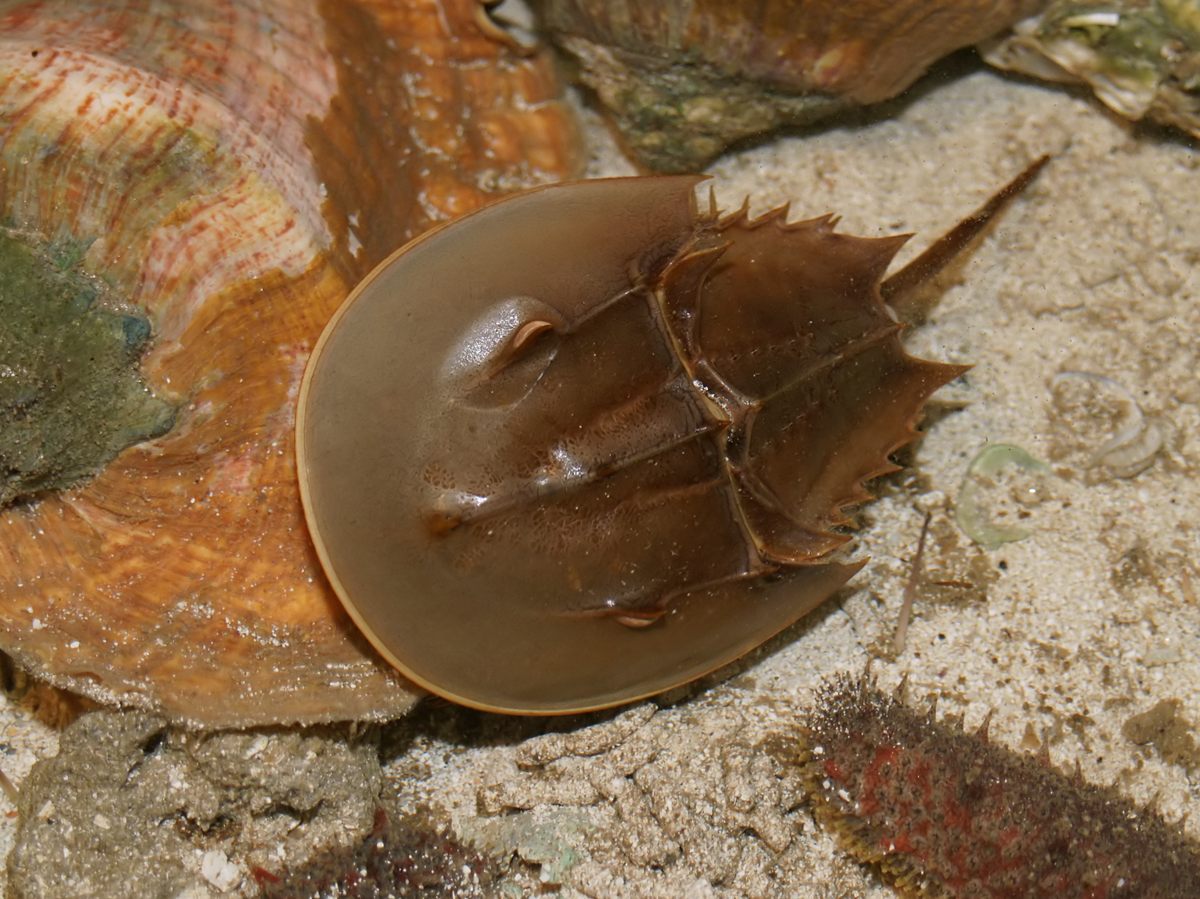
The Atlantic horseshoe crab (Limulus polyphemus) is a marine arthropod of the western Atlantic coast, whose lineage stretches back some 450 million years. It is not a true crab but is closer to spiders and scorpions, and it is listed as Vulnerable.
The Atlantic horseshoe crab (Limulus polyphemus) is a marine arthropod of the western Atlantic coast, whose lineage stretches back some 450 million years. It is not a true crab but is closer to spiders and scorpions, and it is listed as Vulnerable.
🧬 Field Guide Specimen: Open Atlantic Horseshoe Crab in the CRV Science Field Guide to log the specimen, see its place among the Evolutionary lineages in the Cladogram Explorer, and test your recall in the Red List conservation game.
Blood That Detects Bacteria: What Is LAL?
The blue, copper-based blood of horseshoe crabs clots in the presence of bacterial endotoxin. Extracts from the blood cells (Limulus amebocyte lysate) are used to test vaccines, injectable drugs and medical devices for contamination. A recombinant alternative, based on the clotting trigger factor C, is replacing animal-derived tests.
A Spawning Spectacle and Migrating Birds
Each spring thousands of crabs come ashore to spawn on beaches, notably in Delaware Bay. Their eggs feed migrating shorebirds such as the red knot, which depends on them to refuel on its long journey from South America to the Arctic.
Living Fossil
Horseshoe crabs belong to Xiphosura within the chelicerates, a group that also includes spiders. They have ten eyes, including a pair of large compound eyes studied by Haldan Hartline in work that won a 1967 Nobel Prize for the physiology of vision.
Atlantic Horseshoe Crab at a Glance
| Property | Value |
|---|---|
| Scientific name | Limulus polyphemus |
| Kingdom | Animalia |
| Phylum | Arthropoda |
| Subphylum | Chelicerata |
| Class | Xiphosura |
| Order | Xiphosurida |
| Field Guide group | Evolutionary Oddities (Unique & Disputed Lineages) |
| Diagnostic feature (Field Guide) | Celebrated xiphosuran living fossil with horseshoe carapace, ventral chelicerae, book gills, and blue amebocyte blood. |
| IUCN Red List status | Vulnerable (VU), assessed 2016 |
| Lineage age | About 450 million years |
See Also
- Evolution — living fossils
- Immunology — innate immune detection of endotoxin