Common Blue Damselfly
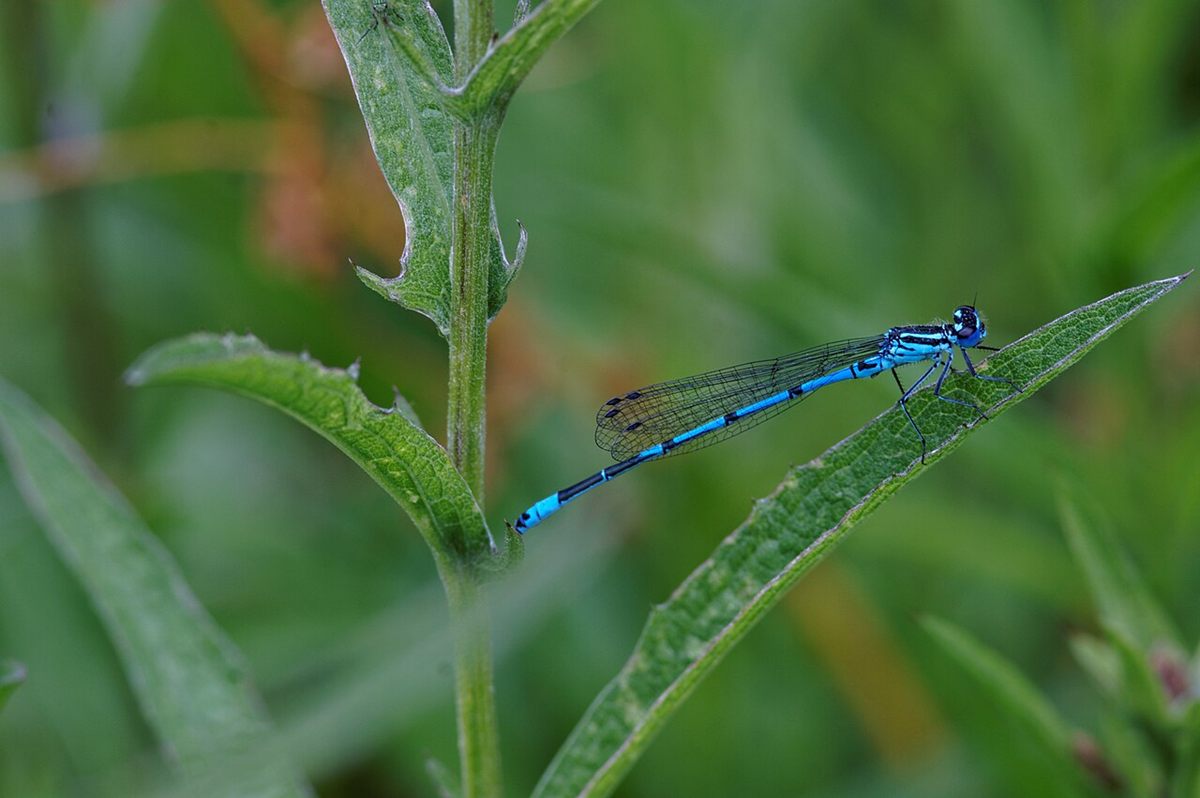
The common blue damselfly (Enallagma cyathigerum) is a slender, bright blue damselfly found around ponds and lakes across Europe, Asia and North America (where it is known as the northern bluet).
The common blue damselfly (Enallagma cyathigerum) is a slender, bright blue damselfly found around ponds and lakes across Europe, Asia and North America (where it is known as the northern bluet).
🧬 Field Guide Specimen: Open Common Blue Damselfly in the CRV Science Field Guide to log the specimen, see its place among the Ecdysozoa lineages in the Cladogram Explorer, and test your recall in the Red List conservation game.
The Mating Wheel
Before mating, the male grasps the female behind her head with claspers at the tip of his abdomen. The female then curls her abdomen forward to the male's secondary genitalia, forming a heart-shaped "wheel". Males may remove the sperm of earlier mates.
Damselflies Versus Dragonflies
Damselflies hold their wings together over the body at rest, are more slender, and have eyes on either side of the head, while dragonflies hold their wings out and have eyes that touch or nearly touch.
Aquatic Larvae
The larvae breathe through tail gills and hunt small invertebrates in the water for a year or two before emerging. The damselfly is a sign of healthy water. See Banded Demoiselle.
Common Blue Damselfly at a Glance
| Property | Value |
|---|---|
| Scientific name | Enallagma cyathigerum |
| Kingdom | Animalia |
| Phylum | Arthropoda |
| Class | Insecta |
| Order | Odonata |
| Family | Coenagrionidae |
| Field Guide group | Ecdysozoa: Hexapoda (Insects) |
| Diagnostic feature (Field Guide) | Thin bright-blue body with black rings; folds its wings together over its back at rest; widely spaced eyes. |
| IUCN Red List status | Least Concern (LC), assessed 2020 |
| Suborder | Zygoptera |
| Mating posture | Wheel |