Common Earthworm
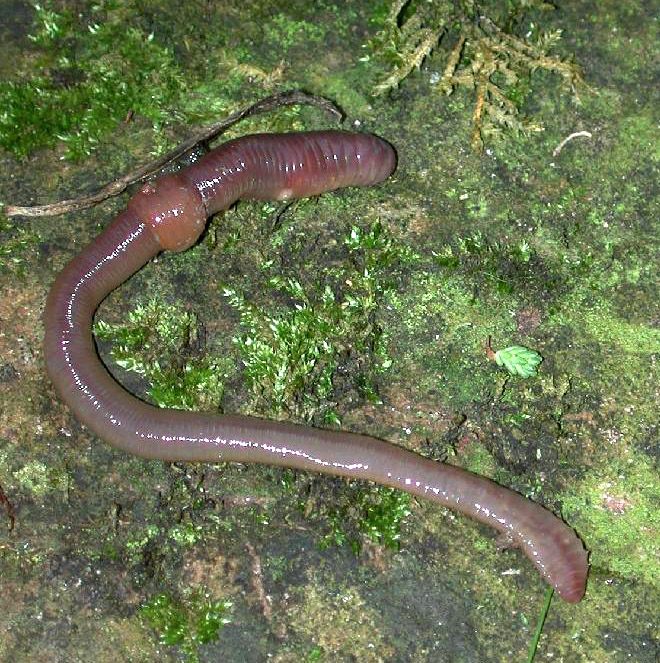
The common earthworm or nightcrawler (Lumbricus terrestris) is a large European annelid that digs deep vertical burrows. Charles Darwin devoted his last book, published in 1881, to the role of earthworms in forming soil.
The common earthworm or nightcrawler (Lumbricus terrestris) is a large European annelid that digs deep vertical burrows. Charles Darwin devoted his last book, published in 1881, to the role of earthworms in forming soil.
🧬 Field Guide Specimen: Open Common Earthworm in the CRV Science Field Guide to log the specimen, see its place among the Lophotrochozoa lineages in the Cladogram Explorer, and test your recall in the Red List conservation game.
Ecosystem Engineers: What Do Earthworms Do to Soil?
By pulling leaf litter down into burrows, mixing it with mineral soil and excreting casts, earthworms aerate and fertilize the ground and speed up decomposition. Darwin estimated they turn over many tonnes of soil per hectare each year.
Body Plan
The worm is segmented, with bristles (setae) that grip the burrow, and it breathes through its moist skin. Five pairs of muscular aortic arches pump blood, and each worm is a hermaphrodite that exchanges sperm with a mate.
An Invader in North America
Northern North American forests lost their native earthworms during the last ice age. European species, spread by settlers, fishing bait and garden soil, are now transforming forest floors by consuming the leaf litter layer, altering plant communities.
Common Earthworm at a Glance
| Property | Value |
|---|---|
| Scientific name | Lumbricus terrestris |
| Kingdom | Animalia |
| Phylum | Annelida |
| Class | Clitellata |
| Order | Crassiclitellata |
| Family | Lumbricidae |
| Field Guide group | Lophotrochozoa: Worms, Shells & Allies |
| Diagnostic feature (Field Guide) | Foundation for studying metamerism, hydrostatic skeletons, and nephridial excretion. |
| Class | Clitellata |
| Darwin's book | The Formation of Vegetable Mould through the Action of Worms (1881) |
See Also
- Evolution — Darwin's observations
- Biodiversity — invasive earthworms in forests