Dyeing Poison Dart Frog
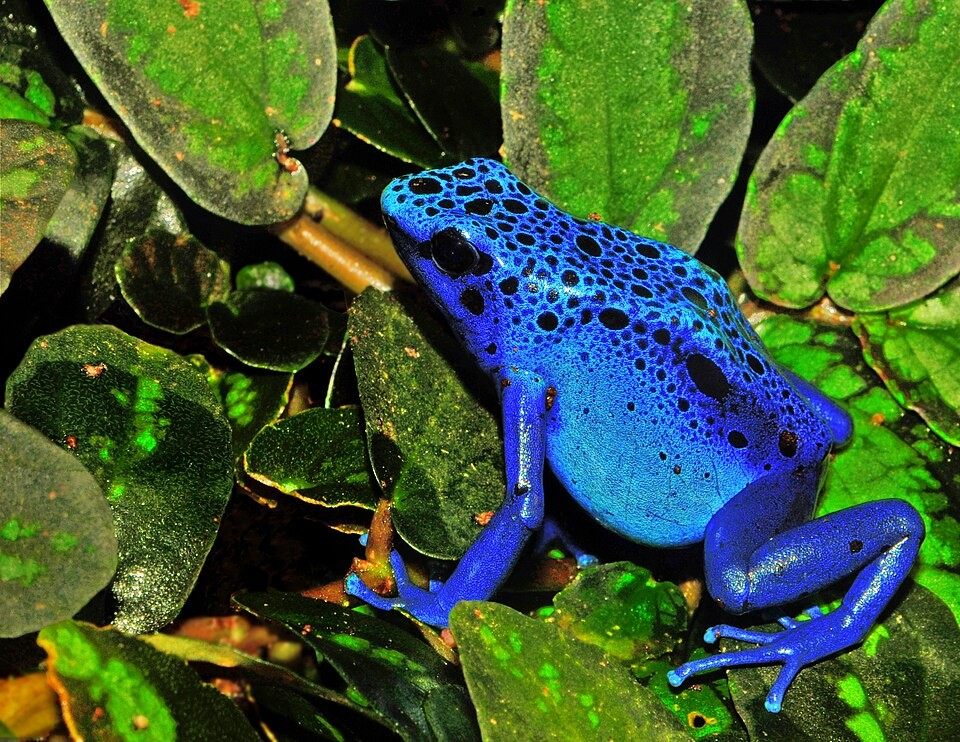
The dyeing poison dart frog (Dendrobates tinctorius) is a large, brightly marked frog of the rainforests of the Guianas and northern Brazil. Its contrasting colors warn predators that its skin is toxic.
The dyeing poison dart frog (Dendrobates tinctorius) is a large, brightly marked frog of the rainforests of the Guianas and northern Brazil. Its contrasting colors warn predators that its skin is toxic.
🧬 Field Guide Specimen: Open Dyeing Poison Dart Frog in the CRV Science Field Guide to log the specimen, see its place among the Tetrapoda lineages in the Cladogram Explorer, and test your recall in the Red List conservation game.
Toxic by Diet: Where Do the Poisons Come From?
Poison dart frogs do not make their own toxins. They accumulate alkaloids from the ants and mites they eat, then secrete them in skin glands. Captive-raised frogs fed on fruit flies are not toxic, which shows the link to diet.
Warning Colors
Bright, high-contrast patterns are examples of aposematism, a signal that predators learn to avoid. Within this species there are many color morphs from different regions, a variation that is being studied for clues about selection on warning signals.
Frog Parenting
Males guard the eggs laid on land and carry the newly hatched tadpoles on their backs to small pools of water, such as water-filled tree holes, where they develop.
Dyeing Poison Dart Frog at a Glance
| Property | Value |
|---|---|
| Scientific name | Dendrobates tinctorius |
| Kingdom | Animalia |
| Phylum | Chordata |
| Class | Amphibia |
| Order | Anura |
| Family | Dendrobatidae |
| Field Guide group | Tetrapoda: Amphibia (Frogs, Salamanders & Caecilians) |
| Diagnostic feature (Field Guide) | Vibrant aposematic yellow and blue-black pigmentation, absence of webbing on toes, specialized granular glands secreting batrachotoxins. |
| IUCN Red List status | Least Concern (LC), assessed 2023 |
| Toxins | Alkaloids from diet |
| Parental care | Males carry tadpoles |