🐙 Cell & Organismal Biology
Fat-tailed Dunnart
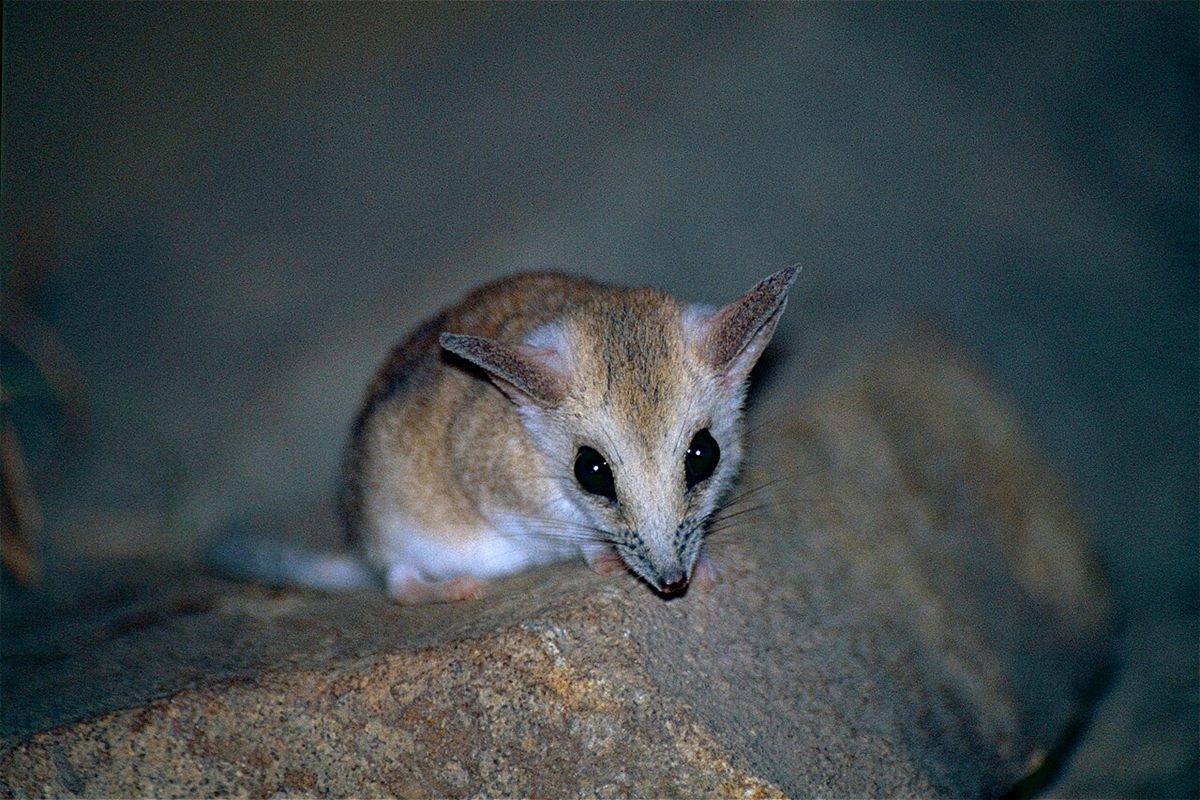
The fat-tailed dunnart (Sminthopsis crassicaudata) is a tiny, mouse-like marsupial of the arid grasslands and deserts of Australia. Its carrot-shaped tail stores fat for lean times.
The fat-tailed dunnart (Sminthopsis crassicaudata) is a tiny, mouse-like marsupial of the arid grasslands and deserts of Australia. Its carrot-shaped tail stores fat for lean times.
🧬 Field Guide Specimen: Open Fat-tailed Dunnart in the CRV Science Field Guide to log the specimen, see its place among the Mammals lineages in the Cladogram Explorer, and test your recall in the Red List conservation game.
A Fat Reserve Tail
In good seasons the tail swells with fat, then shrinks when food is scarce. The dunnart feeds on insects, spiders and small lizards at night.
Saving Energy by Torpor
Dunnarts enter torpor daily, lowering their metabolism and body temperature to save energy. They sometimes bask in the morning sun to warm up quickly.
Small Carnivorous Marsupials
Dunnarts belong to Dasyuridae with quolls and Tasmanian devils. See Tasmanian Devil.
Fat-tailed Dunnart at a Glance
| Property | Value |
|---|---|
| Scientific name | Sminthopsis crassicaudata |
| Kingdom | Animalia |
| Phylum | Chordata |
| Class | Mammalia |
| Infraclass | Marsupialia |
| Order | Dasyuromorphia |
| Family | Dasyuridae |
| Field Guide group | Mammals: Marsupialia (Metatherians) |
| Diagnostic feature (Field Guide) | Mouse-sized nocturnal Australian desert hunter with large pointed ears, polyprotodont needle-sharp teeth for crunching beetles, and a carrot-shaped tail that swells with stored fat. |
| IUCN Red List status | Least Concern (LC), assessed 2016 |
| Family | Dasyuridae |
| Tail | Stores fat |
🧬 Support Open Science
Explore interactive science games on LowKey Games or browse scientific apparel & accessories in the CRV Science Shop.
💡
Spot an inaccuracy or have primary literature to expand this article?
Submit a citation or revision note using your shared CRV Science / LowKey Games profile ID.