Garter Snake
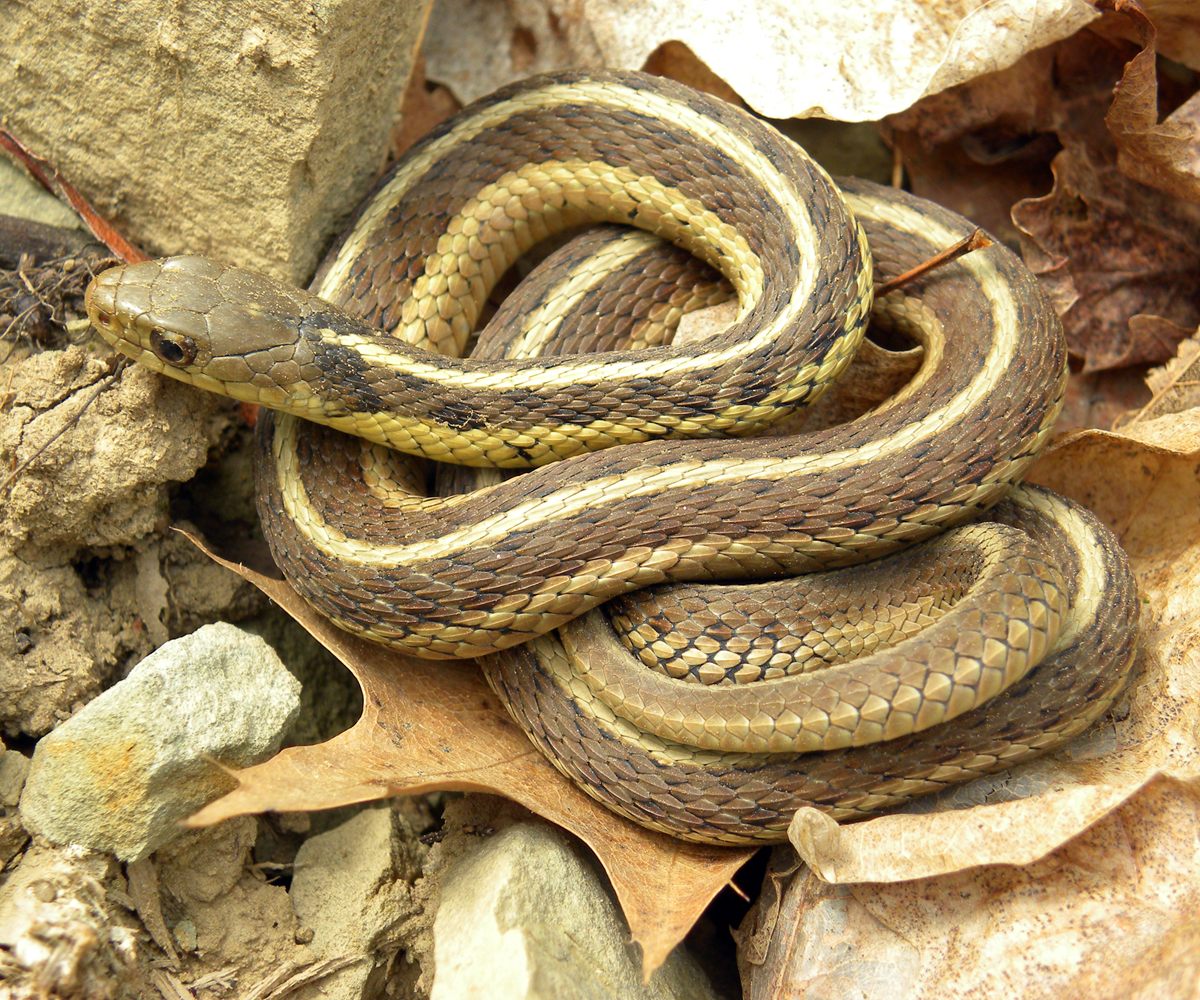
The common garter snake (Thamnophis sirtalis) is a slender, striped snake found across much of North America, one of the continent's most widespread reptiles. It gives birth to live young and is a favorite subject of studies in evolution and behavior.
The common garter snake (Thamnophis sirtalis) is a slender, striped snake found across much of North America, one of the continent's most widespread reptiles. It gives birth to live young and is a favorite subject of studies in evolution and behavior.
🧬 Field Guide Specimen: Open Garter Snake in the CRV Science Field Guide to log the specimen, see its place among the Reptilia lineages in the Cladogram Explorer, and test your recall in the Red List conservation game.
Resistant to a Deadly Toxin
Garter snakes that eat rough-skinned newts have evolved sodium channels that resist tetrodotoxin and can store small amounts of the toxin in their liver, which deters their own predators. Resistance is highest where the newts are most toxic. See Rough-skinned Newt.
Mating Balls at Narcisse
In Manitoba, tens of thousands of red-sided garter snakes gather at limestone dens after hibernation. Many males swarm each female in a mating ball. Some males produce female-like scent and attract other males, which helps them warm up and may confuse rivals.
Mild Venom
Garter snakes secrete a mild toxin in their saliva that is harmless to people. They eat frogs, worms, fish and small mammals.
Garter Snake at a Glance
| Property | Value |
|---|---|
| Scientific name | Thamnophis sirtalis |
| Kingdom | Animalia |
| Phylum | Chordata |
| Class | Reptilia |
| Order | Squamata |
| Family | Colubridae |
| Field Guide group | Reptilia (Reptiles) |
| Diagnostic feature (Field Guide) | Used to study vomeronasal (Jacobson's) organ chemoreception and brumation cycles. |
| IUCN Red List status | Least Concern (LC) |
| Reproduction | Live birth |
| Toxin resistance | Tetrodotoxin |