Komodo Dragon
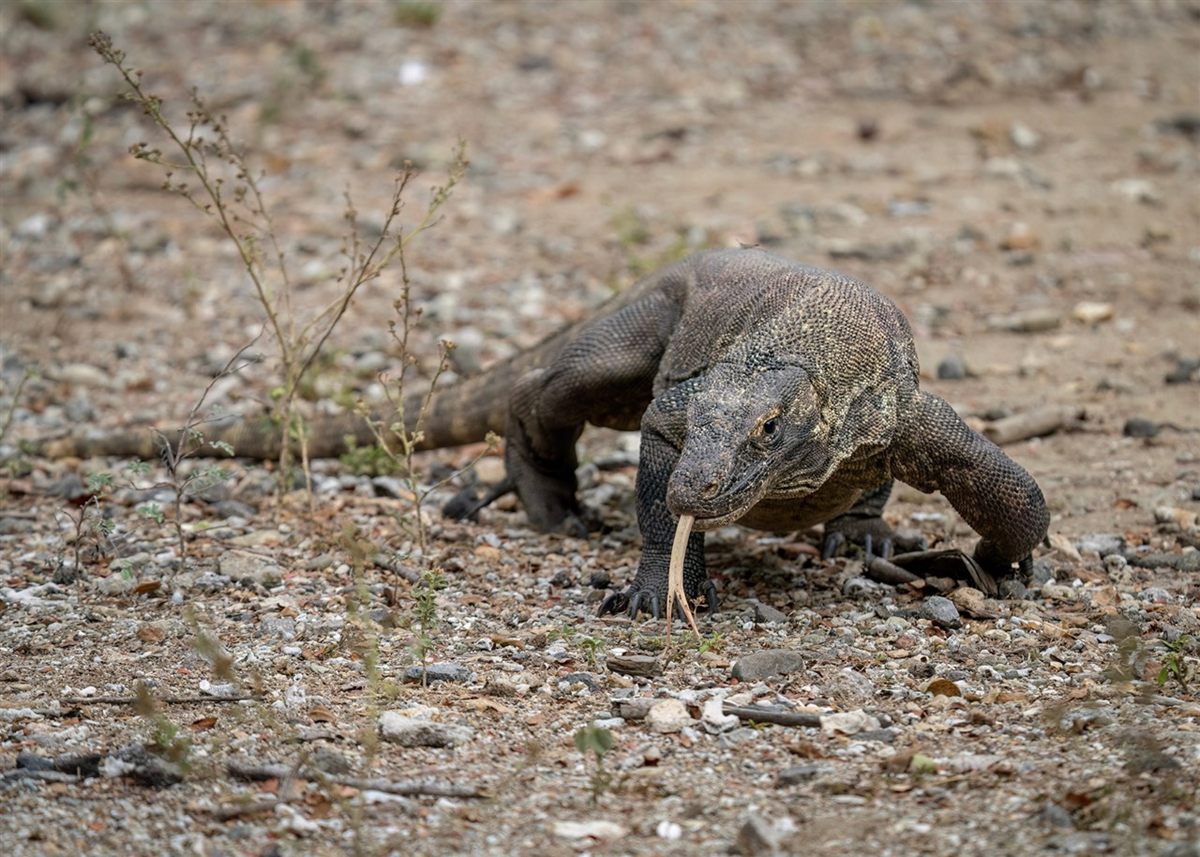
The Komodo dragon (Varanus komodoensis) is the largest living lizard, up to about 3 meters long, found only on a handful of Indonesian islands including Komodo and Rinca.
The Komodo dragon (Varanus komodoensis) is the largest living lizard, up to about 3 meters long, found only on a handful of Indonesian islands including Komodo and Rinca. It is listed as Endangered by the IUCN, a change from Vulnerable in 2021 that reflects the threat of rising seas to its habitat.
🧬 Field Guide Specimen: Open Komodo Dragon in the CRV Science Field Guide to log the specimen, see its place among the Reptilia lineages in the Cladogram Explorer, and test your recall in the Red List conservation game.
Bacteria or Venom? How Does the Bite Kill?
Komodo dragons were long thought to kill with septic bacteria in their mouths, but research in 2009 showed that they have venom glands in the lower jaw that deliver proteins which lower blood pressure and prevent clotting. The teeth are serrated and, in the tooth tips, coated with iron-rich enamel.
Parthenogenesis
In 2006 a captive female produced fertile offspring without a mate, by parthenogenesis. In Komodo dragons females are ZW and males ZZ, and the resulting offspring are all male.
Life on an Island
Adult dragons ambush deer and pigs and also scavenge. A population of only a few thousand depends on prey abundance. Warming and sea-level rise could shrink suitable habitat on small islands.
Komodo Dragon at a Glance
| Property | Value |
|---|---|
| Scientific name | Varanus komodoensis |
| Kingdom | Animalia |
| Phylum | Chordata |
| Class | Reptilia |
| Order | Squamata |
| Family | Varanidae |
| Field Guide group | Reptilia (Reptiles) |
| Diagnostic feature (Field Guide) | Serrated ziphodont blade teeth, iron-capped tooth tips, gular pumping for continuous respiration during pursuit. |
| IUCN Red List status | Endangered (EN), assessed 2021 |
| Range | Indonesian islands including Komodo and Rinca |
See Also
- Sea-level rise — threat to island habitat
- Climate change — impacts on island species