Lemon Sponge
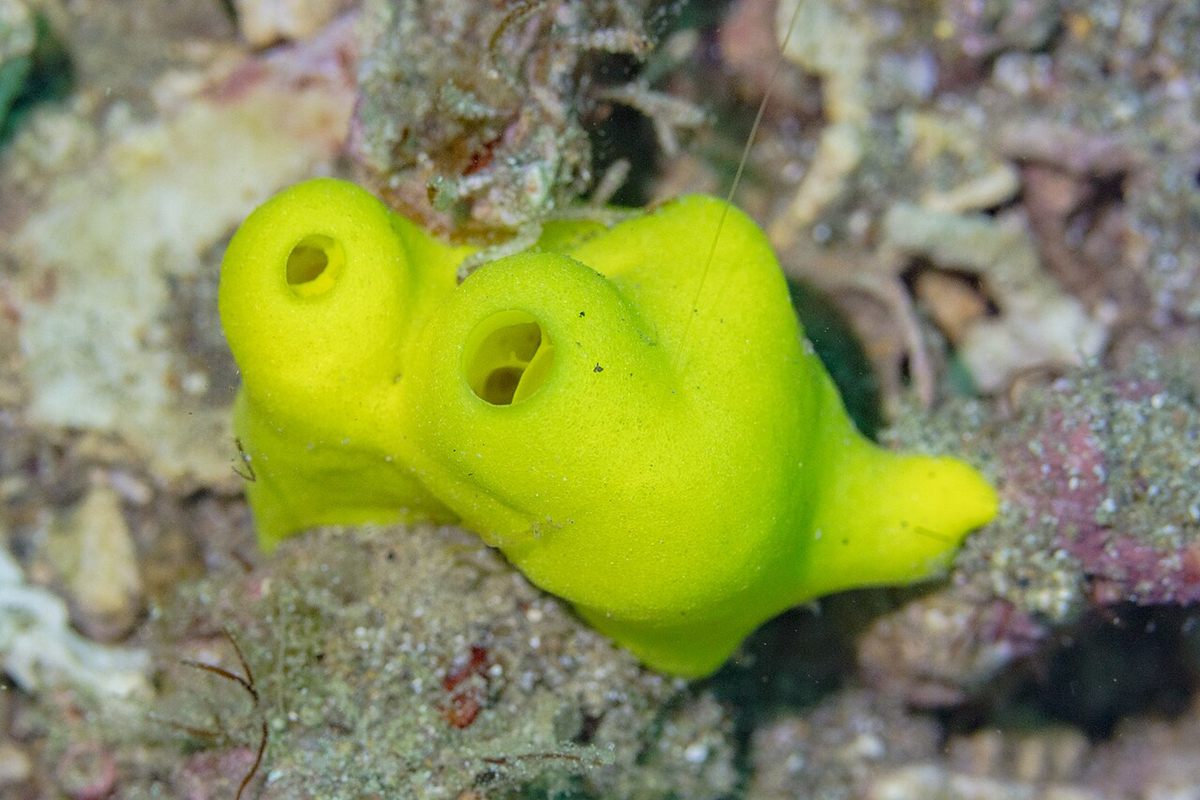
The lemon sponge (Leucetta chagosensis) is a bright yellow calcareous sponge of Indo-Pacific reefs. It is of interest to chemists because it makes alkaloids that kill bacteria and other organisms.
The lemon sponge (Leucetta chagosensis) is a bright yellow calcareous sponge of Indo-Pacific reefs. It is of interest to chemists because it makes alkaloids that kill bacteria and other organisms.
🧬 Field Guide Specimen: Open Lemon Sponge in the CRV Science Field Guide to log the specimen, see its place among the Metazoa lineages in the Cladogram Explorer, and test your recall in the Red List conservation game.
A Chemical Arsenal
Sponges cannot flee, so many defend themselves with toxic or bad-tasting compounds. Leucetta produces imidazole alkaloids such as naamines, which have shown activity against microbes and cancer cells in lab tests. See Bath Sponge.
Calcite and Color
The sponge builds a skeleton of calcite spicules, unlike the silica of most reef sponges. Its yellow color is due to pigments in its tissues.
Microbial Partners
Like many sponges, it hosts communities of symbiotic microbes, and some of the chemicals once attributed to the sponge may be produced by them.
Lemon Sponge at a Glance
| Property | Value |
|---|---|
| Scientific name | Leucetta chagosensis |
| Kingdom | Animalia |
| Phylum | Porifera |
| Class | Calcarea |
| Order | Clathrinida |
| Family | Leucettidae |
| Field Guide group | Porifera: Sponges (Basal Metazoans) |
| Diagnostic feature (Field Guide) | Bright lemon-yellow lobed sponge on Indo-Pacific reefs, firm to the touch from its dense calcite spicules. |
| Class | Calcarea |
| Compounds | Imidazole alkaloids |