Mexican Burrowing Caecilian
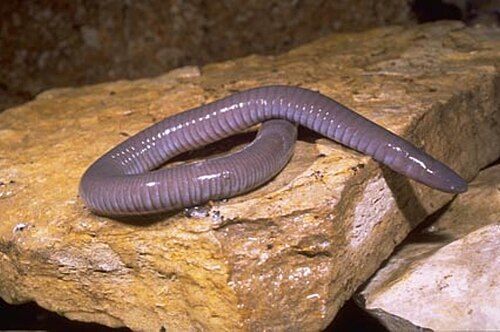
The Mexican burrowing caecilian (Dermophis mexicanus) is a legless, worm-like amphibian that burrows in the soil of Central America. It gives birth to live young that have already fed inside the mother.
The Mexican burrowing caecilian (Dermophis mexicanus) is a legless, worm-like amphibian that burrows in the soil of Central America. It gives birth to live young that have already fed inside the mother.
🧬 Field Guide Specimen: Open Mexican Burrowing Caecilian in the CRV Science Field Guide to log the specimen, see its place among the Tetrapoda lineages in the Cladogram Explorer, and test your recall in the Red List conservation game.
Feeding Inside the Mother
Embryos grow in the oviduct and use special fetal teeth to scrape a nutritious lining of the mother's oviduct. They emerge at a large size, fully formed. This is one of the ways amphibians have evolved to nourish their young.
Life Underground
The caecilian burrows with its strong skull and eats earthworms and other soil animals. It has a tentacle between the eye and nose that detects chemicals. See Ringed Caecilian.
Amphibians Without Limbs
Caecilians form the order Gymnophiona and are closer to frogs and salamanders than to snakes.
Mexican Burrowing Caecilian at a Glance
| Property | Value |
|---|---|
| Scientific name | Dermophis mexicanus |
| Kingdom | Animalia |
| Phylum | Chordata |
| Class | Amphibia |
| Order | Gymnophiona |
| Family | Dermophiidae |
| Field Guide group | Tetrapoda: Amphibia (Frogs, Salamanders & Caecilians) |
| Diagnostic feature (Field Guide) | Limbless gray-purple burrower ringed with skin folds, tiny eyes under the skin, and sensory tentacles near the nostrils; young are born live and feed on the lining of the mother's oviduct. |
| IUCN Red List status | Least Concern (LC), assessed 2020 |
| Order | Gymnophiona |
| Reproduction | Live-bearing |
See Also
- Ringed Caecilian — a South American caecilian
- Rubber Eel — an aquatic caecilian