Northern Brown Bandicoot
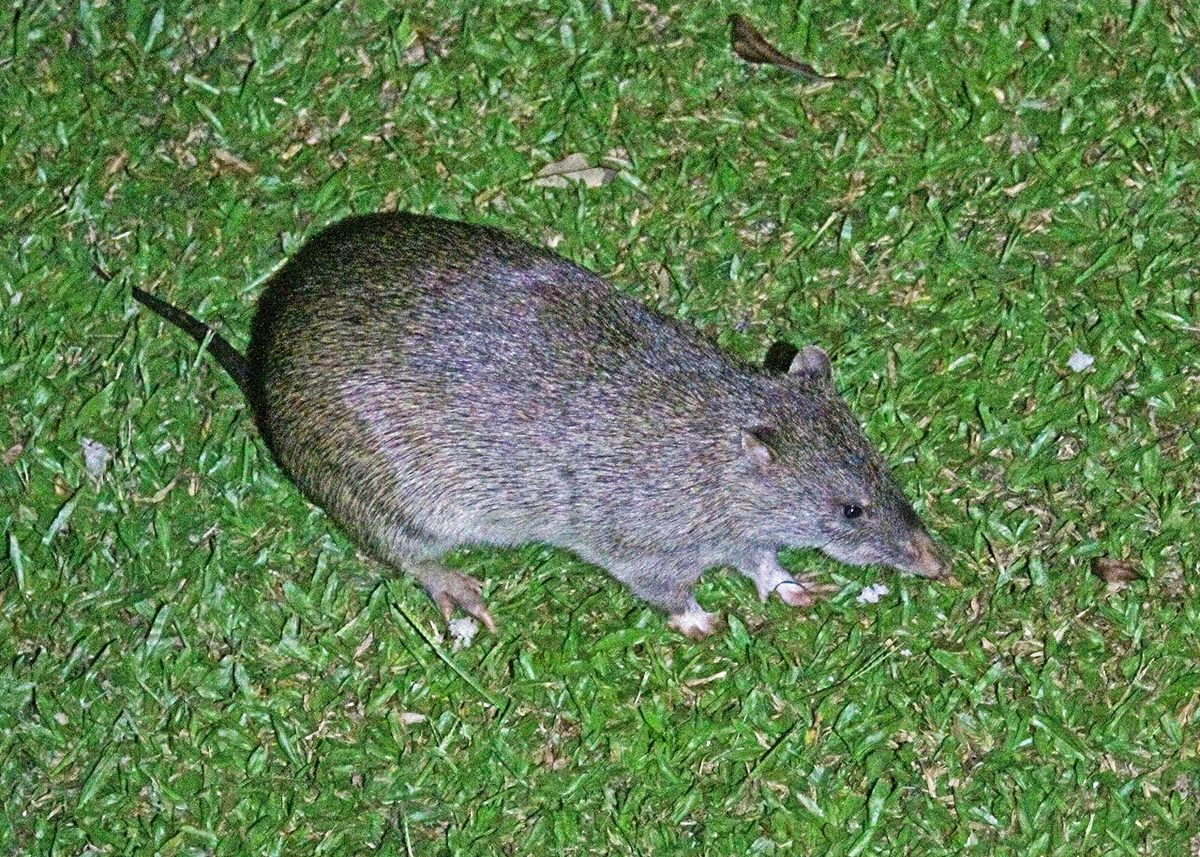
The northern brown bandicoot (Isoodon macrourus) is an adaptable, sturdy marsupial of northern and eastern Australia and New Guinea. The word 'bandicoot' comes from an Indian name for a large rat.
The northern brown bandicoot (Isoodon macrourus) is an adaptable, sturdy marsupial of northern and eastern Australia and New Guinea. The word "bandicoot" comes from an Indian name for a large rat.
🧬 Field Guide Specimen: Open Northern Brown Bandicoot in the CRV Science Field Guide to log the specimen, see its place among the Mammals lineages in the Cladogram Explorer, and test your recall in the Red List conservation game.
Adaptable Omnivore
The bandicoot eats insects, plant roots, seeds and small animals. It shelters in nests of grass and leaves on the ground and lives in woodland, grassland and gardens.
A Name From India
The English word comes from the Telugu pandikokku, "pig-rat", the name of a large rat in India. Early European settlers applied it to the Australian animals for their rat-like look.
Tolerates Disturbance
It is more widespread than its southern relatives, though introduced predators and fire regimes affect it. See Southern Brown Bandicoot.
Northern Brown Bandicoot at a Glance
| Property | Value |
|---|---|
| Scientific name | Isoodon macrourus |
| Kingdom | Animalia |
| Phylum | Chordata |
| Class | Mammalia |
| Order | Peramelemorphia |
| Family | Peramelidae |
| Field Guide group | Mammals: Marsupialia (Metatherians) |
| Diagnostic feature (Field Guide) | Stocky, coarse-furred digger with a short snout; breeds year-round with one of the shortest pregnancies of any mammal, about 12 days. |
| IUCN Red List status | Least Concern (LC), assessed 2016 |
| Order | Peramelemorphia |
| Name origin | Telugu pandikokku |