Peat Moss
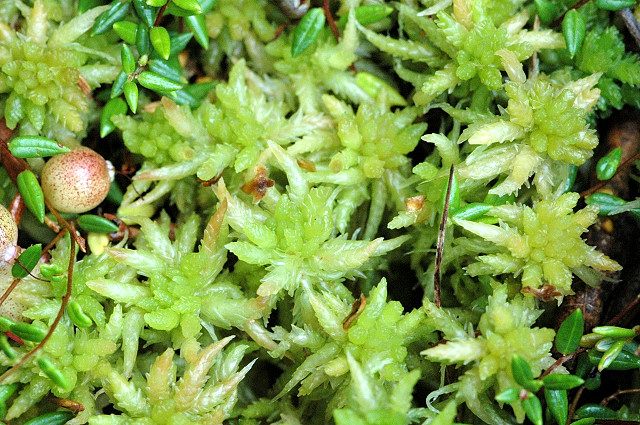
Peat moss (Sphagnum palustre) is a moss that dominates cool, wet bogs and builds peat, a deposit of partly decayed plant matter. Peatlands cover only a small share of the land but store roughly a third of the world's soil carbon.
Peat moss (Sphagnum palustre) is a moss that dominates cool, wet bogs and builds peat, a deposit of partly decayed plant matter. Peatlands cover only a small share of the land but store roughly a third of the world's soil carbon.
🧬 Field Guide Specimen: Open Peat Moss in the CRV Science Field Guide to log the specimen, see its place among the Diaphoretickes lineages in the Cladogram Explorer, and test your recall in the Red List conservation game.
A Sponge of Dead Cells
Sphagnum leaves contain large empty cells that can soak up many times the plant's dry weight in water. The moss also acidifies its surroundings by releasing hydrogen ions, which suppresses decay and favors its own growth over that of competitors.
Peat and Carbon: Why Do Bogs Matter for Climate?
Because dead moss decays very slowly in cold, waterlogged, acidic conditions, it accumulates over thousands of years. Draining or burning peatlands releases the stored carbon as carbon dioxide. See Carbon sink.
Spores and Uses
The spore capsule explodes, shooting spores upward in a vortex ring. Sphagnum was used as an absorbent, antiseptic wound dressing in the First World War, and peat is harvested for fuel and horticulture, which is increasingly criticized for climate reasons.
Peat Moss at a Glance
| Property | Value |
|---|---|
| Scientific name | Sphagnum palustre |
| Kingdom | Plantae |
| Phylum | Bryophyta |
| Class | Sphagnopsida |
| Order | Sphagnales |
| Field Guide group | Diaphoretickes: Plants & Algae |
| Diagnostic feature (Field Guide) | Non-vascular gametophyte cushions containing dead hyaline cells that hold 20x their weight in water, explosive capsule spores. |
| Group | Bryophytes (mosses) |
| Habitat | Cool, wet bogs |