Periodical Cicada
The periodical cicada (Magicicada septendecim) is one of several North American cicadas that spend 13 or 17 years underground before emerging together in enormous numbers. M. septendecim is a 17-year species of the northeastern United States.
The periodical cicada (Magicicada septendecim) is one of several North American cicadas that spend 13 or 17 years underground before emerging together in enormous numbers. M. septendecim is a 17-year species of the northeastern United States.
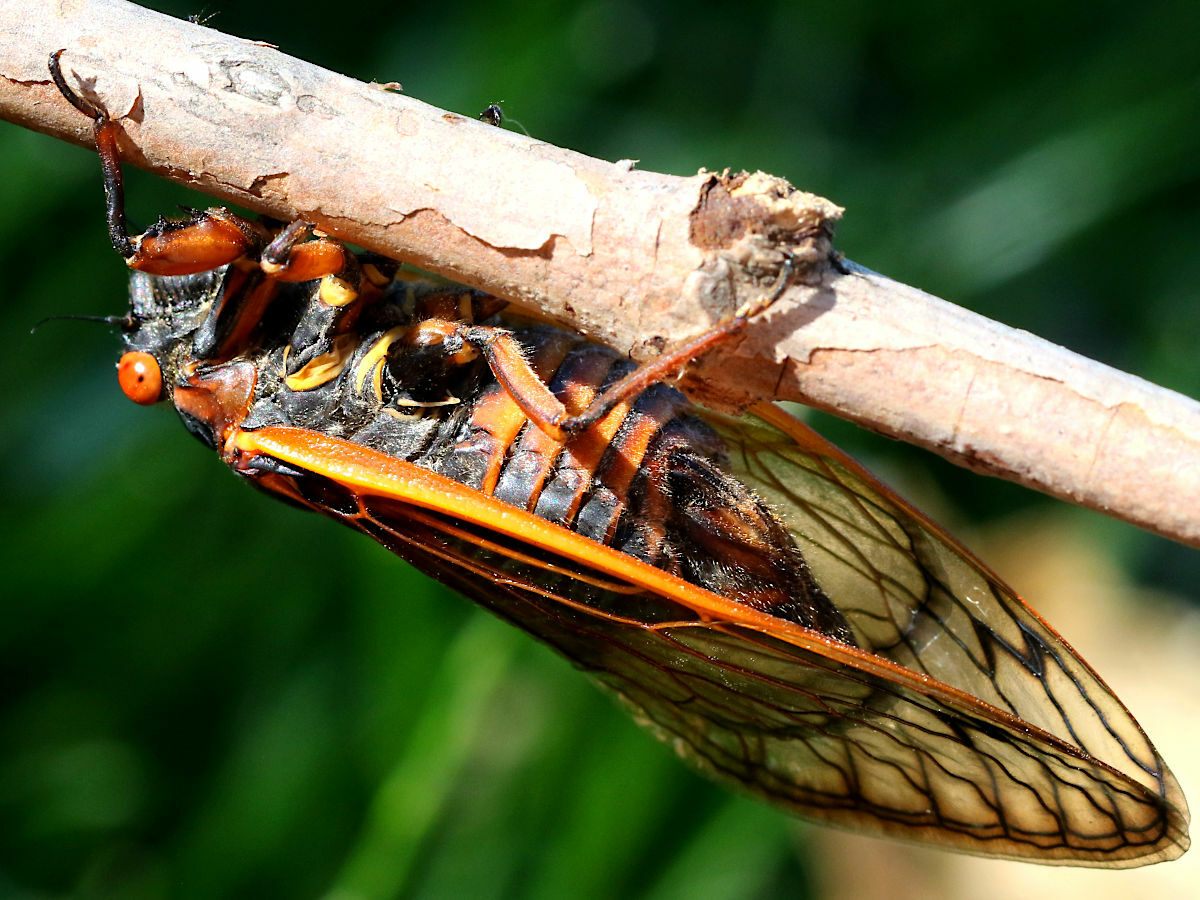
🧬 Field Guide Specimen: Open Periodical Cicada in the CRV Science Field Guide to log the specimen, see its place among the Ecdysozoa lineages in the Cladogram Explorer, and test your recall in the Red List conservation game.
Why 17 Years? Prime Numbers and Predator Satiation
Emerging in huge, synchronized broods overwhelms predators, which cannot eat enough cicadas to threaten the population, a strategy called predator satiation. Prime-numbered cycles of 13 and 17 years may also make it hard for predators with shorter cycles to synchronize, and reduce the chance of different broods interbreeding.
Life Underground
Nymphs feed on xylem sap from tree roots using a piercing mouthpart, a trait of true bugs (Hemiptera), and molt several times before tunneling to the surface to molt a final time into winged adults. Males sing with drum-like tymbals, producing a deafening chorus.
Emergences and Dates
Broods are numbered with Roman numerals. Brood X emerged in 2021, and in 2024 a rare double emergence of a 13-year brood and a 17-year brood occurred in parts of the Midwest. Adults live only a few weeks, during which they mate and lay eggs in twigs.
Periodical Cicada at a Glance
| Property | Value |
|---|---|
| Scientific name | Magicicada septendecim |
| Kingdom | Animalia |
| Phylum | Arthropoda |
| Class | Insecta |
| Order | Hemiptera |
| Suborder | Auchenorrhyncha |
| Field Guide group | Ecdysozoa: Hexapoda (Insects) |
| Diagnostic feature (Field Guide) | Prominent sound-producing tymbals, piercing-sucking rostrum beak originating from base of head. |
| Life cycle | 17 years (northern broods) |
| Order | Hemiptera (true bugs) |