Plakina Sponge
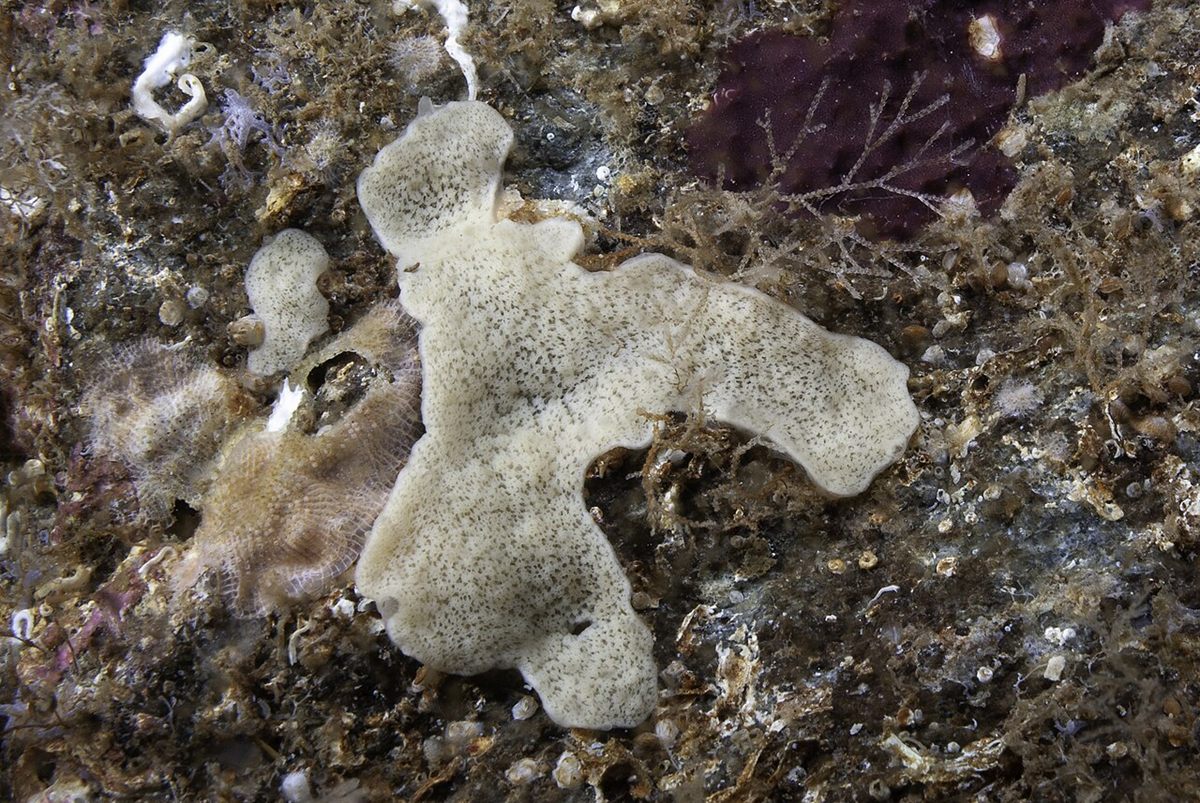
The Plakina sponge (Plakina monolopha) is a thin, encrusting sponge of rocky Mediterranean shores and caves. Like other homoscleromorphs, it has a tissue organized into true epithelial layers.
The Plakina sponge (Plakina monolopha) is a thin, encrusting sponge of rocky Mediterranean shores and caves. Like other homoscleromorphs, it has a tissue organized into true epithelial layers.
🧬 Field Guide Specimen: Open Plakina Sponge in the CRV Science Field Guide to log the specimen, see its place among the Metazoa lineages in the Cladogram Explorer, and test your recall in the Red List conservation game.
A Thin Crust
The sponge forms a flat, pale or colored crust a few millimeters thick on rock, often in shaded places. Its tiny spicules have three or four arms and are scattered in the tissue.
Embryonic Development
Homoscleromorphs are unusual among sponges in that their larvae develop with layers of cells that resemble the layers of embryos of other animals. This makes them important in studies of how tissues and gastrulation-like movements evolved.
Where They Fit
Where homoscleromorphs fit among sponges and within the animal tree has been debated: some studies group them with calcareous sponges. See Candelabrum Sponge.
Plakina Sponge at a Glance
| Property | Value |
|---|---|
| Scientific name | Plakina monolopha |
| Kingdom | Animalia |
| Phylum | Porifera |
| Class | Homoscleromorpha |
| Order | Homosclerophorida |
| Family | Plakinidae |
| Field Guide group | Porifera: Sponges (Basal Metazoans) |
| Diagnostic feature (Field Guide) | Thin, pale, lobed encrusting sheet on shaded rock, with small branched silica spicules called lophose calthrops. |
| Class | Homoscleromorpha |
| Form | Thin encrusting sheets |