Red Kangaroo
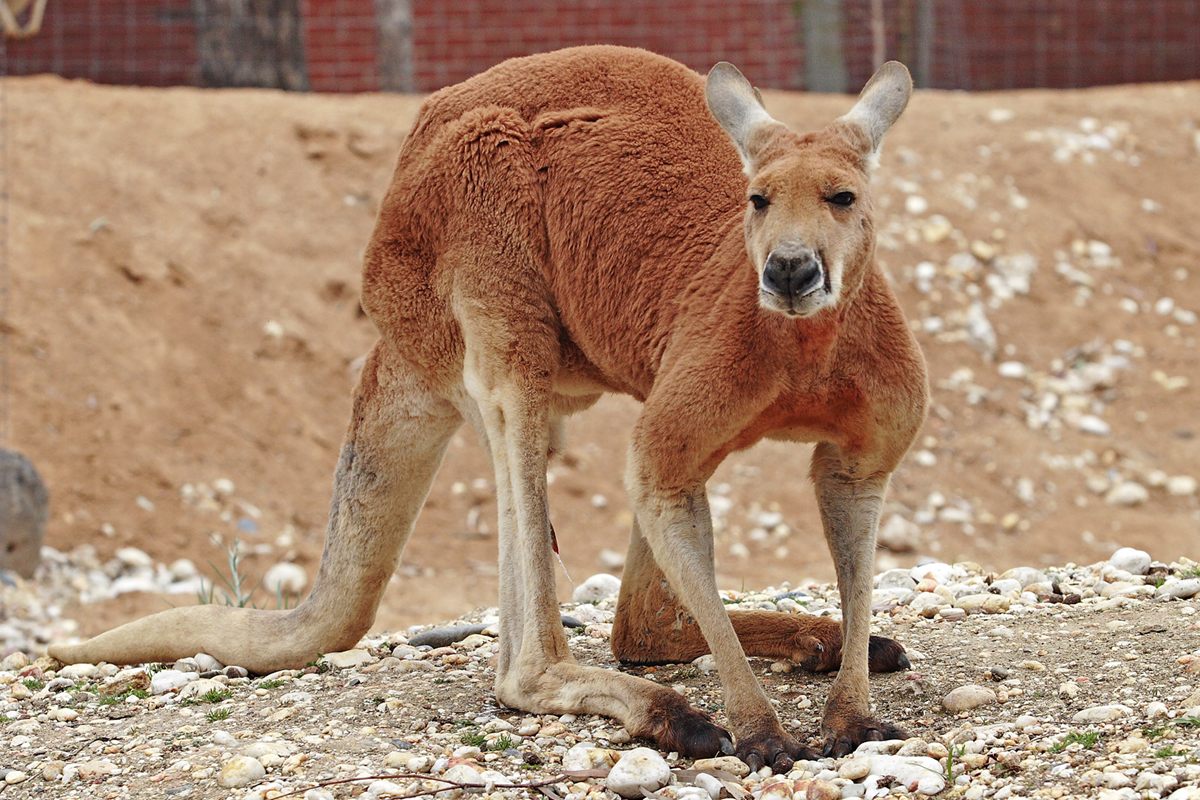
The red kangaroo (Osphranter rufus) is the largest living marsupial, with males standing up to about 1.8 meters tall. It roams the arid interior of Australia in groups called mobs and is listed as Least Concern.
The red kangaroo (Osphranter rufus) is the largest living marsupial, with males standing up to about 1.8 meters tall. It roams the arid interior of Australia in groups called mobs and is listed as Least Concern.
🧬 Field Guide Specimen: Open Red Kangaroo in the CRV Science Field Guide to log the specimen, see its place among the Mammals lineages in the Cladogram Explorer, and test your recall in the Red List conservation game.
Hopping: Why Is It So Efficient?
Kangaroos store elastic energy in their long Achilles tendons, like springs, so that fast hopping uses little more energy than slow hopping. They can reach about 60 to 70 kilometers per hour in bursts and leap several meters. Strangely, they cannot move their hind legs independently, so they cannot hop backward.
Reproduction in a Boom-and-Bust Land
A female can carry a dormant embryo that resumes growth when conditions improve, a process called embryonic diapause. She can have a joey in the pouch and one at foot, producing two different kinds of milk at once.
Population and Management
Numbers fluctuate with rainfall and have been boosted by artificial water points. Kangaroos are harvested under government quotas in some regions.
Red Kangaroo at a Glance
| Property | Value |
|---|---|
| Scientific name | Osphranter rufus |
| Kingdom | Animalia |
| Phylum | Chordata |
| Class | Mammalia |
| Order | Diprotodontia |
| Family | Macropodidae |
| Field Guide group | Mammals: Marsupialia (Metatherians) |
| Diagnostic feature (Field Guide) | Saltatorial bipedal hopping, elastic storage tendons, forward-opening marsupium. |
| IUCN Red List status | Least Concern (LC), assessed 2016 |
| Maximum height | About 1.8 meters |
See Also
- Natural selection — adaptation to arid environments
- Biodiversity — Australian marsupial diversity