Red Sea Plume
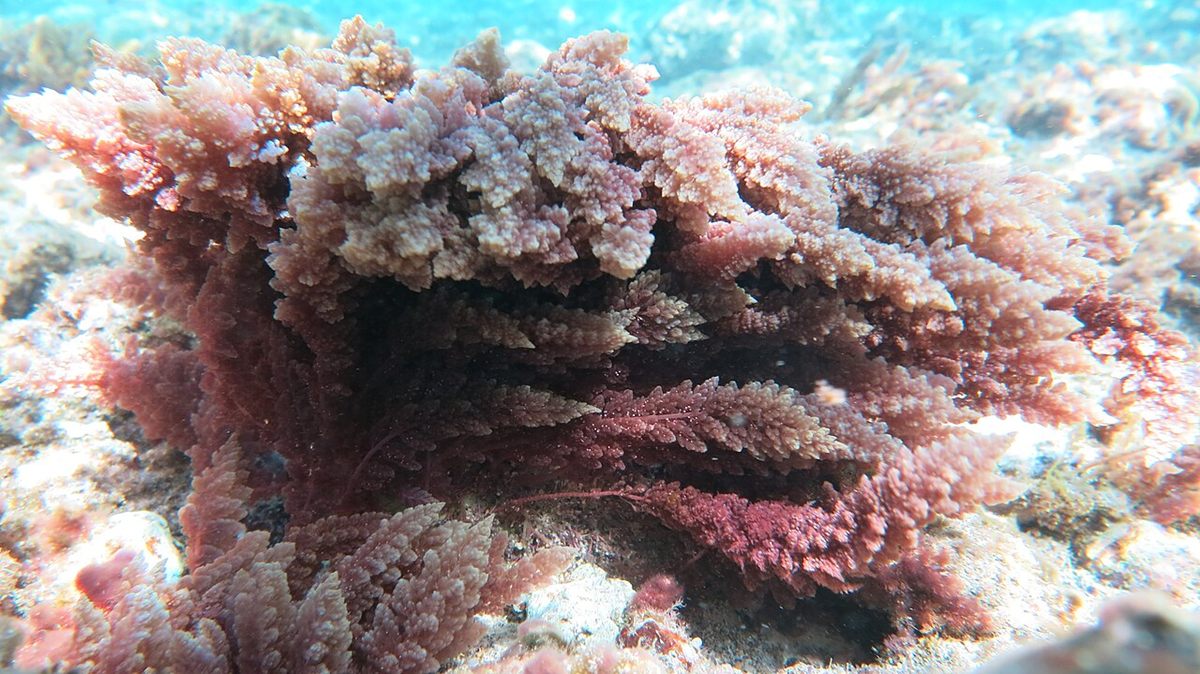
The red sea plume (Asparagopsis taxiformis) is a feathery red seaweed of warm seas that has attracted attention because feeding a little of it to cattle sharply reduces their methane emissions.
The red sea plume (Asparagopsis taxiformis) is a feathery red seaweed of warm seas that has attracted attention because feeding a little of it to cattle sharply reduces their methane emissions.
🧬 Field Guide Specimen: Open Red Sea Plume in the CRV Science Field Guide to log the specimen, see its place among the Diaphoretickes lineages in the Cladogram Explorer, and test your recall in the Red List conservation game.
A Seaweed That Cuts Cow Burps
Cattle release methane, a potent greenhouse gas, from the fermentation of grass in the rumen. Bromoform in the seaweed inhibits the microbes that make methane. Trials found that a small amount in the feed can cut methane by more than 80 percent in beef cattle. See Cattle.
Farming and Doubts
Companies grow the seaweed in tanks and at sea in Hawaii, Australia and elsewhere. Concerns include the long-term safety of bromoform for animals and people, the ozone-depleting potential of bromoform released in production, and the cost of scaling.
Global Seaweed
The alga is widespread in tropical and warm temperate seas and used as food in Hawaii. See Harpoon Weed.
Red Sea Plume at a Glance
| Property | Value |
|---|---|
| Scientific name | Asparagopsis taxiformis |
| Kingdom | Plantae |
| Phylum | Rhodophyta |
| Class | Florideophyceae |
| Order | Bonnemaisoniales |
| Family | Bonnemaisoniaceae |
| Field Guide group | Diaphoretickes: Plants & Algae |
| Diagnostic feature (Field Guide) | Soft, pinkish-red bottlebrush fronds rising from creeping runners on warm-water reefs; eaten as limu kohu in Hawaii. |
| Group | Red algae |
| Active compound | Bromoform |