Sensitive Plant
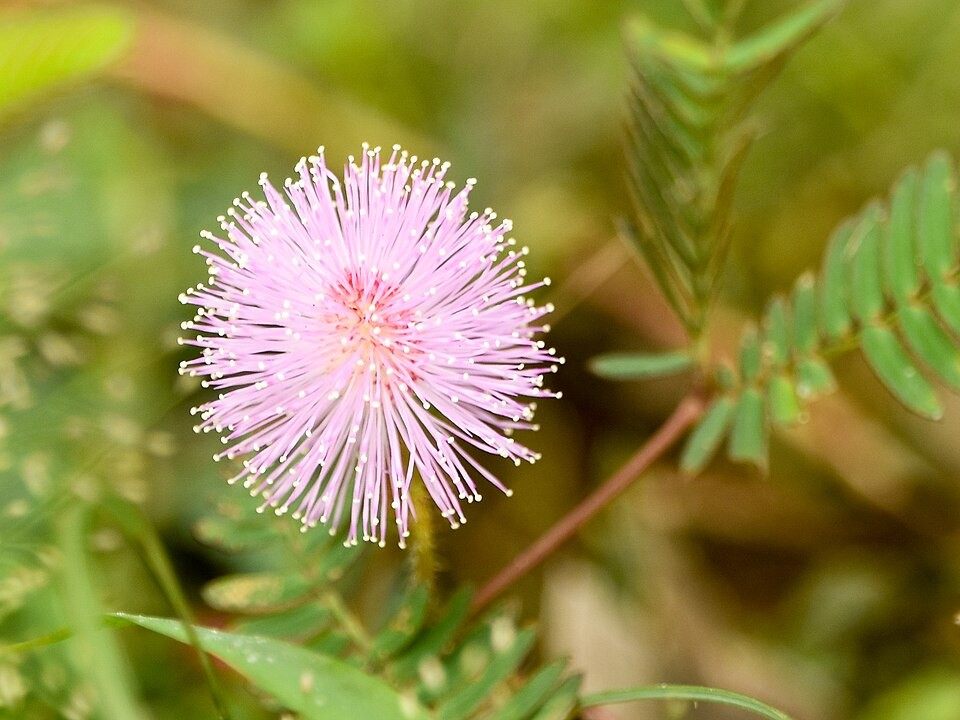
The sensitive plant (Mimosa pudica) is a small tropical weed whose compound leaves fold up and droop within seconds when touched. It has fascinated naturalists for centuries as a plant that appears to move like an animal.
The sensitive plant (Mimosa pudica) is a small tropical weed whose compound leaves fold up and droop within seconds when touched. It has fascinated naturalists for centuries as a plant that appears to move like an animal.
🧬 Field Guide Specimen: Open Sensitive Plant in the CRV Science Field Guide to log the specimen, see its place among the Diaphoretickes lineages in the Cladogram Explorer, and test your recall in the Red List conservation game.
Folding in Seconds: What Powers the Movement?
Touch triggers an electrical signal that travels through the leaf. At the leaf joints (pulvini), cells quickly lose water, and the change in turgor pressure makes the leaflets fold and the stalk droop. The signal can travel to neighboring leaves. The reaction may startle herbivores or make the plant look less appetizing.
Can a Plant Learn?
In a 2014 experiment, plants dropped repeatedly a short distance learned to stop folding, whereas they still responded to other stimuli, which the authors interpreted as habituation. Interpretation of such results is debated, since the plant has no neurons.
A Pantropical Weed
Native to Central and South America, the plant has spread throughout the tropics. It is a legume and so can fix nitrogen with root bacteria. See Venus Flytrap.
Sensitive Plant at a Glance
| Property | Value |
|---|---|
| Scientific name | Mimosa pudica |
| Kingdom | Plantae |
| Phylum | Tracheophyta |
| Class | Magnoliopsida |
| Order | Fabales |
| Family | Fabaceae |
| Field Guide group | Diaphoretickes: Plants & Algae |
| Diagnostic feature (Field Guide) | Bipinnately compound leaves exhibiting rapid thigmonastic folding in response to touch via pulvinar turgor changes. |
| IUCN Red List status | Least Concern (LC), assessed 2012 |
| Family | Fabaceae (legumes) |
| Movement | Turgor changes in pulvini |
See Also
- Venus Flytrap — a plant with rapid movements
- Nitrogen fixation — legume root bacteria