Spottail Mantis Shrimp
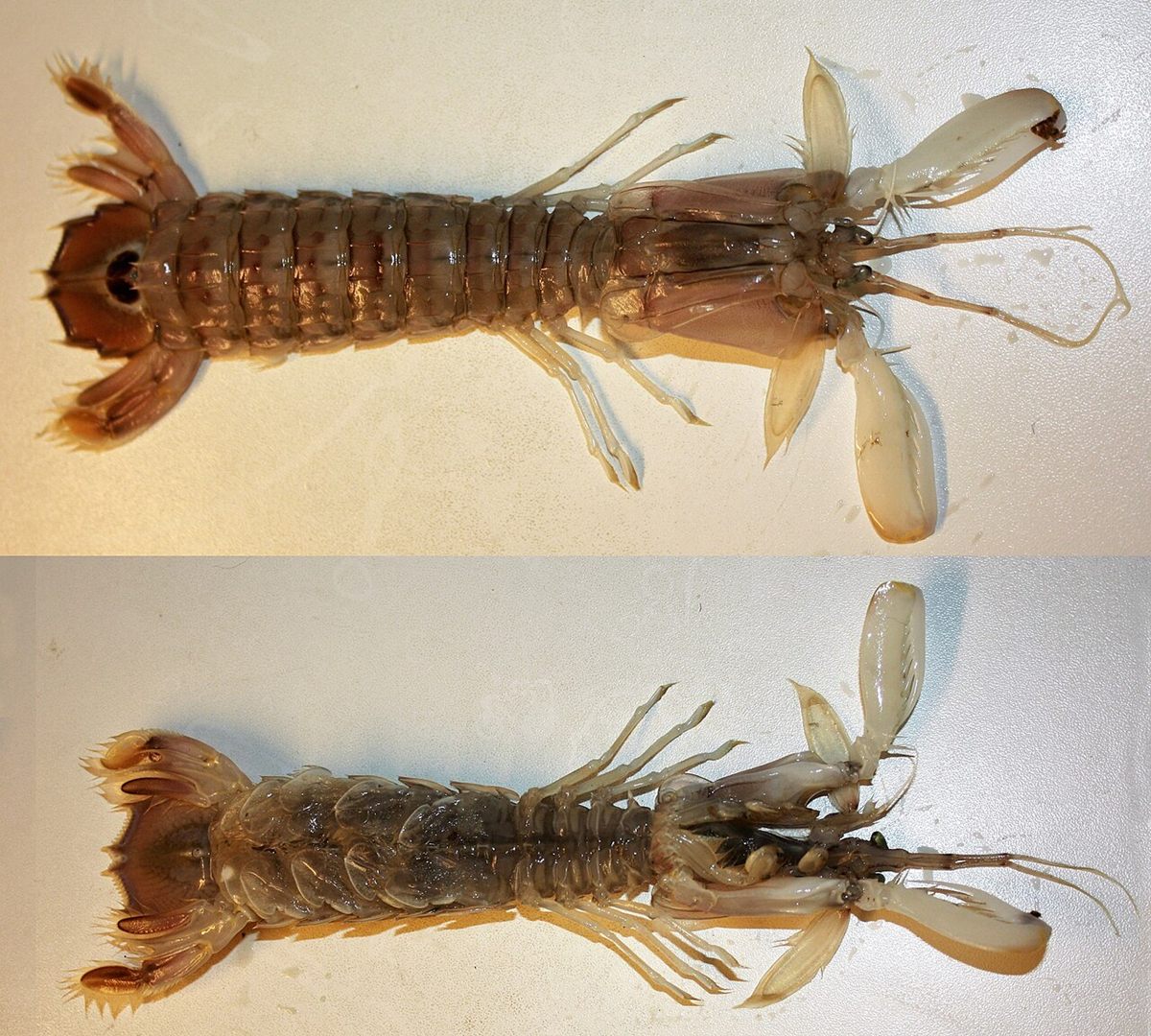
The spottail mantis shrimp (Squilla mantis) is a burrowing predator of the Mediterranean and eastern Atlantic that strikes prey with a pair of folded, spear-armed limbs. Mantis shrimps (stomatopods) have some of the most complex eyes known.
The spottail mantis shrimp (Squilla mantis) is a burrowing predator of the Mediterranean and eastern Atlantic that strikes prey with a pair of folded, spear-armed limbs. Mantis shrimps (stomatopods) have some of the most complex eyes known.
🧬 Field Guide Specimen: Open Spottail Mantis Shrimp in the CRV Science Field Guide to log the specimen, see its place among the Ecdysozoa lineages in the Cladogram Explorer, and test your recall in the Red List conservation game.
Spearers and Smashers
Stomatopods are classified by their raptorial claws. Spearers like Squilla have barbed spines that impale soft-bodied prey such as fish and shrimp, while smashers have club-like heels that shatter shells. Both strike at extreme speed with spring-loaded mechanisms, in a fraction of a second.
Eyes Like No Other
Each compound eye is divided into three regions that give each eye depth perception, and mantis shrimps have 12 to 16 types of photoreceptors, versus three in humans. They can also detect the polarization of light, including circular polarization. How they use all this information is still being worked out.
On the Table
In the Mediterranean the animal is eaten, and it is fished with trawls. It builds U-shaped burrows in mud, from which it hunts.
Spottail Mantis Shrimp at a Glance
| Property | Value |
|---|---|
| Scientific name | Squilla mantis |
| Kingdom | Animalia |
| Phylum | Arthropoda |
| Class | Malacostraca |
| Order | Stomatopoda |
| Family | Squillidae |
| Field Guide group | Ecdysozoa: Mandibulata (Mandibulates) |
| Diagnostic feature (Field Guide) | Enormous raptorial thoracic appendages specialized for spearing prey, trinocular vision with 16 photoreceptor pigments. |
| Order | Stomatopoda |
| Photoreceptor types | 12 to 16 |
See Also
- Giant Tube Worm — another invertebrate extreme
- Natural selection — evolution of vision