Wild Turkey
The wild turkey (Meleagris gallopavo) is a large ground-dwelling bird native to North America and the ancestor of the domestic turkey. After nearly vanishing in the early twentieth century, it was restored to its range by careful wildlife management.
The wild turkey (Meleagris gallopavo) is a large ground-dwelling bird native to North America and the ancestor of the domestic turkey. After nearly vanishing in the early twentieth century, it was restored to its range by careful wildlife management.
🧬 Field Guide Specimen: Open Wild Turkey in the CRV Science Field Guide to log the specimen, see its place among the Reptilia lineages in the Cladogram Explorer, and test your recall in the Red List conservation game.
A Conservation Comeback
Overhunting and forest loss reduced wild turkeys to tens of thousands of birds by the early 1900s. Trapping and relocating wild birds to restored habitat has since raised the population to millions, one of the great successes of wildlife management in the United States.
Domestication
Turkeys were domesticated in Mesoamerica around two thousand years ago and taken to Europe by the Spanish in the sixteenth century. The name has nothing to do with the country Turkey.
Surprising Abilities
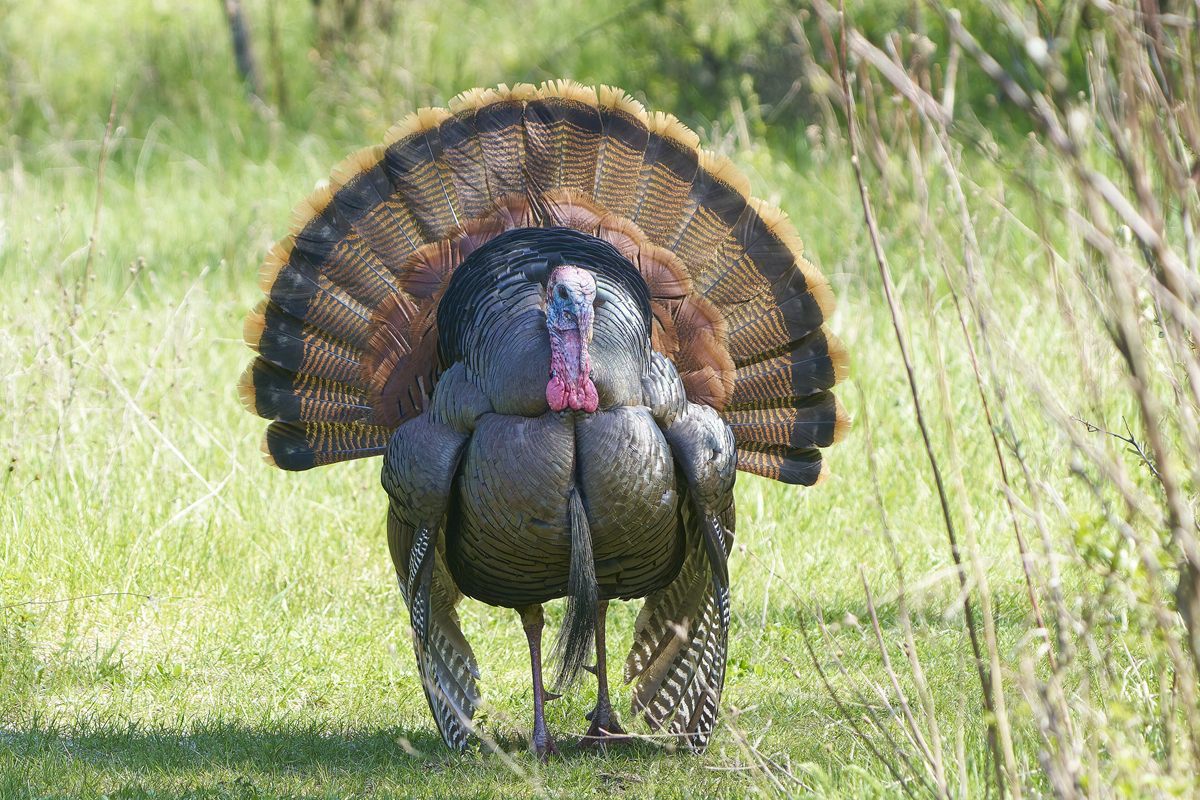
Despite their weight, wild turkeys fly short distances at high speed and roost in trees, and they run fast. Males display with fanned tails, a red wattle and a fleshy snood on the beak.
Wild Turkey at a Glance
| Property | Value |
|---|---|
| Scientific name | Meleagris gallopavo |
| Kingdom | Animalia |
| Phylum | Chordata |
| Class | Aves |
| Order | Galliformes |
| Family | Phasianidae |
| Field Guide group | Reptilia: Aves (Birds) |
| Diagnostic feature (Field Guide) | Erectile fleshy caruncles and snood, broad fan tail, tarsal spur for combat, scratching feet. |
| IUCN Red List status | Least Concern (LC), assessed 2018 |
| Domestication | Mesoamerica, about 2,000 years ago |
See Also
- Biodiversity — wildlife restoration
- Natural selection — domestication