Amazonian Giant Centipede
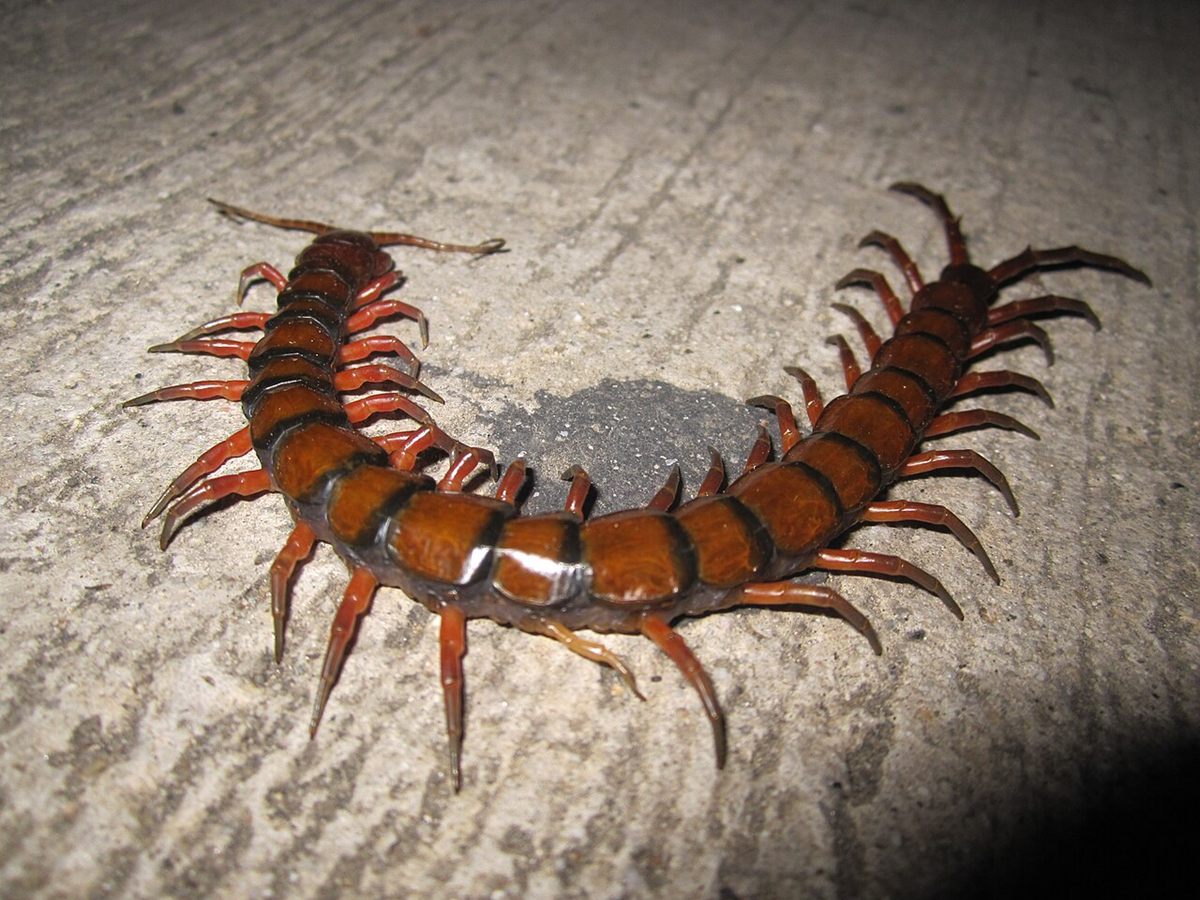
The Amazonian giant centipede (Scolopendra gigantea) is one of the largest centipedes, reaching up to about 30 centimeters. It lives in the rainforests of northern South America and the Caribbean and hunts animals as large as small mammals, lizards and bats.
The Amazonian giant centipede (Scolopendra gigantea) is one of the largest centipedes, reaching up to about 30 centimeters. It lives in the rainforests of northern South America and the Caribbean and hunts animals as large as small mammals, lizards and bats.
🧬 Field Guide Specimen: Open Amazonian Giant Centipede in the CRV Science Field Guide to log the specimen, see its place among the Ecdysozoa lineages in the Cladogram Explorer, and test your recall in the Red List conservation game.
Venom Delivered by Modified Legs
The first pair of legs is modified into fangs (forcipules), each connected to a venom gland. The venom contains compounds that paralyze prey and cause pain in humans. Centipedes are not insects but belong to the myriapods, with a flattened body of many segments.
A Bat Hunter
Observations in a Venezuelan cave showed giant centipedes climbing the walls and ceiling to seize bats in flight, an unusual example of a centipede preying on a flying mammal.
Mother Care
Female centipedes guard their eggs and young, coiling around them for weeks.
Amazonian Giant Centipede at a Glance
| Property | Value |
|---|---|
| Scientific name | Scolopendra gigantea |
| Kingdom | Animalia |
| Phylum | Arthropoda |
| Class | Chilopoda |
| Order | Scolopendromorpha |
| Family | Scolopendridae |
| Field Guide group | Ecdysozoa: Mandibulata (Mandibulates) |
| Diagnostic feature (Field Guide) | World's largest centipede reaching 35 cm, 21-23 trunk segments with single leg pairs, venomous modified forcipule pincers. |
| Class | Chilopoda |
| Maximum length | About 30 centimeters |
See Also
- House Centipede — a small centipede
- Giant African Millipede — a millipede