American Bullfrog
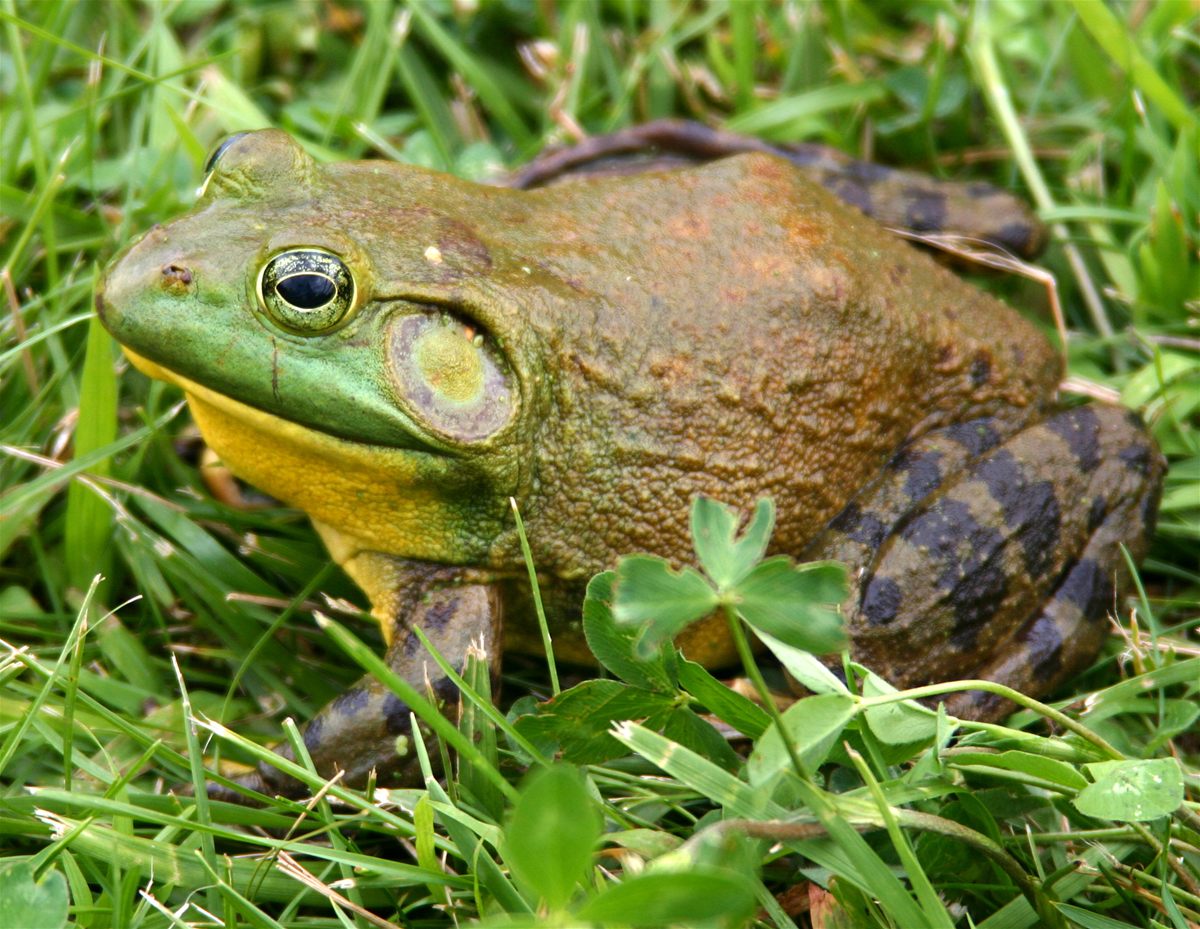
The American bullfrog (Lithobates catesbeianus) is the largest frog in North America, up to about 20 centimeters, and is native to the eastern United States and Canada.
The American bullfrog (Lithobates catesbeianus) is the largest frog in North America, up to about 20 centimeters, and is native to the eastern United States and Canada. It has been introduced to western North America, Europe, Asia and South America, where it is a damaging invasive predator.
🧬 Field Guide Specimen: Open American Bullfrog in the CRV Science Field Guide to log the specimen, see its place among the Tetrapoda lineages in the Cladogram Explorer, and test your recall in the Red List conservation game.
An Appetite for Everything
Bullfrogs eat anything that fits in their mouths, including insects, fish, other frogs, small turtles and birds. Males defend territories and give a deep "jug-o-rum" call. Tadpoles can take up to three years to mature in cold areas.
Why Is It Invasive?
Bullfrogs introduced for frog farming and aquaculture have escaped and compete with and eat native frogs and other amphibians. They are also tolerant carriers of the chytrid fungus Batrachochytrium dendrobatidis, helping spread the disease that has driven amphibian declines.
Metamorphosis
Like other frogs, it passes from an aquatic, gill-breathing tadpole to a lung-breathing adult through a hormone-controlled metamorphosis, a classic system in developmental endocrinology.
American Bullfrog at a Glance
| Property | Value |
|---|---|
| Scientific name | Lithobates catesbeianus |
| Kingdom | Animalia |
| Phylum | Chordata |
| Class | Amphibia |
| Field Guide group | Tetrapoda: Amphibia (Frogs, Salamanders & Caecilians) |
| Diagnostic feature (Field Guide) | Classic organism for studying vertebrate anatomy, acoustic communication, and skin respiration. |
| IUCN Red List status | Least Concern (LC), assessed 2022 |
| Maximum length | About 20 centimeters |
| Native range | Eastern North America |