Cane Toad
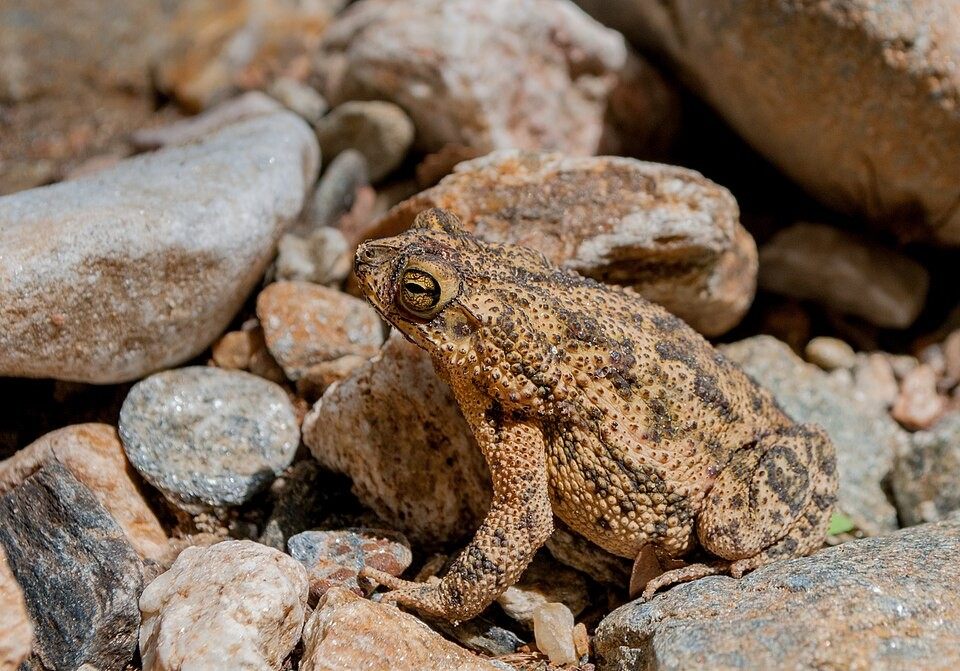
The cane toad (Rhinella marina) is a large toad from Central and South America that was introduced to Queensland, Australia, in 1935 to control beetles in sugar cane. It failed to control them and became one of the world's most notorious invasive species.
The cane toad (Rhinella marina) is a large toad from Central and South America that was introduced to Queensland, Australia, in 1935 to control beetles in sugar cane. It failed to control them and became one of the world's most notorious invasive species.
🧬 Field Guide Specimen: Open Cane Toad in the CRV Science Field Guide to log the specimen, see its place among the Tetrapoda lineages in the Cladogram Explorer, and test your recall in the Red List conservation game.
A Poisonous Invader: What Does the Toxin Do?
Glands behind the head release bufotoxin, which affects the heart. Native predators that eat toads, such as quolls, goannas and snakes, may die. Some animals have learned to avoid toads or to eat only the safe parts.
Evolution in Action: Faster Toads
The toads at the front of the invasion in northern Australia have longer legs and travel farther than those in older populations, with the invasion front advancing by tens of kilometers a year. This is an example of selection acting on dispersal as a species spreads. See Natural selection.
Control
Efforts include trapping, fencing and training native animals to avoid toads by conditioned taste aversion. Toads breed prolifically, laying thousands of eggs at a time.
Cane Toad at a Glance
| Property | Value |
|---|---|
| Scientific name | Rhinella marina |
| Kingdom | Animalia |
| Phylum | Chordata |
| Class | Amphibia |
| Order | Anura |
| Family | Bufonidae |
| Field Guide group | Tetrapoda: Amphibia (Frogs, Salamanders & Caecilians) |
| Diagnostic feature (Field Guide) | Heavy warty body, prominent triangular parotoid venom glands behind eyes secreting toxic bufadienolides. |
| IUCN Red List status | Least Concern (LC), assessed 2009 |
| Introduced | Queensland, 1935 |
| Toxin | Bufotoxin |
See Also
- Tiger Quoll — a native predator at risk
- American Bullfrog — another invasive amphibian
- Natural selection — evolution at the invasion front