Alligator Snapping Turtle
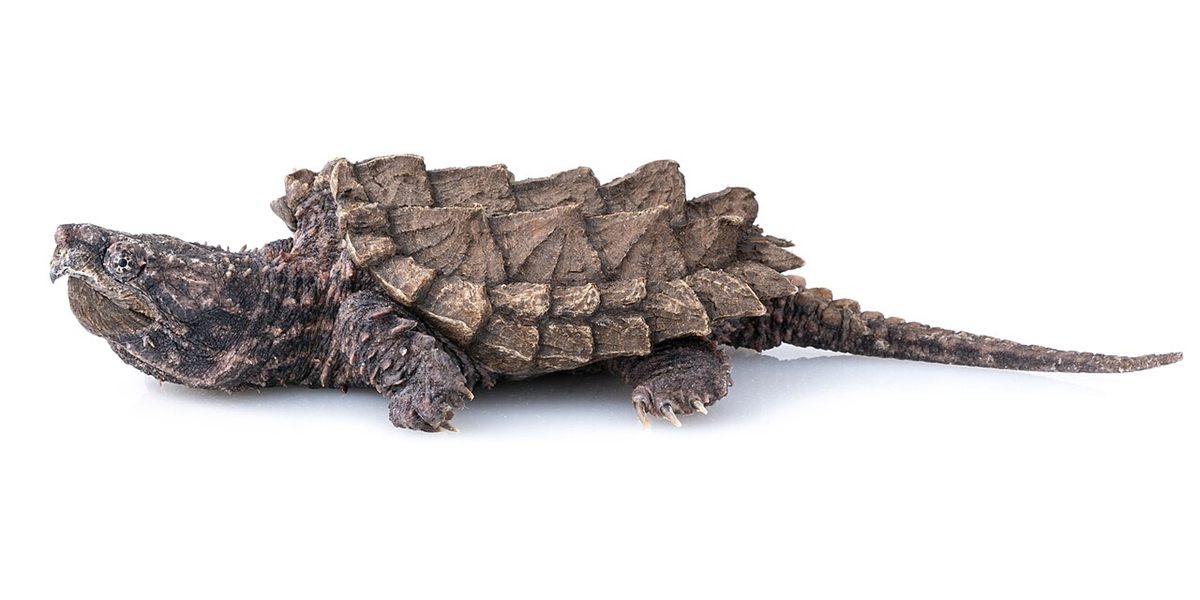
The alligator snapping turtle (Macrochelys temminckii) is the largest freshwater turtle in North America, weighing up to about 100 kilograms. It lives in rivers of the southeastern United States and was reassessed as Endangered by the IUCN in 2025.
The alligator snapping turtle (Macrochelys temminckii) is the largest freshwater turtle in North America, weighing up to about 100 kilograms. It lives in rivers of the southeastern United States and was reassessed as Endangered by the IUCN in 2025.
🧬 Field Guide Specimen: Open Alligator Snapping Turtle in the CRV Science Field Guide to log the specimen, see its place among the Reptilia lineages in the Cladogram Explorer, and test your recall in the Red List conservation game.
A Worm for a Lure
The turtle lies on the bottom with its mouth open, and wriggles a pink, worm-shaped extension of its tongue to attract fish. When a fish approaches, the jaws snap shut.
Prehistoric Looks
It has a ridged shell, a hooked beak and a powerful bite. It can live for many decades, and females do not breed until they are about a dozen years old or more.
Overharvested
Harvest for meat and soup depleted wild populations. See Common Snapping Turtle.
Alligator Snapping Turtle at a Glance
| Property | Value |
|---|---|
| Scientific name | Macrochelys temminckii |
| Kingdom | Animalia |
| Phylum | Chordata |
| Class | Reptilia |
| Order | Testudines |
| Family | Chelydridae |
| Field Guide group | Reptilia (Reptiles) |
| Diagnostic feature (Field Guide) | Massive freshwater ambush predator with three jagged dorsal rows of spiked scutes, a powerfully hooked beak, and a pink, worm-shaped appendage on its tongue wiggled to lure fish. |
| IUCN Red List status | Endangered (EN), assessed 2025 |
| Lure | Worm-like tongue tip |
See Also
- Common Snapping Turtle — a smaller snapper
- Pond Slider — a common pond turtle