Common Snapping Turtle
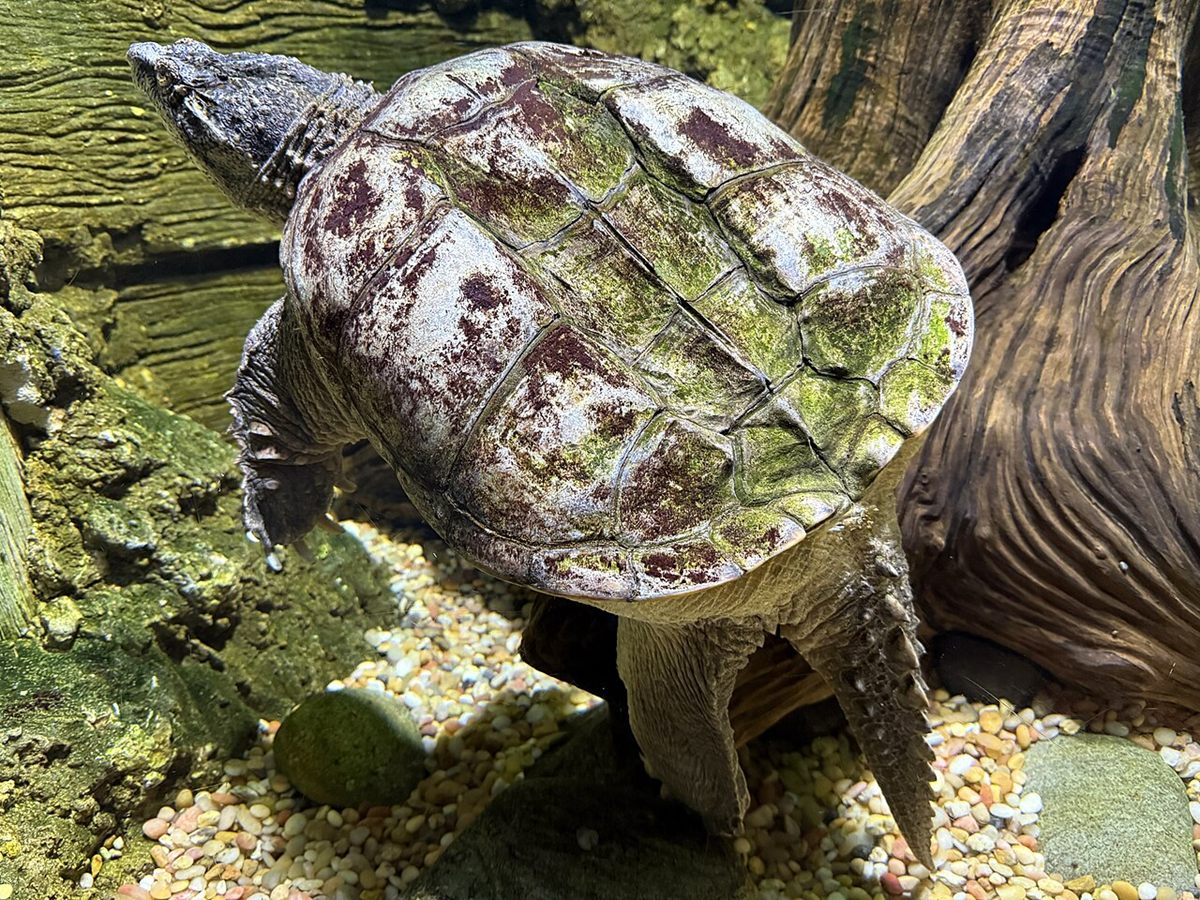
The common snapping turtle (Chelydra serpentina) is a large freshwater turtle of North America with a powerful, hooked beak. It lies in wait on muddy bottoms and snaps at passing prey.
The common snapping turtle (Chelydra serpentina) is a large freshwater turtle of North America with a powerful, hooked beak. It lies in wait on muddy bottoms and snaps at passing prey.
🧬 Field Guide Specimen: Open Common Snapping Turtle in the CRV Science Field Guide to log the specimen, see its place among the Reptilia lineages in the Cladogram Explorer, and test your recall in the Red List conservation game.
An Ambush Predator
The turtle sits camouflaged in mud with its mouth open and may wiggle a worm-like tongue tip as a lure. It lunges to catch fish, frogs, ducklings and invertebrates, and scavenges carrion. It can strike quickly with its long neck.
A Shell Too Small
Unlike many turtles, the snapper cannot pull its head and limbs fully into its small shell, so it relies on its sharp beak and bad temper for defense. On land it is more vulnerable and can be aggressive when approached.
Slow Life, Long Life
Snapping turtles mature at around fifteen years and can live for decades. Nests are laid on land and often raided by raccoons. See Pond Slider.
Common Snapping Turtle at a Glance
| Property | Value |
|---|---|
| Scientific name | Chelydra serpentina |
| Kingdom | Animalia |
| Phylum | Chordata |
| Class | Reptilia |
| Order | Testudines |
| Family | Chelydridae |
| Field Guide group | Reptilia (Reptiles) |
| Diagnostic feature (Field Guide) | Freshwater ambush predator with a hooked beak, rough ridged carapace, small cross-shaped plastron, and long saw-toothed tail. |
| IUCN Red List status | Least Concern (LC), assessed 2025 |
| Order | Testudines |
| Hunting method | Ambush |