Green Sea Turtle
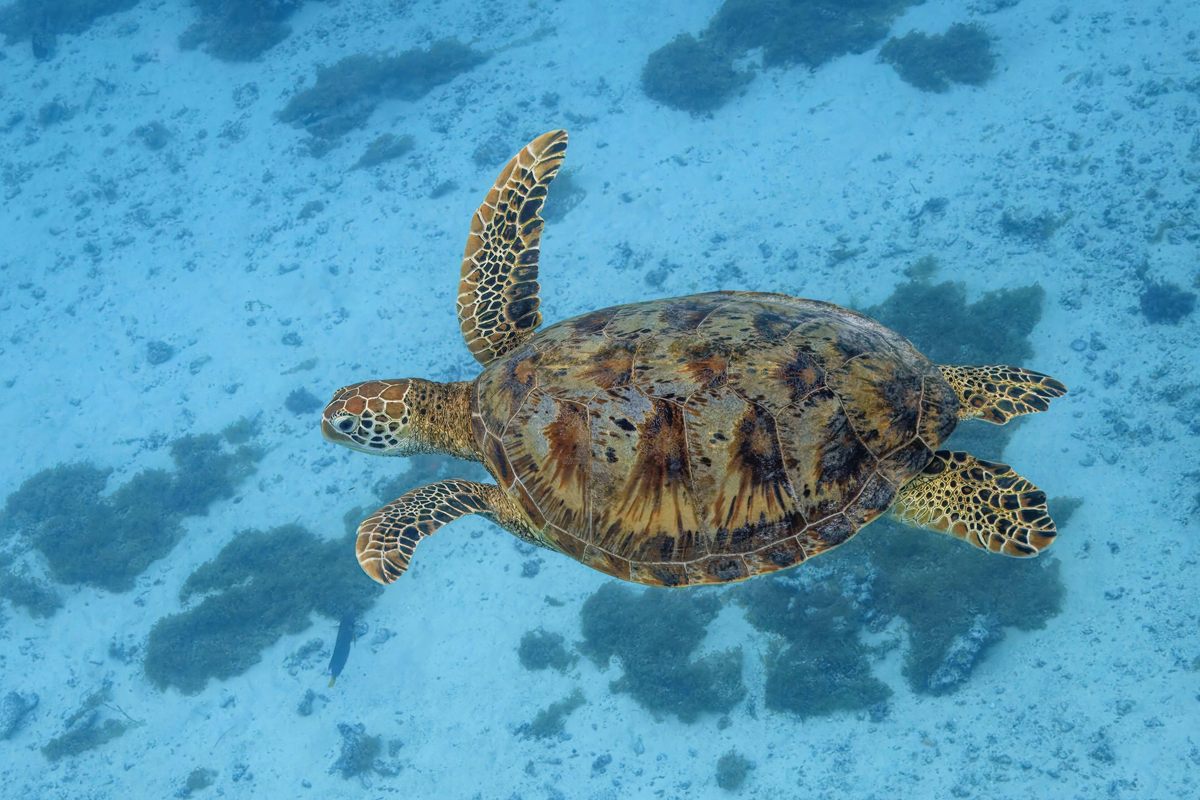
The green sea turtle (Chelonia mydas) is a large sea turtle of tropical and subtropical oceans, named for the green color of its fat.
The green sea turtle (Chelonia mydas) is a large sea turtle of tropical and subtropical oceans, named for the green color of its fat. Adults graze on seagrass and algae. In October 2025 the IUCN reassessed it as Least Concern globally after decades of nest protection let many populations recover, though some regional populations remain at risk.
🧬 Field Guide Specimen: Open Green Sea Turtle in the CRV Science Field Guide to log the specimen, see its place among the Reptilia lineages in the Cladogram Explorer, and test your recall in the Red List conservation game.
Long-Distance Navigation: How Do Turtles Find Their Beach?
Females return to nest on or near the beach where they hatched, often after migrations of thousands of kilometers. Studies suggest turtles detect the intensity and inclination of Earth's magnetic field as a kind of map signature of their natal coast.
Temperature Decides Sex
Like many reptiles, the sex of hatchlings depends on nest temperature, with warmer nests producing females. Climate warming has produced nesting populations that are overwhelmingly female in some places, such as parts of the Great Barrier Reef. See Climate change.
Grazers and Gardeners
Green turtles cut seagrass and so influence the health and productivity of the meadows. Threats include fisheries bycatch, loss of nesting beaches, plastic pollution and the viral disease fibropapillomatosis.
Green Sea Turtle at a Glance
| Property | Value |
|---|---|
| Scientific name | Chelonia mydas |
| Kingdom | Animalia |
| Phylum | Chordata |
| Class | Reptilia |
| Order | Testudines |
| Family | Cheloniidae |
| Field Guide group | Reptilia (Reptiles) |
| Diagnostic feature (Field Guide) | Showcases modified skeletal anapsid anatomy (carapace/plastron) and geomagnetic navigation. |
| IUCN Red List status | Least Concern (LC), assessed 2025 |
| Sex determination | Temperature-dependent |
| Diet (adult) | Seagrass and algae |
See Also
- Climate change — warming sand and skewed sex ratios
- Sea-level rise — loss of nesting beaches