Leatherback Sea Turtle
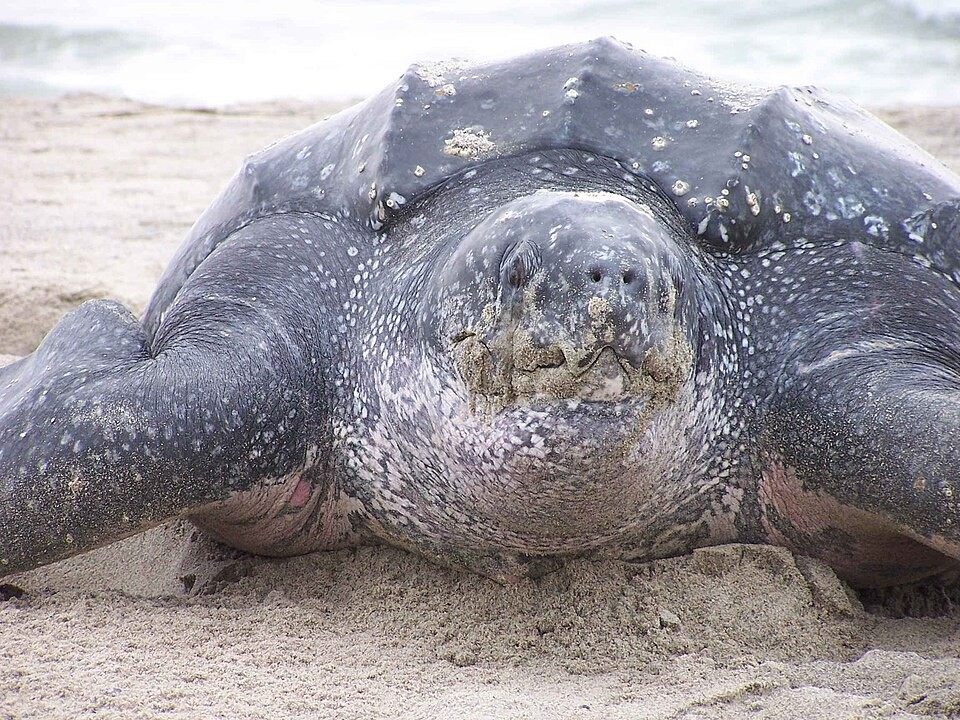
The leatherback sea turtle (Dermochelys coriacea) is the largest living turtle, up to about 2 meters long and 600 kilograms, and the only one without a hard shell.
The leatherback sea turtle (Dermochelys coriacea) is the largest living turtle, up to about 2 meters long and 600 kilograms, and the only one without a hard shell. It makes some of the longest migrations of any marine animal and is listed as Vulnerable, with some Pacific populations critically endangered.
🧬 Field Guide Specimen: Open Leatherback Sea Turtle in the CRV Science Field Guide to log the specimen, see its place among the Reptilia lineages in the Cladogram Explorer, and test your recall in the Red List conservation game.
A Shell of Leather and Oil
Instead of bony scutes, the carapace is made of thick, oily connective tissue with seven ridges. The turtle's large size and fat allow it to stay warm in cold seas, a strategy called gigantothermy.
Jellyfish Specialist and Deep Diver
Leatherbacks eat jellyfish using backward-pointing spines in the throat to hold slippery prey. They dive to more than a thousand meters. Floating plastic bags that look like jellyfish are a serious hazard.
Long Migrations
Tagged females have traveled across the Pacific from Indonesia to the US West Coast, a trip of some 20,000 kilometers. Egg harvest, bycatch in fishing gear and loss of nesting beaches have reduced populations.
Leatherback Sea Turtle at a Glance
| Property | Value |
|---|---|
| Scientific name | Dermochelys coriacea |
| Kingdom | Animalia |
| Phylum | Chordata |
| Class | Reptilia |
| Order | Testudines |
| Family | Dermochelyidae |
| Field Guide group | Reptilia (Reptiles) |
| Diagnostic feature (Field Guide) | Leathery connective tissue carapace lacking bony scutes, 7 longitudinal dorsal ridges, gigantothermic countercurrent heat exchangers. |
| IUCN Red List status | Vulnerable (VU), assessed 2013 |
| Diet | Jellyfish |
See Also
- Green Sea Turtle — a hard-shelled sea turtle
- Moon Jellyfish — typical leatherback prey