Aragonite
Aragonite is a polymorph of calcium carbonate, CaCO₃, with orthorhombic crystals, a hardness of 3.5 to 4 and a density higher than calcite. It forms in shells, corals and hot springs, and is the mineral of mother-of-pearl.
Aragonite is a polymorph of calcium carbonate, CaCO₃, with orthorhombic crystals, a hardness of 3.5 to 4 and a density higher than calcite. It forms in shells, corals and hot springs, and is the mineral of mother-of-pearl.
🪨 Geology Guide Specimen: Open Aragonite in the CRV Science Rock & Mineral ID Guide to log the specimen, compare it with the other 8 mineral classes of Dana / Strunz Classes, and test your eye in LithoClade.
Polymorph of Calcite: What Is the Difference?
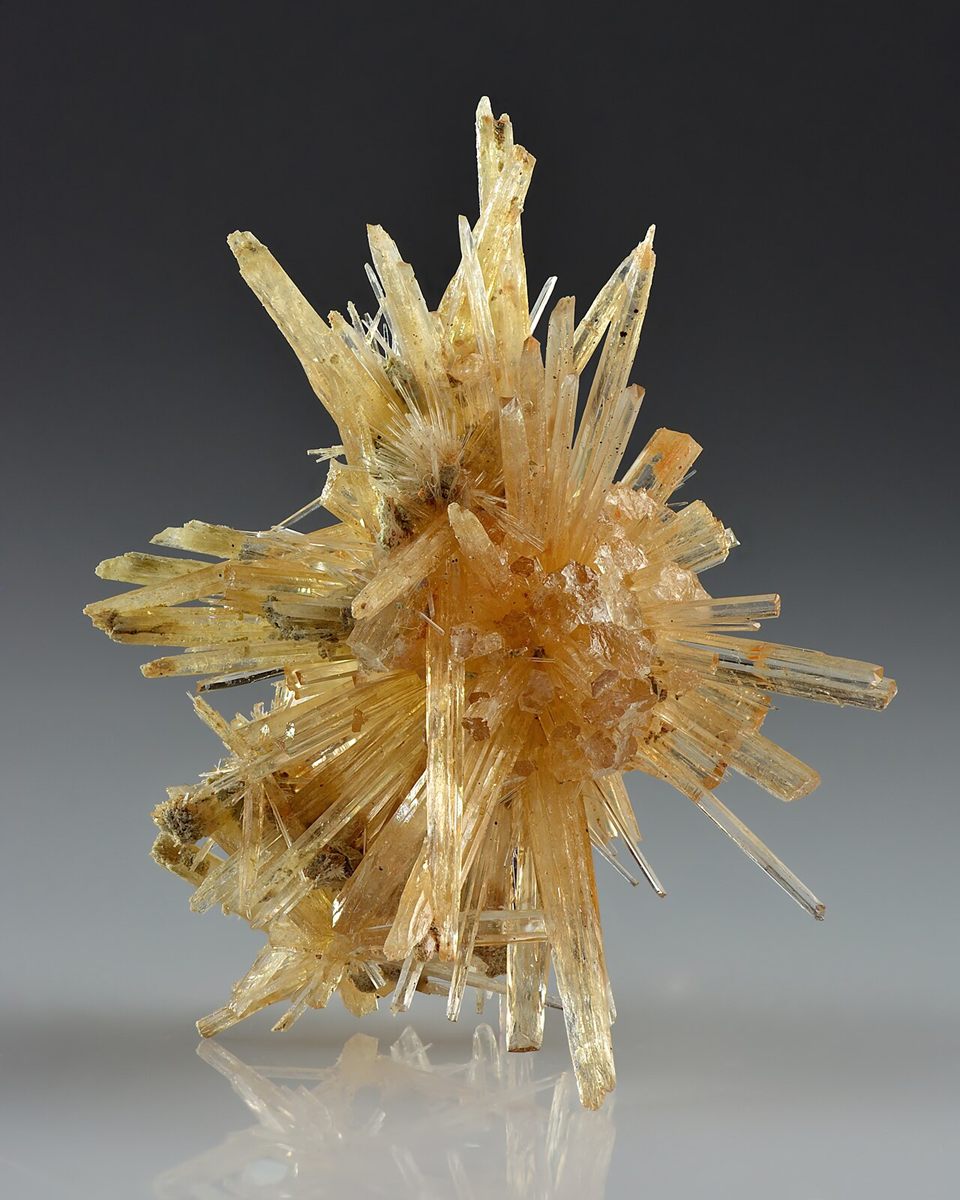
Aragonite and calcite have the same formula but different atomic arrangements. Aragonite is denser and has no rhombohedral cleavage; it often forms needle clusters or "Sputnik" sprays and pseudo-hexagonal twins. At the surface it is metastable and gradually converts to calcite over geological time.
Biological Aragonite: Which Animals Build It?
Many mollusks make shells partly of aragonite, including the pearly nacre of oysters and nautilus, and stony corals build aragonite skeletons. Because aragonite dissolves more easily than calcite, such organisms are sensitive to ocean acidification, for example the staghorn coral.
Other Settings: Where Else Does It Form?
Aragonite precipitates from hot springs together with travertine and grows in caves. It is also the stable form at high pressure, so it occurs in blueschist-facies rocks. The name comes from Molina de Aragón in Spain.
Aragonite at a Glance
| Property | Value |
|---|---|
| Type / variety | CaCO₃ • Orthorhombic Carbonate Polymorph |
| Composition | CaCO₃ (Orthorhombic polymorph of Calcite; often contains trace Sr²⁺) |
| Geology Guide group | Minerals (8 Major Chemical Groups) |
| Mineral Group | Carbonates |
| Mohs hardness | Mohs 3.5–4 |
| Texture / habit | Radiating 'Sputnik' needle clusters, acicular sprays, or cyclic pseudo-hexagonal twins |
| Density | 2.93–2.95 g/cm³ (denser than calcite) |
| Lustre and cleavage | Vitreous white, reddish, or colourless needles; fizzes in dilute HCl |
| Geological setting | Mollusk mother-of-pearl (nacre), coral skeletons, cave 'anthodites', and blueschists |
| Diagnostic feature (Geology Guide) | Radiating 'Sputnik' star-clusters of prism needles or pseudo-hexagonal twins (Mohs 3.5–4, density 2.94 g/cm³) that share the exact chemical formula of calcite (CaCO₃) and fizz in acid, but lack rhombohedral cleavage. |
| Formula | CaCO₃ |
| Name origin | Molina de Aragón, Spain |
See Also
- Calcite — the more stable polymorph
- Ocean Acidification — the threat to aragonite shell builders
- Staghorn Coral — a coral that builds an aragonite skeleton