Book Scorpion
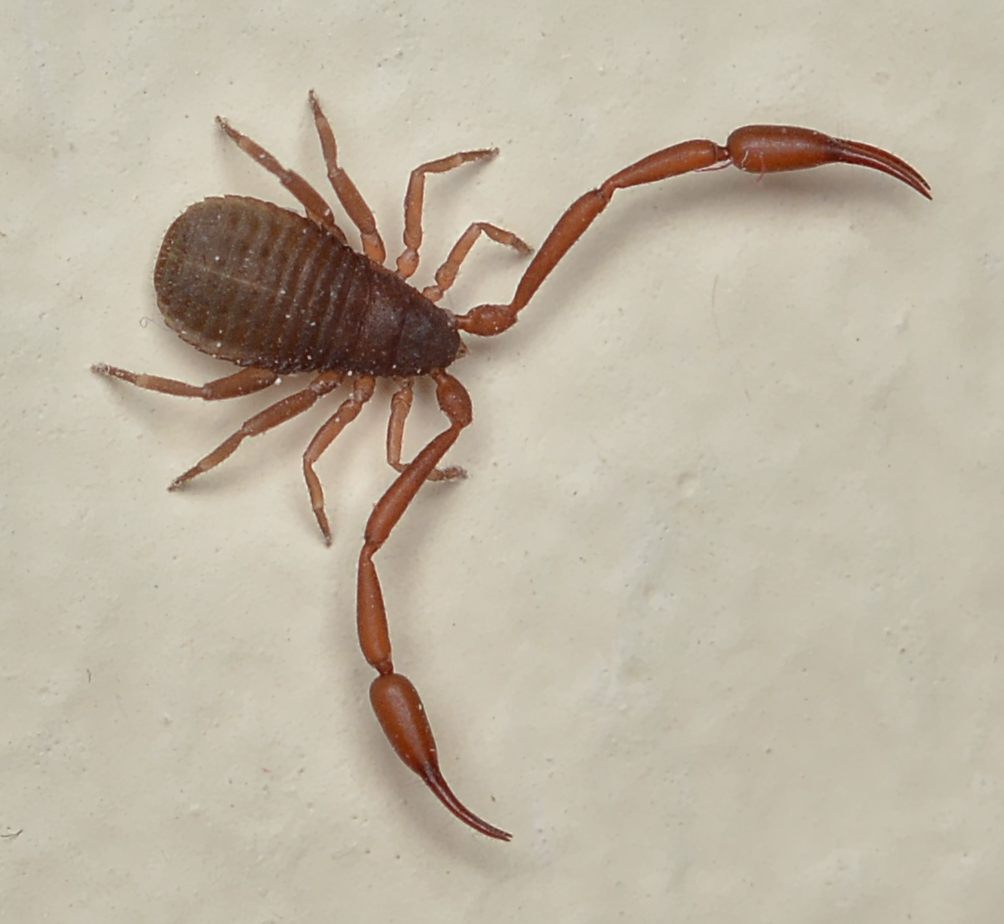
The book scorpion (Chelifer cancroides) is a tiny pseudoscorpion, only a few millimeters long, found in houses and libraries across the world. It has scorpion-like pincers but no stinging tail, and is harmless to people.
The book scorpion (Chelifer cancroides) is a tiny pseudoscorpion, only a few millimeters long, found in houses and libraries across the world. It has scorpion-like pincers but no stinging tail, and is harmless to people.
🧬 Field Guide Specimen: Open Book Scorpion in the CRV Science Field Guide to log the specimen, see its place among the Ecdysozoa lineages in the Cladogram Explorer, and test your recall in the Red List conservation game.
Not a Scorpion: What Is a Pseudoscorpion?
Pseudoscorpions (order Pseudoscorpiones) look like scorpions without the tail. They hunt booklice, mites and other tiny arthropods with pincers (pedipalps) that carry venom glands. The venom is used only on prey.
Hitchhikers
To move to new habitats, a pseudoscorpion may grab the leg of a fly or beetle and ride along, a behavior known as phoresy.
Silk and Courtship
Pseudoscorpions make silk from glands in the jaws, which they use to build shelters for molting and overwintering. Males perform a courtship dance and deposit a packet of sperm for the female to pick up.
Book Scorpion at a Glance
| Property | Value |
|---|---|
| Scientific name | Chelifer cancroides |
| Kingdom | Animalia |
| Phylum | Arthropoda |
| Subphylum | Chelicerata |
| Class | Arachnida |
| Order | Pseudoscorpiones |
| Field Guide group | Ecdysozoa: Arachnida (Spiders, Scorpions & Allies) |
| Diagnostic feature (Field Guide) | Miniature teardrop-shaped flat body with prominent venomous chelae pincers, completely lacking a tail or stinger. |
| Order | Pseudoscorpiones |
| Size | A few millimeters |
See Also
- Emperor Scorpion — a true scorpion
- Biodiversity — tiny predators in the home