Emperor Scorpion
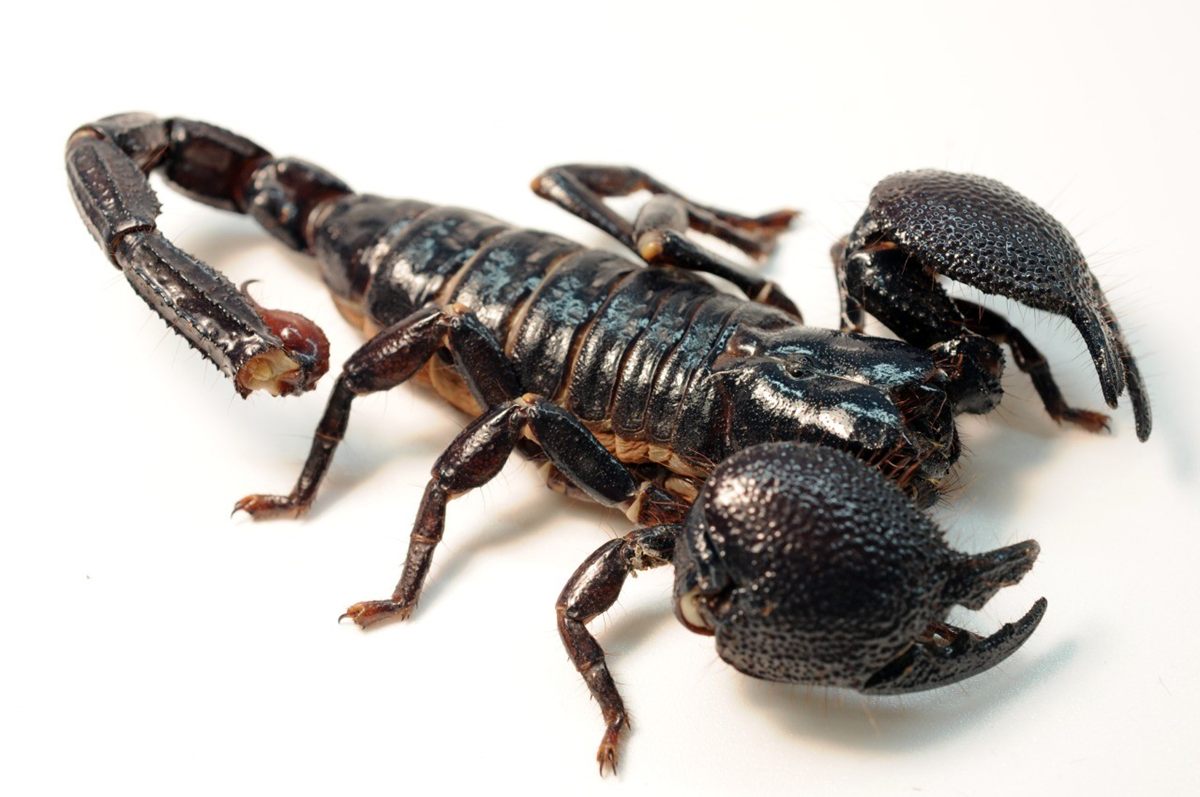
The emperor scorpion (Pandinus imperator) is one of the largest scorpions in the world, reaching about 20 centimeters, and lives in the rainforests and savannas of West Africa. Its sting is relatively mild, but its big pincers make it look fearsome.
The emperor scorpion (Pandinus imperator) is one of the largest scorpions in the world, reaching about 20 centimeters, and lives in the rainforests and savannas of West Africa. Its sting is relatively mild, but its big pincers make it look fearsome.
🧬 Field Guide Specimen: Open Yellow Emperor Scorpion in the CRV Science Field Guide to log the specimen, see its place among the Ecdysozoa lineages in the Cladogram Explorer, and test your recall in the Red List conservation game.
Glowing Under UV: Why Do Scorpions Fluoresce?
Compounds in the outer layer of the cuticle absorb ultraviolet light and re-emit it as blue-green light. Why scorpions glow is still unclear; it may help them sense light or be incidental. The glow is a handy way for researchers to find them at night.
Maternal Care
Females give birth to live young, which climb onto the mother's back and ride there until their first molt. She defends them from threats.
Trade and Protection
Because it is popular as a pet, the species is listed in CITES Appendix II, which regulates international trade. Scorpions are chelicerates, ancient arachnids dating back to the Silurian.
Emperor Scorpion at a Glance
| Property | Value |
|---|---|
| Scientific name | Pandinus imperator |
| Kingdom | Animalia |
| Phylum | Arthropoda |
| Subphylum | Chelicerata |
| Class | Arachnida |
| Order | Scorpiones |
| Field Guide group | Ecdysozoa: Arachnida (Spiders, Scorpions & Allies) |
| Diagnostic feature (Field Guide) | Enormous chelae pincers on pedipalps, segmented metasoma tail curved with venom stinger, ventral sensory pectines, fluoresces under UV light. |
| IUCN Red List status | Not Evaluated (NE): no global IUCN assessment |
| Trade status | CITES Appendix II |
| Maximum length | About 20 centimeters |
See Also
- Arizona Bark Scorpion — a dangerously venomous scorpion
- Evolution — ancient arachnid lineages