Giant Camel Spider
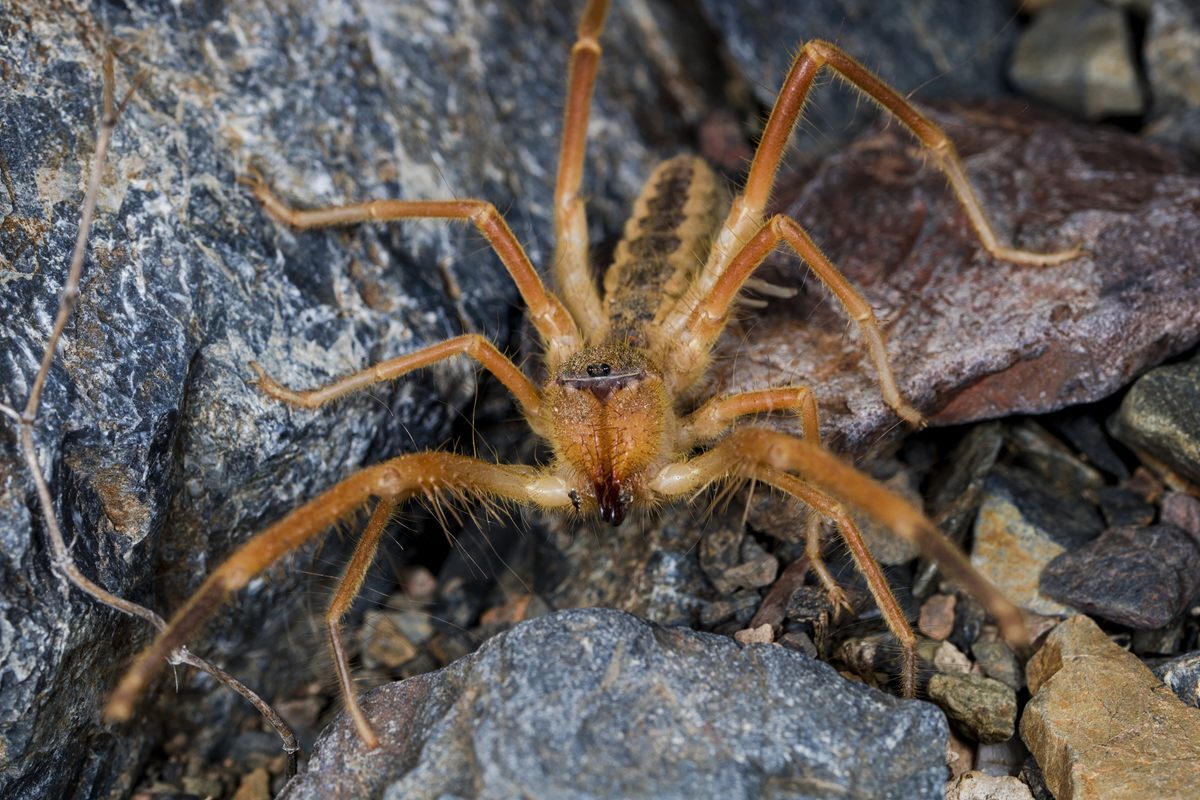
The giant camel spider (Galeodes arabs) is a large solifuge of deserts in the Middle East and North Africa. It is neither a spider nor a scorpion, and stories about its size and speed are exaggerated.
The giant camel spider (Galeodes arabs) is a large solifuge of deserts in the Middle East and North Africa. It is neither a spider nor a scorpion, and stories about its size and speed are exaggerated.
🧬 Field Guide Specimen: Open Giant Camel Spider in the CRV Science Field Guide to log the specimen, see its place among the Ecdysozoa lineages in the Cladogram Explorer, and test your recall in the Red List conservation game.
Solifugae: A Separate Order
Solifuges have huge, vertical jaws (chelicerae) that work like shears, a pair of leg-like pedipalps and no venom glands. Their body has distinct segments, and they run fast on eight legs.
Myths and Facts
During the 2003 Iraq war, rumors spread online that camel spiders were as big as dinner plates, ran 40 miles per hour and chewed through sleeping soldiers' flesh. In reality they reach perhaps 15 centimeters including legs, run at a few kilometers per hour and have a bite that is painful but not venomous.
Desert Hunters
Camel spiders hunt at night, running down insects, other arachnids and small lizards. They are attracted to shade, which is the origin of the stories about "following" people.
Giant Camel Spider at a Glance
| Property | Value |
|---|---|
| Scientific name | Galeodes arabs |
| Kingdom | Animalia |
| Phylum | Arthropoda |
| Subphylum | Chelicerata |
| Class | Arachnida |
| Order | Solifugae |
| Field Guide group | Ecdysozoa: Arachnida (Spiders, Scorpions & Allies) |
| Diagnostic feature (Field Guide) | Enormous two-segmented forward-pointing chelicerae jaws, long tactile pedipalps, rapid cursorial desert runner. |
| Order | Solifugae |
| Venom | None |
See Also
- Emperor Scorpion — a desert arachnid with a sting
- Tanzanian Giant Whip Spider — another non-spider arachnid