Bootlace Worm
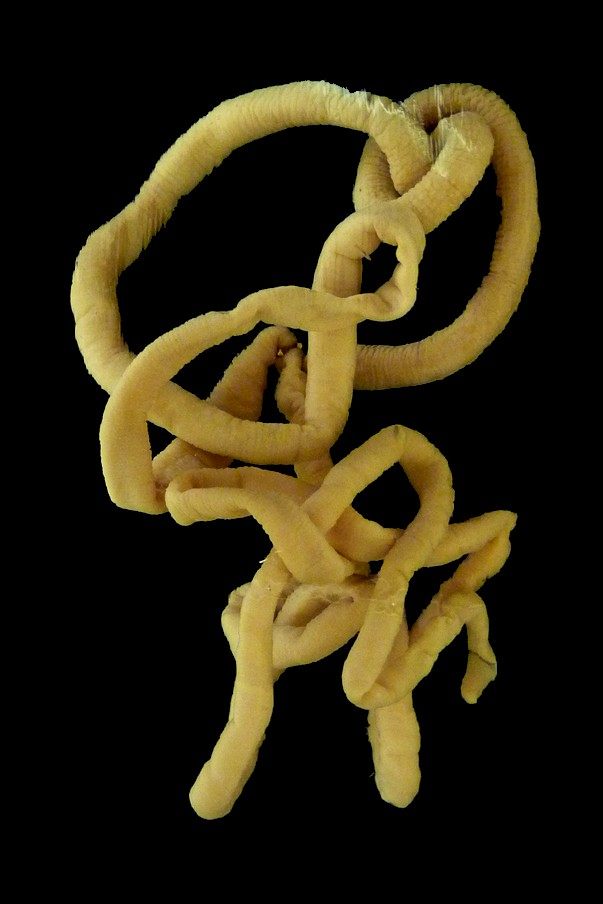
The bootlace worm (Lineus longissimus) is a ribbon worm of North Atlantic shores that is among the longest animals known.
The bootlace worm (Lineus longissimus) is a ribbon worm of North Atlantic shores that is among the longest animals known. Specimens exceeding 30 meters have been reported, including a famous 1864 individual said to be about 55 meters long washed ashore in Scotland.
🧬 Field Guide Specimen: Open Bootlace Worm in the CRV Science Field Guide to log the specimen, see its place among the Lophotrochozoa lineages in the Cladogram Explorer, and test your recall in the Red List conservation game.
A Hunting Ribbon: How Does the Proboscis Work?
Ribbon worms (phylum Nemertea) have a muscular proboscis that can be shot out to ensnare prey and is retracted into a sheath. They have a closed blood-vessel system, unlike flatworms, and a one-way gut with mouth and anus.
Slimy and Fragile
The bootlace worm is dark brown or black and coils among rocks and seaweed at low tide. It secretes a toxic mucus and can break into pieces that regenerate if handled roughly.
Where It Fits
Nemerteans are lophotrochozoans, related to molluscs and annelids. Their long, simple body plan is a good example of how animal size can be reached by lengthening rather than thickening.
Bootlace Worm at a Glance
| Property | Value |
|---|---|
| Scientific name | Lineus longissimus |
| Kingdom | Animalia |
| Phylum | Nemertea |
| Class | Heteronemertea |
| Family | Lineidae |
| Field Guide group | Lophotrochozoa: Worms, Shells & Allies |
| Diagnostic feature (Field Guide) | Extensible body reaching up to 30 meters, eversible muscular rhynchocoel proboscis containing neurotoxins. |
| Phylum | Nemertea |
| Reported length | Over 30 meters |
See Also
- Evolutionary developmental biology — body plan evolution
- Stem cell biology and regenerative medicine — regeneration