Bracken
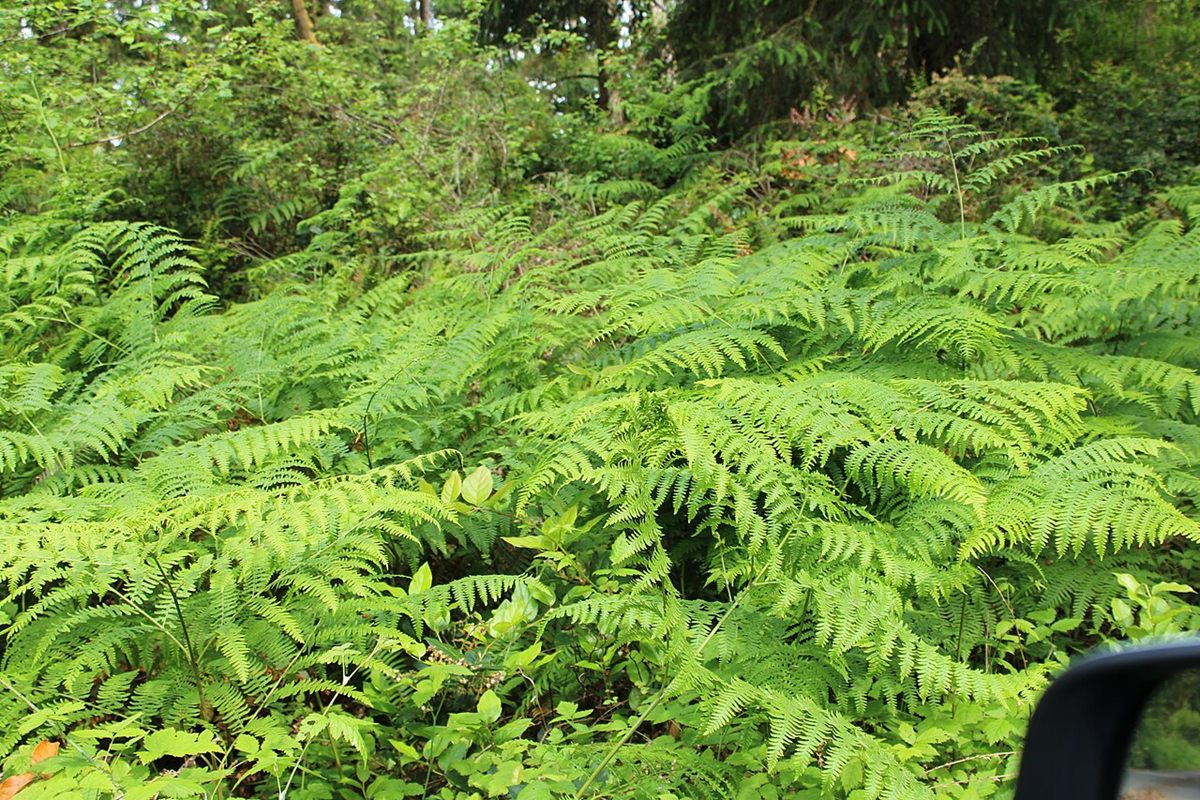
Bracken (Pteridium aquilinum) is one of the most widespread plants on Earth, a coarse fern that forms dense stands on every continent except Antarctica. It is toxic and a troublesome weed in many pastures and moorlands.
Bracken (Pteridium aquilinum) is one of the most widespread plants on Earth, a coarse fern that forms dense stands on every continent except Antarctica. It is toxic and a troublesome weed in many pastures and moorlands.
🧬 Field Guide Specimen: Open Bracken in the CRV Science Field Guide to log the specimen, see its place among the Diaphoretickes lineages in the Cladogram Explorer, and test your recall in the Red List conservation game.
A Carcinogen in the Fern
Bracken contains ptaquiloside, a compound that damages DNA and is linked to cancer in livestock that graze on it. In regions where people eat the young fronds, there is an association with stomach and esophageal cancer. See Cancer.
A Successful Colonizer
Underground rhizomes can spread across a hillside, and a single clone may cover hectares. Bracken thrives after fire and grazing, and its dense fronds smother other plants. Spore dispersal also carries it to new places.
Management
Cutting, crushing and herbicides are used to control bracken in grazing land. Because spores and fronds are carcinogenic, handling large quantities calls for care.
Bracken at a Glance
| Property | Value |
|---|---|
| Scientific name | Pteridium aquilinum |
| Kingdom | Plantae |
| Phylum | Tracheophyta |
| Class | Polypodiopsida |
| Order | Polypodiales |
| Family | Dennstaedtiaceae |
| Field Guide group | Diaphoretickes: Plants & Algae |
| Diagnostic feature (Field Guide) | Tall triangular fronds from deep underground rhizomes; spreads across hillsides worldwide and is toxic to livestock. |
| IUCN Red List status | Least Concern (LC), assessed 2017 |
| Group | Ferns |
| Toxin | Ptaquiloside |