Brown Centipede
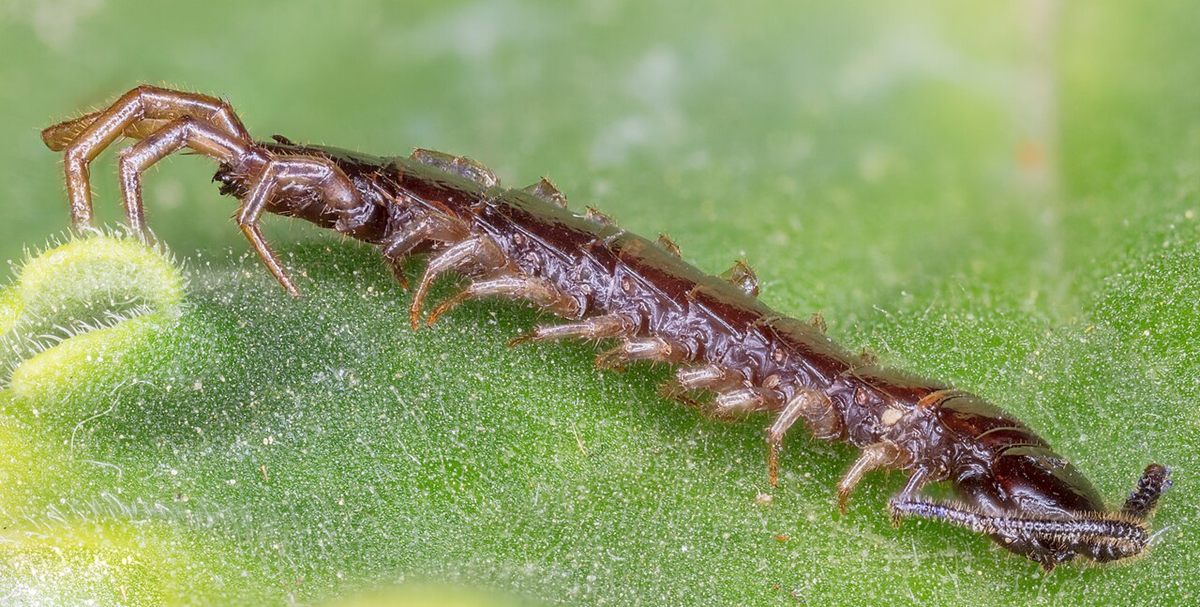
The brown centipede (Lithobius forficatus) is a flat, chestnut-brown centipede that lives under stones, logs and leaf litter in European gardens and woods. It hunts at night for small invertebrates.
The brown centipede (Lithobius forficatus) is a flat, chestnut-brown centipede that lives under stones, logs and leaf litter in European gardens and woods. It hunts at night for small invertebrates.
🧬 Field Guide Specimen: Open Brown Centipede in the CRV Science Field Guide to log the specimen, see its place among the Ecdysozoa lineages in the Cladogram Explorer, and test your recall in the Red List conservation game.
Growing More Legs
The young hatch with only seven pairs of legs and gain more at each molt until they have fifteen pairs as adults, a pattern called anamorphosis.
A Fast Hunter
The centipede detects prey with long antennae, seizes it with its forcipules and injects venom. It eats spiders, woodlice and insect larvae. Bites to people are usually harmless.
Garden Allies
By preying on slugs and other invertebrates, the centipede helps keep soil animal communities in balance. See House Centipede.
Brown Centipede at a Glance
| Property | Value |
|---|---|
| Scientific name | Lithobius forficatus |
| Kingdom | Animalia |
| Phylum | Arthropoda |
| Class | Chilopoda |
| Order | Lithobiomorpha |
| Family | Lithobiidae |
| Field Guide group | Ecdysozoa: Mandibulata (Mandibulates) |
| Diagnostic feature (Field Guide) | Chestnut-brown, flattened, fast-running predator under stones with 15 pairs of legs, one pair per segment, and venomous claws beneath its head. |
| Class | Chilopoda |
| Leg pairs (adult) | 15 |
See Also
- House Centipede — another centipede
- Common Rough Woodlouse — typical prey