Brown Recluse
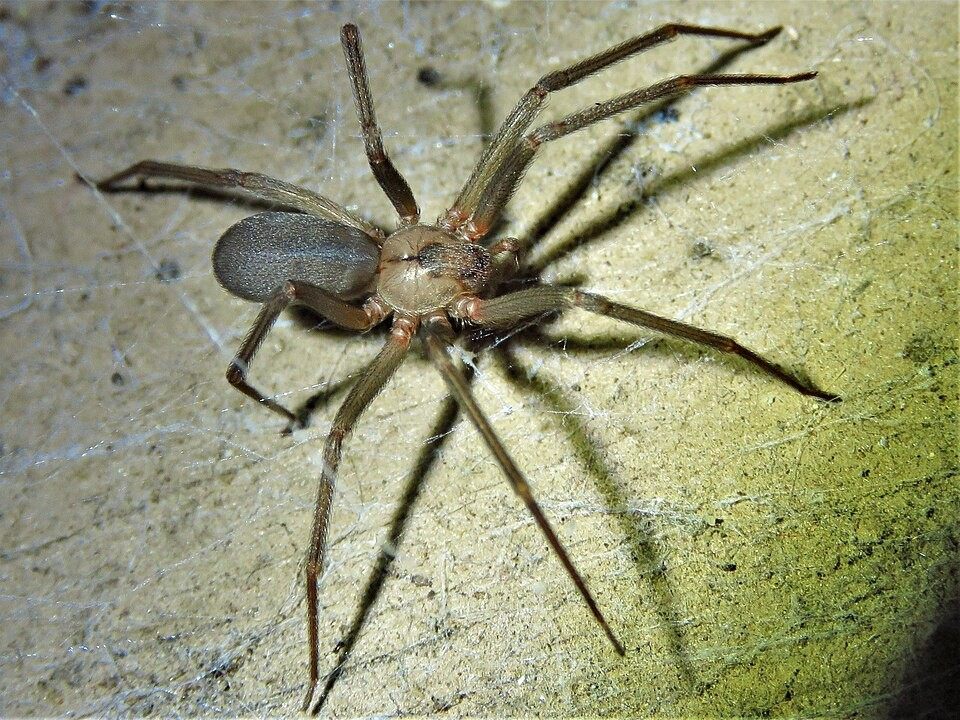
The brown recluse (Loxosceles reclusa) is a small, brown spider of the south-central United States, recognizable by a dark violin-shaped mark on its back and six eyes arranged in pairs. Its venom can cause tissue damage, but serious bites are uncommon.
The brown recluse (Loxosceles reclusa) is a small, brown spider of the south-central United States, recognizable by a dark violin-shaped mark on its back and six eyes arranged in pairs. Its venom can cause tissue damage, but serious bites are uncommon.
🧬 Field Guide Specimen: Open Brown Recluse in the CRV Science Field Guide to log the specimen, see its place among the Ecdysozoa lineages in the Cladogram Explorer, and test your recall in the Red List conservation game.
A Necrotic Venom
The venom contains sphingomyelinase D, an enzyme that damages cell membranes and blood vessels. Some bites cause a slow-healing wound, but many people bitten have only mild reactions. Treatment is mainly supportive.
Often Blamed, Rarely Present
Many skin lesions are blamed on the brown recluse in places where the spider does not live at all, and the true cause is often infection or another condition. The spider is shy and hides in dark undisturbed places like boxes and closets.
Fiddle Spiders
Loxosceles spiders live around the world, and a few species are found in homes. See Black Widow Spider.
Brown Recluse at a Glance
| Property | Value |
|---|---|
| Scientific name | Loxosceles reclusa |
| Kingdom | Animalia |
| Phylum | Arthropoda |
| Class | Arachnida |
| Order | Araneae |
| Family | Sicariidae |
| Field Guide group | Ecdysozoa: Arachnida (Spiders, Scorpions & Allies) |
| Diagnostic feature (Field Guide) | Dark violin-shaped marking on dorsal carapace, six eyes arranged in three dyads, cytotoxic sphingomyelinase D venom. |
| Venom enzyme | Sphingomyelinase D |
| Eyes | Six, in three pairs |
See Also
- Black Widow Spider — another medically important spider
- Cell membrane — venom and membranes