Burgundy Snail
The Burgundy snail or Roman snail (Helix pomatia) is a large land snail of central and southern Europe, traditionally eaten as escargot. It is a protected species in several countries and regulated by European law.
The Burgundy snail or Roman snail (Helix pomatia) is a large land snail of central and southern Europe, traditionally eaten as escargot. It is a protected species in several countries and regulated by European law.
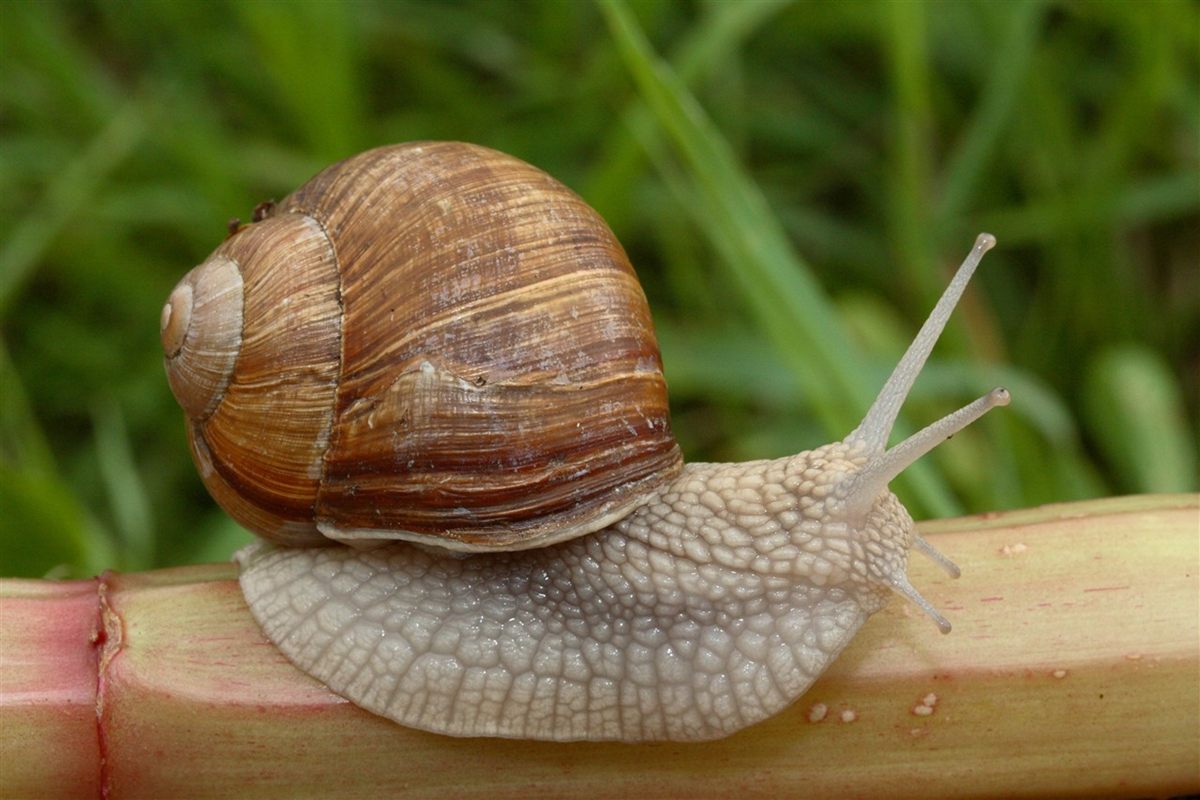
🧬 Field Guide Specimen: Open Burgundy Snail in the CRV Science Field Guide to log the specimen, see its place among the Lophotrochozoa lineages in the Cladogram Explorer, and test your recall in the Red List conservation game.
Love Darts: What Is the Dart For?
Snails are hermaphrodites. Before mating, each partner may stab the other with a sharp calcium-carbonate dart that transfers mucus containing a hormone-like substance. The mucus appears to increase the chance that the donor's sperm is used.
Hibernation and Longevity
In autumn the snail seals its shell opening with a hard calcified lid (epiphragm) and burrows into the soil, hibernating for months. Individuals can live for twenty years or more.
Harvest and Conservation
Collection for food led to regulation of harvest sizes and seasons, and snail farming is increasingly common. The snail benefits from calcium-rich soils, so calcareous grasslands and woodlands are important habitats.
Burgundy Snail at a Glance
| Property | Value |
|---|---|
| Scientific name | Helix pomatia |
| Kingdom | Animalia |
| Phylum | Mollusca |
| Class | Gastropoda |
| Order | Stylommatophora |
| Field Guide group | Lophotrochozoa: Worms, Shells & Allies |
| Diagnostic feature (Field Guide) | Helical calcium carbonate shell, muscular creeping foot, retractable optic tentacles, 180° visceral torsion. |
| IUCN Red List status | Least Concern (LC), assessed 2025 |
| Class | Gastropoda |
| Reproduction | Simultaneous hermaphrodite with love darts |
See Also
- Natural selection — sexual selection in hermaphrodites
- Biodiversity — regulating harvested species