Cinnabar
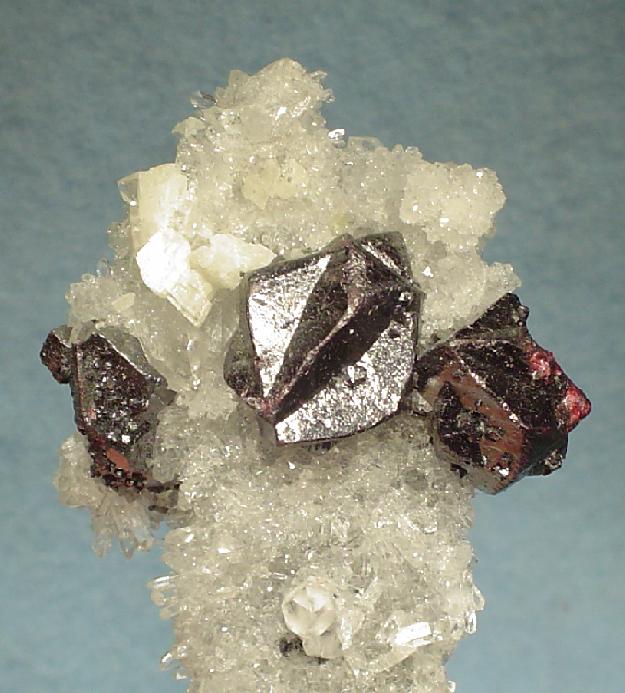
Cinnabar is mercury sulfide, HgS, a soft, very dense mineral with a bright scarlet color. It is the main ore of mercury and the source of the red pigment vermilion.
Cinnabar is mercury sulfide, HgS, a soft, very dense mineral with a bright scarlet color. It is the main ore of mercury and the source of the red pigment vermilion.
🪨 Geology Guide Specimen: Open Cinnabar in the CRV Science Rock & Mineral ID Guide to log the specimen, compare it with the other 8 mineral classes of Dana / Strunz Classes, and test your eye in LithoClade.
Heavy and Red: How Do You Recognize It?
Cinnabar has a hardness of only 2 to 2.5, a high adamantine luster and a vivid red to scarlet streak. At about 8.1 grams per cubic centimeter it is startlingly heavy for a red crystal, because it is 86 percent mercury by weight.
Volcanic Hot Springs: Where Does It Form?
Cinnabar precipitates near the surface from hot, mercury-bearing fluids in volcanic regions and hot springs. The Almadén district in Spain was the largest mercury source for centuries, and China's Hunan and Guizhou provinces are also famous.
Pigment and Poison: What Is Its History?
Ground cinnabar was used as the pigment vermilion in ancient China, Rome and later European painting, and in red lacquer. Mercury is highly toxic, so modern use of the mineral is strictly controlled. See mercury.
Cinnabar at a Glance
| Property | Value |
|---|---|
| Type / variety | HgS • Trigonal Mercury Sulfide |
| Composition | HgS (86.2 wt% Mercury) |
| Geology Guide group | Minerals (8 Major Chemical Groups) |
| Mineral Group | Sulfides |
| Mohs hardness | Mohs 2–2.5 (very soft) |
| Texture / habit | Rhombohedral or thick tabular trigonal crystals and earthy scarlet crusts |
| Density | 8.10–8.18 g/cm³ (extraordinarily heavy for a non-metallic red mineral!) |
| Lustre and cleavage | Adamantine-to-submetallic cochineal-red crystals; scarlet vermilion streak |
| Geological setting | Shallow epithermal volcanic hot-spring veins (e.g., Almadén, Spain; Hunan, China) |
| Diagnostic feature (Geology Guide) | Soft (Mohs 2–2.5), startlingly heavy (density 8.1 g/cm³!) crimson-to-vermilion crystal with an adamantine flash and a bright scarlet streak, deposited around volcanic hot springs. |
| Formula | HgS |
| Density | About 8.1 g/cm³ |