Common Green Bottle Fly
The common green bottle fly (Lucilia sericata) is a metallic green blowfly that lays its eggs on carrion and on animal wounds. Its larvae are used in medicine to clean wounds, and in forensic science to estimate the time of death.
The common green bottle fly (Lucilia sericata) is a metallic green blowfly that lays its eggs on carrion and on animal wounds. Its larvae are used in medicine to clean wounds, and in forensic science to estimate the time of death.
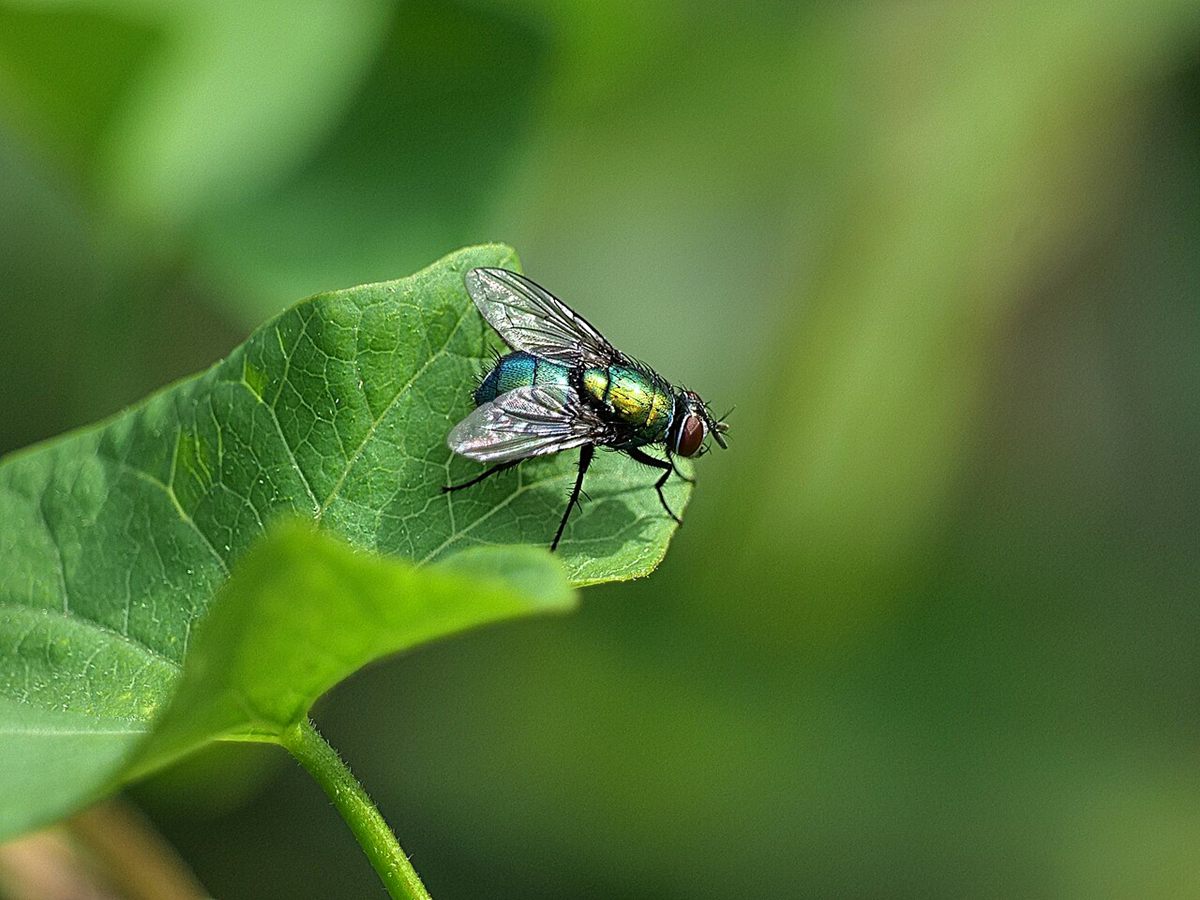
🧬 Field Guide Specimen: Open Common Green Bottle Fly in the CRV Science Field Guide to log the specimen, see its place among the Ecdysozoa lineages in the Cladogram Explorer, and test your recall in the Red List conservation game.
Maggot Therapy: Cleaning Wounds
Sterile maggots placed in a chronic wound eat dead tissue while leaving healthy tissue alone, and they secrete substances that kill bacteria. The US Food and Drug Administration cleared maggots as a medical device in 2004. They are used for leg ulcers and diabetic foot wounds.
Clocks on a Corpse
Blowflies arrive at a body within minutes to hours of death, and the age and growth stage of the larvae reveal the minimum time since death. This is the basis of forensic entomology.
A Livestock Pest
In sheep-farming regions, blowfly strike, in which maggots eat the live flesh of sheep, is a serious welfare and economic problem. See Medicinal Leech.
Common Green Bottle Fly at a Glance
| Property | Value |
|---|---|
| Scientific name | Lucilia sericata |
| Kingdom | Animalia |
| Phylum | Arthropoda |
| Class | Insecta |
| Order | Diptera |
| Family | Calliphoridae |
| Field Guide group | Ecdysozoa: Hexapoda (Insects) |
| Diagnostic feature (Field Guide) | Metallic emerald-green body; its maggots eat only dead tissue and are used medically to clean wounds. |
| Family | Calliphoridae |
| Medical use | Maggot debridement therapy |