House Fly
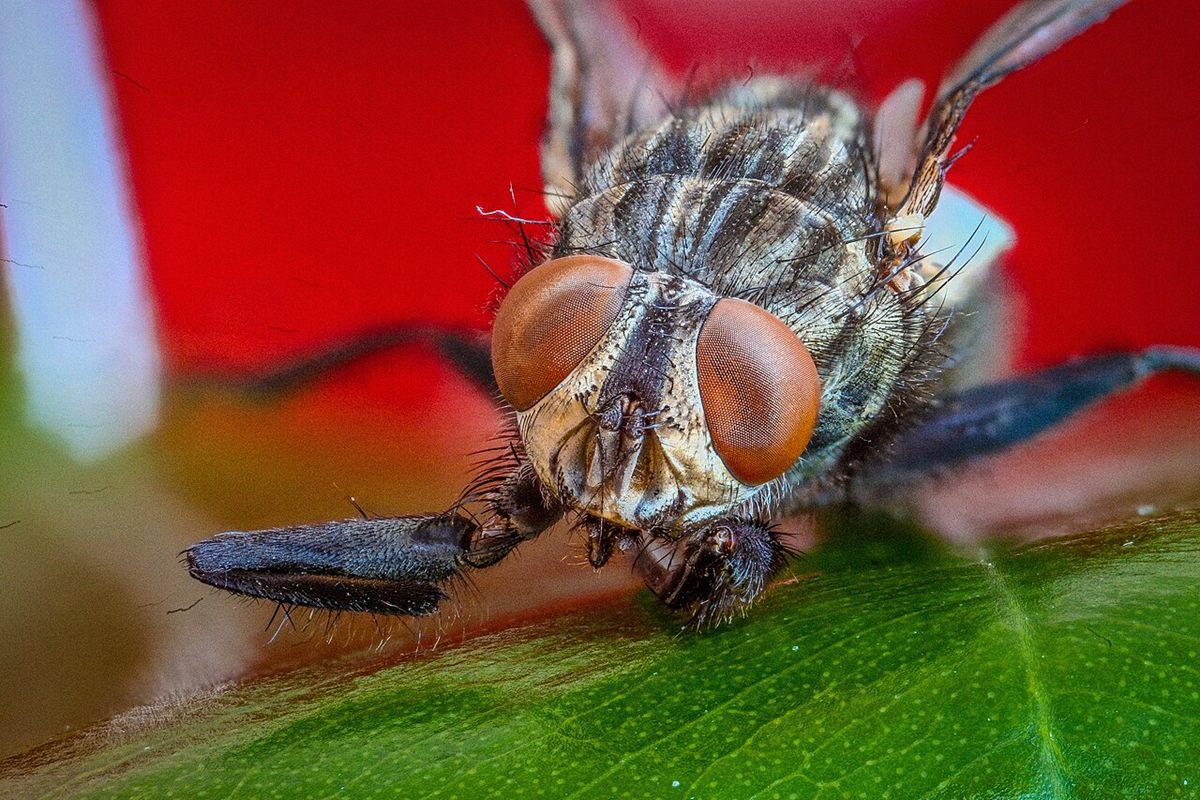
The house fly (Musca domestica) is one of the most widespread insects, living close to people on every continent but Antarctica. It breeds in manure and rotting waste and can spread disease-causing microbes.
The house fly (Musca domestica) is one of the most widespread insects, living close to people on every continent but Antarctica. It breeds in manure and rotting waste and can spread disease-causing microbes.
🧬 Field Guide Specimen: Open House Fly in the CRV Science Field Guide to log the specimen, see its place among the Ecdysozoa lineages in the Cladogram Explorer, and test your recall in the Red List conservation game.
How Flies Feed: Vomit and Sponge
A fly cannot chew. It spits digestive enzymes onto solid food and then sponges up the liquefied meal with its mouthparts. In doing so, it can transfer bacteria on its feet and mouthparts from filth to food, spreading pathogens such as those that cause diarrhea and trachoma.
Flying by Gyroscope
Like other true flies (Diptera), the house fly has one pair of wings and a pair of tiny drumstick-shaped halteres behind them that vibrate as gyroscopes to sense rotation. The compound eyes respond quickly, and the fly reacts within milliseconds to a swatter.
Fast Breeders
Eggs hatch into maggots within a day, and a generation can take just a week or two in warm weather. Control relies on sanitation to remove breeding sites. See Yellow Fever Mosquito.
House Fly at a Glance
| Property | Value |
|---|---|
| Scientific name | Musca domestica |
| Kingdom | Animalia |
| Phylum | Arthropoda |
| Class | Insecta |
| Order | Diptera |
| Family | Muscidae |
| Field Guide group | Ecdysozoa: Hexapoda (Insects) |
| Diagnostic feature (Field Guide) | Gray thorax with four dark stripes, sponging mouthparts, and only one pair of wings; tiny club-shaped halteres replace the hind pair. |
| Order | Diptera |
| Generation time | About one to two weeks in warm weather |