Common Pinmold
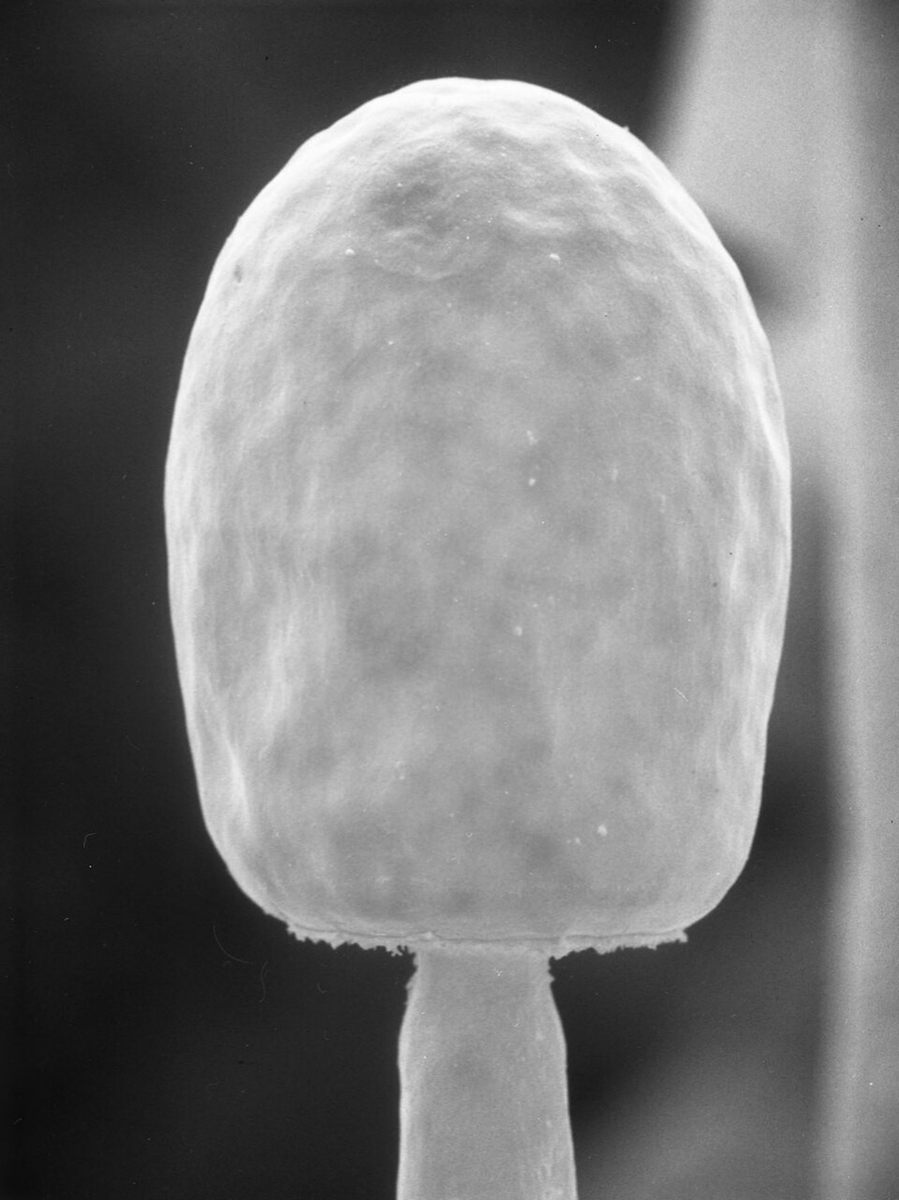
The common pinmold (Mucor mucedo) is a mold that grows on dung, bread and damp organic matter, sending up tall, pin-like stalks tipped with spherical spore sacs. It is a classic organism in introductory mycology.
The common pinmold (Mucor mucedo) is a mold that grows on dung, bread and damp organic matter, sending up tall, pin-like stalks tipped with spherical spore sacs. It is a classic organism in introductory mycology.
🧬 Field Guide Specimen: Open Common Pinmold in the CRV Science Field Guide to log the specimen, see its place among the Opisthokonta lineages in the Cladogram Explorer, and test your recall in the Red List conservation game.
Pins and Spore Sacs
Each stalk (sporangiophore) ends in a sporangium filled with spores that are dispersed by wind or moisture. The stalks can grow toward light, and the mold has been used to study how fungi sense their environment.
A Chemical Mating Signal
Mucor mucedo has two mating types, plus and minus, that exchange a pheromone related to trisporic acid. The chemical makes the hyphae of opposite types grow toward each other and fuse to form zygospores.
Place in the Fungal Tree
Mucorales were once grouped in the Zygomycota, but molecular studies show that group is not natural. Mucor is now placed in Mucoromycota. See Black Bread Mold.
Common Pinmold at a Glance
| Property | Value |
|---|---|
| Scientific name | Mucor mucedo |
| Kingdom | Fungi |
| Phylum | Mucoromycota |
| Class | Mucoromycetes |
| Order | Mucorales |
| Family | Mucoraceae |
| Field Guide group | Opisthokonta: Fungi (True Fungi & Lichens) |
| Diagnostic feature (Field Guide) | Erect, tall pin-like unbranched sporangiophores bearing golden-yellow to dark brown globose sporangia with prominent columellae. |
| Order | Mucorales |
| Mating signal | Trisporic acid derivatives |
See Also
- Black Bread Mold — a close relative
- Bacteria — competitors in decomposition