Common Stonewort
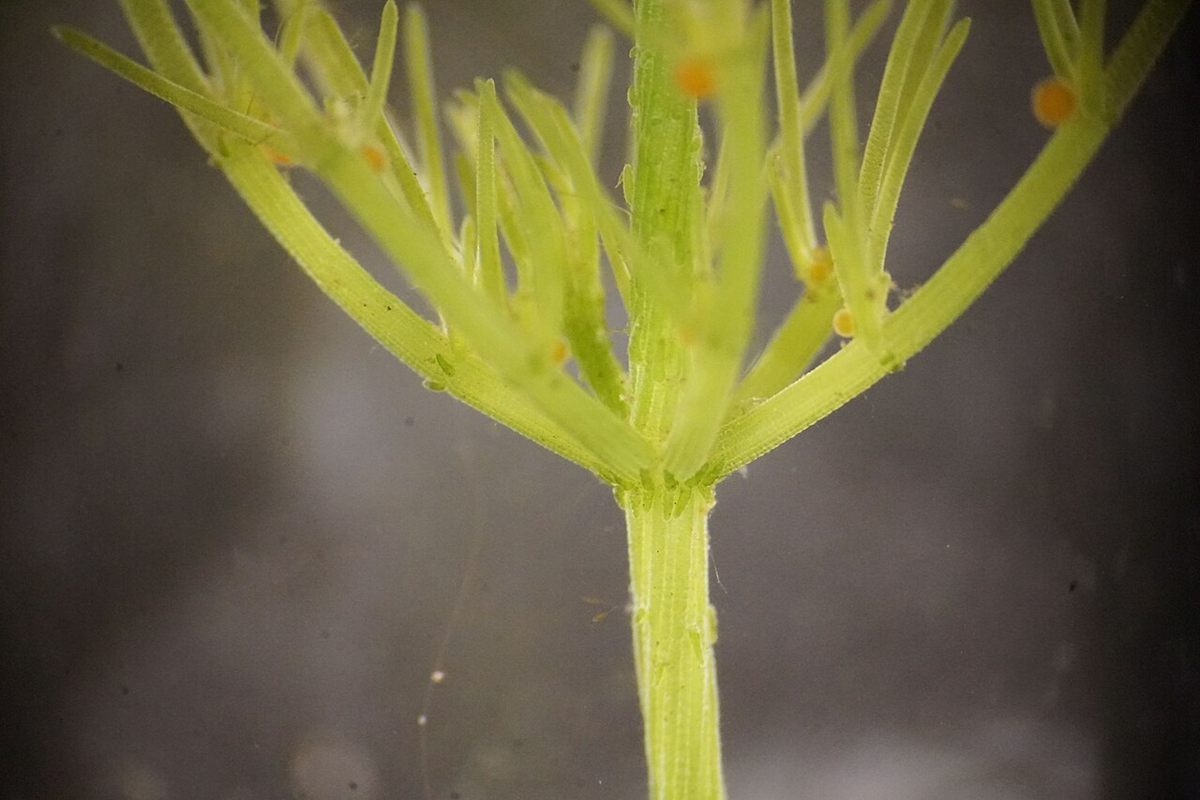
The common stonewort (Chara vulgaris) is a bushy, brittle green alga that grows in freshwater ponds and lakes. Charophytes like this are among the closest relatives of land plants.
The common stonewort (Chara vulgaris) is a bushy, brittle green alga that grows in freshwater ponds and lakes. Charophytes like this are among the closest relatives of land plants.
🧬 Field Guide Specimen: Open Common Stonewort in the CRV Science Field Guide to log the specimen, see its place among the Diaphoretickes lineages in the Cladogram Explorer, and test your recall in the Red List conservation game.
Relatives of Land Plants
Genetic evidence places the charophyte algae, along with the Zygnematophyceae, as the sister lineage of the land plants. Features such as the way the cell divides and the structure of the egg-producing organs are shared with plants.
Giant Cells for Physiology
Chara has cells in its stem segments that can be centimeters long, which makes them ideal for studying how cytoplasm streams around the cell and how electrical signals propagate along cell membranes. See Cell membrane.
Chalky Crusts and Clear Water
The alga becomes coated with lime, which gives it the "stone" name and a rough feel, and it forms meadows in clear, hard water. It has a garlic-like smell.
Common Stonewort at a Glance
| Property | Value |
|---|---|
| Scientific name | Chara vulgaris |
| Kingdom | Plantae |
| Phylum | Charophyta |
| Class | Charophyceae |
| Order | Charales |
| Family | Characeae |
| Field Guide group | Diaphoretickes: Plants & Algae |
| Diagnostic feature (Field Guide) | Pond-bottom plant-like alga with whorls of branches at regular nodes; crusted with lime and smells of garlic. |
| Group | Charophytes |
| Notable feature | Giant internodal cells |