Common Water Flea
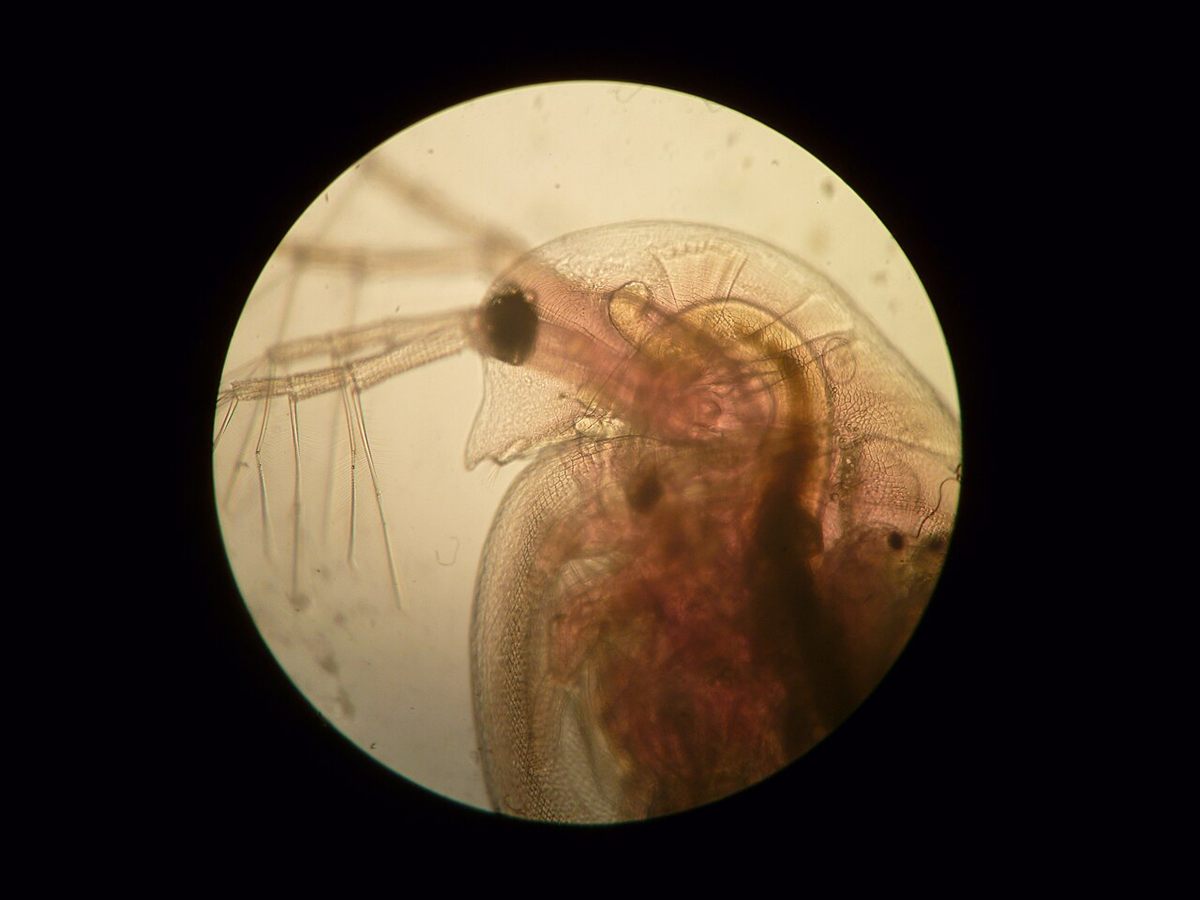
The common water flea (Daphnia pulex) is a tiny freshwater crustacean. In 2011 it became the first crustacean to have its genome sequenced, and the genome revealed an unexpectedly large number of genes.
The common water flea (Daphnia pulex) is a tiny freshwater crustacean. In 2011 it became the first crustacean to have its genome sequenced, and the genome revealed an unexpectedly large number of genes.
🧬 Field Guide Specimen: Open Common Water Flea in the CRV Science Field Guide to log the specimen, see its place among the Ecdysozoa lineages in the Cladogram Explorer, and test your recall in the Red List conservation game.
More Genes Than a Human
The water flea has about 31,000 genes, more than people have. Many arose from recent gene duplications, and a lot of them are unique to Daphnia, probably helping it to respond to its changing environment.
Plasticity in the Pond
Chemical signals from predators trigger Daphnia to grow defensive helmets, necks and spines, a classic example of phenotypic plasticity. See Water Flea.
Environmental Sentinel
Genes that switch on in response to pollutants, metals and acid rain make the animal a model for environmental genomics.
Common Water Flea at a Glance
| Property | Value |
|---|---|
| Scientific name | Daphnia pulex |
| Kingdom | Animalia |
| Phylum | Arthropoda |
| Class | Branchiopoda |
| Order | Anomopoda |
| Family | Daphniidae |
| Field Guide group | Ecdysozoa: Mandibulata (Mandibulates) |
| Diagnostic feature (Field Guide) | Translucent pond crustacean only a few millimeters long that swims in jerky hops with large antennae and grows defensive spines when it smells predators. |
| Genome published | 2011 |
| Gene count | About 31,000 |