Coral Weed
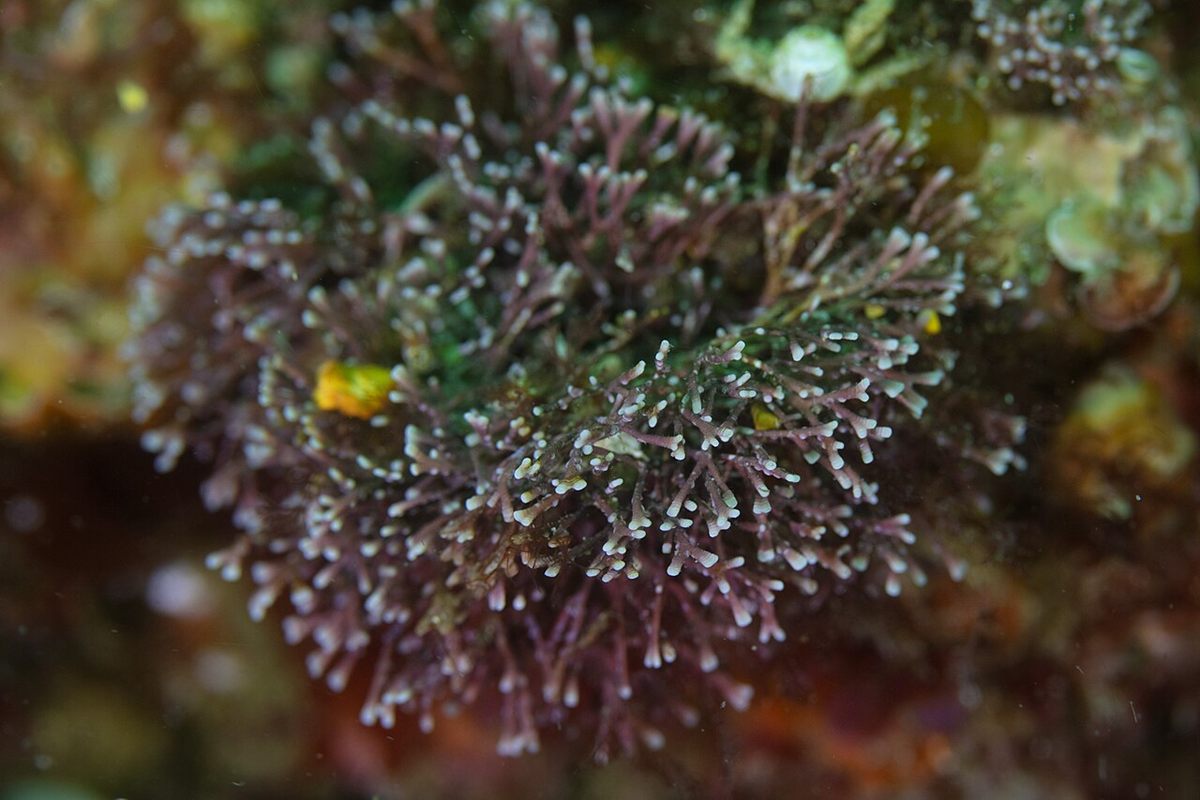
Coral weed (Corallina officinalis) is a pink, branched red alga of rocky shores in the North Atlantic. Its fronds are stiffened with calcium carbonate, which makes the seaweed feel hard and chalky.
Coral weed (Corallina officinalis) is a pink, branched red alga of rocky shores in the North Atlantic. Its fronds are stiffened with calcium carbonate, which makes the seaweed feel hard and chalky.
🧬 Field Guide Specimen: Open Coral Weed in the CRV Science Field Guide to log the specimen, see its place among the Diaphoretickes lineages in the Cladogram Explorer, and test your recall in the Red List conservation game.
A Seaweed With a Skeleton
The cell walls are impregnated with magnesium-rich calcite, giving the alga a crunchy texture. Flexible joints between the segments let the fronds bend in waves. Rock pools lined with pink coralline algae are a familiar sight on temperate shores.
Canaries in the Acidifying Ocean
Calcifying algae are sensitive to changes in ocean chemistry. Experiments suggest that more acidic seawater can weaken or dissolve their skeletons, with consequences for the species that shelter in coralline turf. See Ocean acidification.
Foundations of Habitat
Coralline algae form crusts and turfs that give shelter to small animals and cue larval settlement of many invertebrates. See Dulse.
Coral Weed at a Glance
| Property | Value |
|---|---|
| Scientific name | Corallina officinalis |
| Kingdom | Plantae |
| Phylum | Rhodophyta |
| Class | Florideophyceae |
| Order | Corallinales |
| Family | Corallinaceae |
| Field Guide group | Diaphoretickes: Plants & Algae |
| Diagnostic feature (Field Guide) | Pink jointed fronds hardened with calcium carbonate in tide pools; segments bend at flexible joints like a string of beads. |
| Group | Red algae (Corallinales) |
| Skeleton | Magnesium-rich calcite |