Dulse
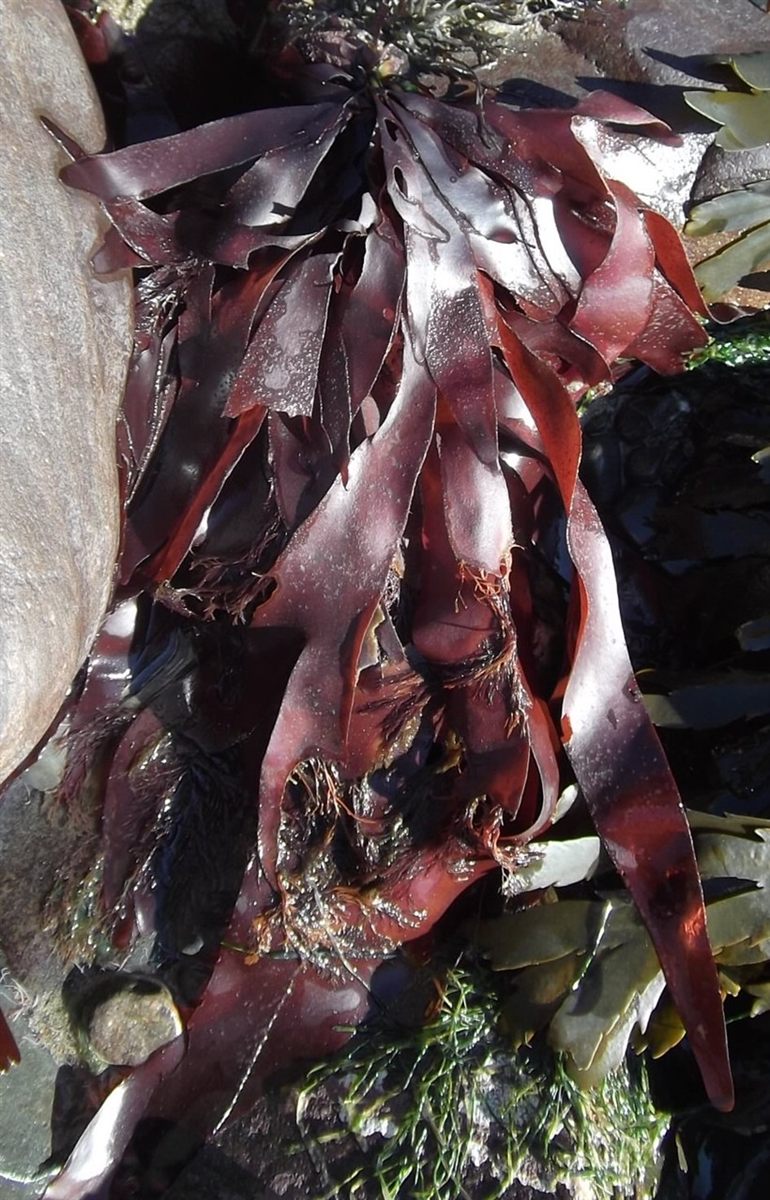
Dulse (Palmaria palmata) is a red seaweed of cold North Atlantic and Pacific shores, long eaten in Ireland, Iceland and eastern Canada. Its reddish-purple blades attach to rocks and shells by a small disc.
Dulse (Palmaria palmata) is a red seaweed of cold North Atlantic and Pacific shores, long eaten in Ireland, Iceland and eastern Canada. Its reddish-purple blades attach to rocks and shells by a small disc.
🧬 Field Guide Specimen: Open Dulse Red Alga in the CRV Science Field Guide to log the specimen, see its place among the Diaphoretickes lineages in the Cladogram Explorer, and test your recall in the Red List conservation game.
Why Is a Red Alga Red?
Red algae (Rhodophyta) contain phycoerythrin and related pigments that absorb blue and green light, which penetrates deeper in the sea than red light, and these pigments mask the green chlorophyll. Red algae are among the oldest eukaryotic lineages, and their chloroplasts came directly from a cyanobacterium.
Food
Dulse is eaten dried or fresh, as a snack or in soups, and is a good source of protein, iodine and minerals. Some people say it tastes like bacon when fried.
A Complex Life Cycle
Like many red algae, dulse alternates between generations that look alike but differ in their chromosome number, and the female structures are tiny, so the reproductive cycle was hard to work out.
Dulse at a Glance
| Property | Value |
|---|---|
| Scientific name | Palmaria palmata |
| Kingdom | Plantae |
| Phylum | Rhodophyta |
| Class | Florideophyceae |
| Order | Palmariales |
| Field Guide group | Diaphoretickes: Plants & Algae |
| Diagnostic feature (Field Guide) | Deep red-purple membranous fronds rich in phycoerythrin pigment, completely lacking flagellated life stages. |
| Group | Red algae (Rhodophyta) |
| Pigments | Phycoerythrin |