Laver
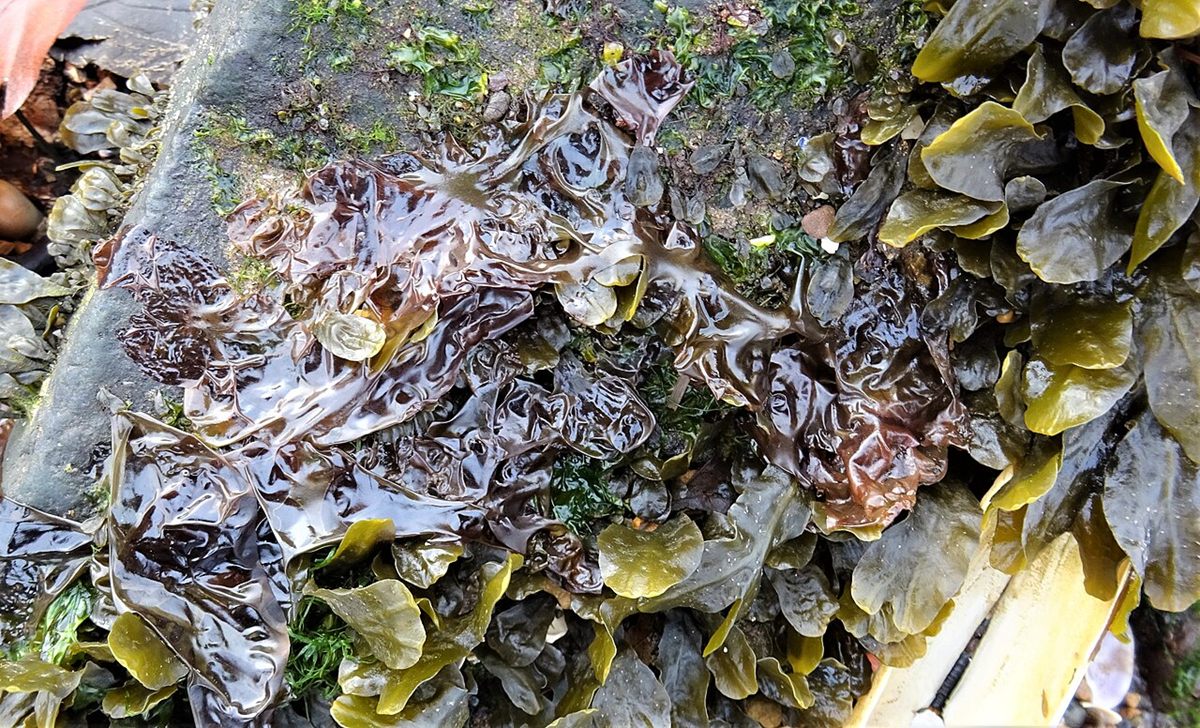
Laver (Porphyra umbilicalis) is a thin, purplish red alga of rocky shores of the North Atlantic. Related species are cultivated in East Asia as nori, the seaweed wrapped around sushi, and in Wales it is made into laverbread.
Laver (Porphyra umbilicalis) is a thin, purplish red alga of rocky shores of the North Atlantic. Related species are cultivated in East Asia as nori, the seaweed wrapped around sushi, and in Wales it is made into laverbread.
🧬 Field Guide Specimen: Open Laver in the CRV Science Field Guide to log the specimen, see its place among the Diaphoretickes lineages in the Cladogram Explorer, and test your recall in the Red List conservation game.
Nori and the Woman Who Solved Its Life Cycle
For centuries nori farming in Japan relied on luck, because no one knew where the seaweed's spores came from. In 1949 the British phycologist Kathleen Drew-Baker showed that Porphyra spends part of its life as a tiny filamentous stage (Conchocelis) boring into shells. Her discovery let farmers seed nets deliberately, and she is honored in Japan.
Nutritious and Thin
The blade is only one or two cells thick and rich in protein, vitamins and minerals. It is dried into sheets or cooked into a paste.
Alternation of Generations
Like many red algae, laver has a complicated life cycle with distinct forms. See Dulse.
Laver at a Glance
| Property | Value |
|---|---|
| Scientific name | Porphyra umbilicalis |
| Kingdom | Plantae |
| Phylum | Rhodophyta |
| Class | Bangiophyceae |
| Order | Bangiales |
| Family | Bangiaceae |
| Field Guide group | Diaphoretickes: Plants & Algae |
| Diagnostic feature (Field Guide) | Thin, glossy, purple-brown sheets only one or two cells thick, attached to rocks; eaten as laverbread in Wales. |
| Group | Red algae (Bangiales) |
| Food products | Nori and laverbread |