Sea Lettuce
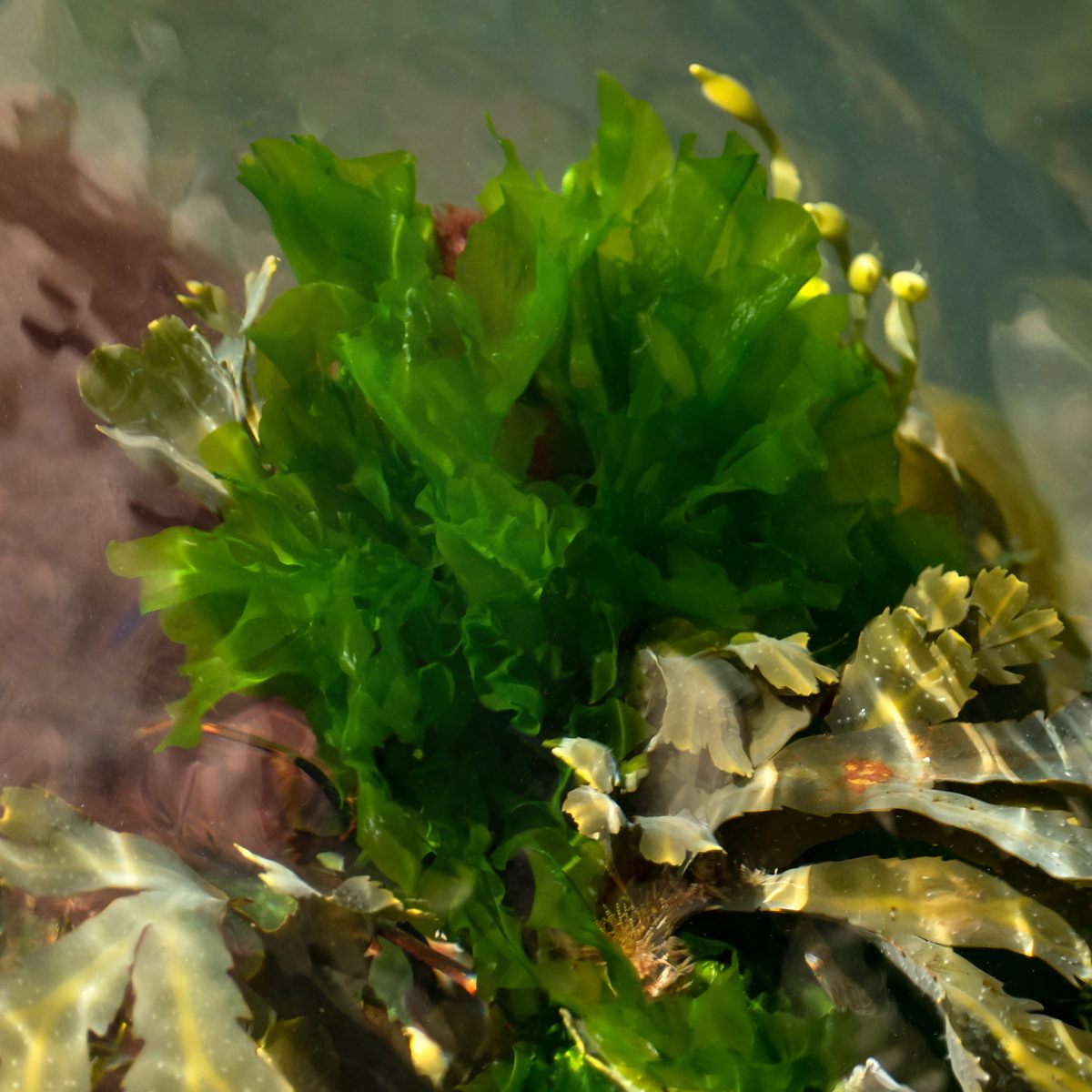
Sea lettuce (Ulva lactuca) is a green seaweed whose thin, bright green blades are only two cells thick. It grows on rocky shores worldwide and is edible, but it is also a source of nuisance blooms called green tides.
Sea lettuce (Ulva lactuca) is a green seaweed whose thin, bright green blades are only two cells thick. It grows on rocky shores worldwide and is edible, but it is also a source of nuisance blooms called green tides.
🧬 Field Guide Specimen: Open Sea Lettuce in the CRV Science Field Guide to log the specimen, see its place among the Diaphoretickes lineages in the Cladogram Explorer, and test your recall in the Red List conservation game.
A Two-Cell-Thick Body
The paper-thin blade lets every cell absorb light and nutrients directly from the seawater. Ulva belongs to the green algae (Chlorophyta), a lineage separate from the one that gave rise to land plants. Its life cycle alternates between two similar-looking generations.
Green Tides: What Feeds the Blooms?
When rivers deliver excess nitrogen and phosphorus to coastal waters, Ulva grows rapidly and washes ashore in huge masses. In 2008 a bloom in the Yellow Sea off Qingdao, China, affected the Olympic sailing venue. Rotting mats release hydrogen sulfide gas. See Eutrophication.
Food and Bioindicators
Sea lettuce is eaten in salads and soups, and its ability to take up nutrients makes it a useful bioindicator and a candidate for cleaning wastewater from fish farms.
Sea Lettuce at a Glance
| Property | Value |
|---|---|
| Scientific name | Ulva lactuca |
| Kingdom | Plantae |
| Phylum | Chlorophyta |
| Class | Ulvophyceae |
| Order | Ulvales |
| Field Guide group | Diaphoretickes: Plants & Algae |
| Diagnostic feature (Field Guide) | Translucent lettuce-like sheet only two cell layers thick, anchored by a tiny holdfast, storing starch inside its plastids. |
| Group | Green algae (Chlorophyta) |
| Blade thickness | Two cells |