Dead Man's Fingers
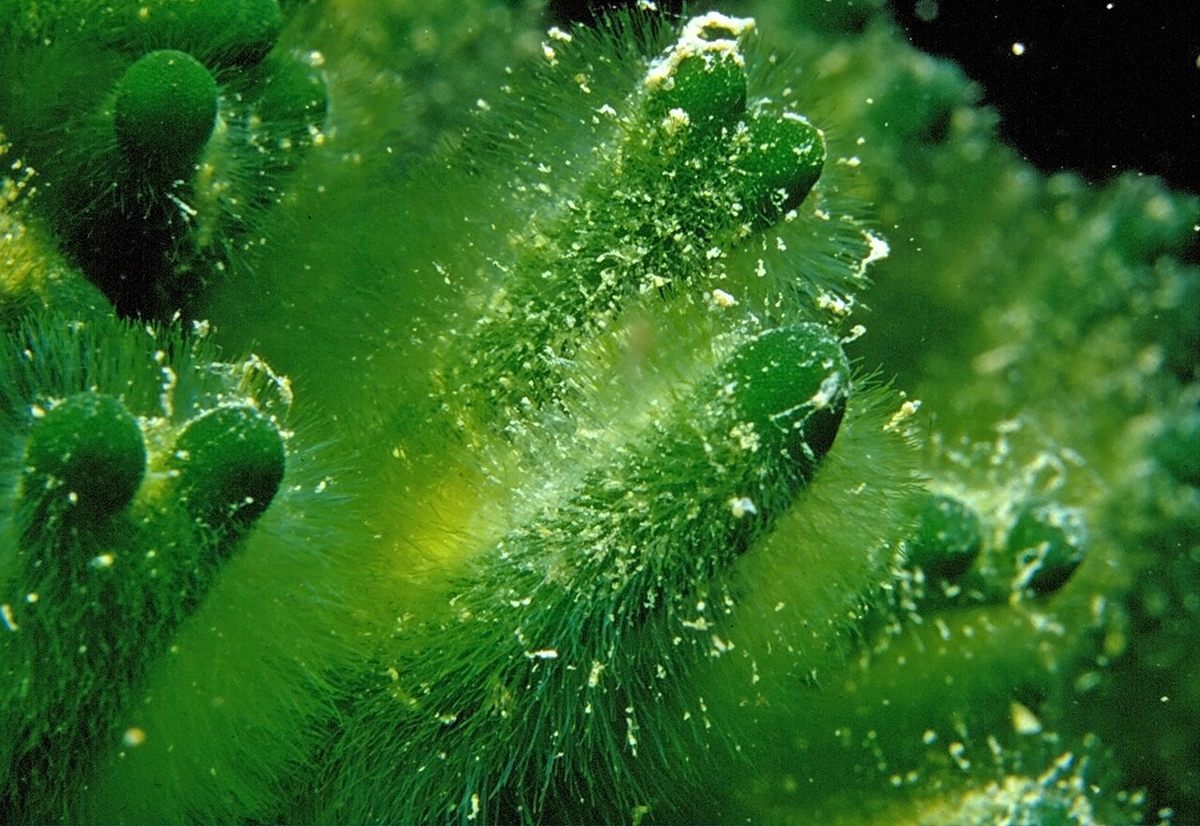
Dead man's fingers (Codium fragile) is a dark green seaweed with spongy, finger-like branches that grows on rocky shores. It originated in the Pacific, and has become an invasive species in many parts of the world.
Dead man's fingers (Codium fragile) is a dark green seaweed with spongy, finger-like branches that grows on rocky shores. It originated in the Pacific, and has become an invasive species in many parts of the world.
🧬 Field Guide Specimen: Open Dead Man's Fingers in the CRV Science Field Guide to log the specimen, see its place among the Diaphoretickes lineages in the Cladogram Explorer, and test your recall in the Red List conservation game.
Dead Man's Fingers at a Glance
| Property | Value |
|---|---|
| Scientific name | Codium fragile |
| Kingdom | Plantae |
| Phylum | Chlorophyta |
| Class | Ulvophyceae |
| Order | Bryopsidales |
| Family | Codiaceae |
| Field Guide group | Diaphoretickes: Plants & Algae |
| Diagnostic feature (Field Guide) | Dark spongy branching fingers of rocky shores, made of interwoven tubular filaments with many nuclei and no cross-walls. |
| Group | Green algae |
| Body | Siphonous branching tubes |
Taxonomy, Phylogenetics, and Evolutionary History
Class Ulvophyceae, Order Bryopsidales, and Subspecies fragile
Described by Willem Frederik Reinier Suringar in 1867 from Japanese specimens as Acanthocodium fragile and transferred to the genus Codium by Paul Auguste Hariot in 1889, dead man's fingers (Codium fragile, also known as green sea velvet, felty fingers, or oyster thief) is a marine macroalga in the family Codiaceae (order Bryopsidales, class Ulvophyceae, phylum Chlorophyta). Within Ulvophyceae, the order Bryopsidales (alongside the sister order Dasycladales, which includes Mermaid's Wine Glass Acetabularia) represents an evolutionary radiation of macroscopic marine green algae that construct complex, decimeter-scale thalli without multicellular tissue division.
The genus Codium encompasses roughly 140 species distributed across tropical to cold-temperate seas. Within Codium fragile, molecular phylogeography using plastid (rbcL, tufA, and rpl16 intron) markers by Provan, Booth, Maggs, and Verbruggen demonstrated that while non-invasive subspecies native to the northeast Pacific (such as C. fragile subsp. californicum), subantarctic waters, and northwest Europe (C. fragile subsp. atlanticum) have restricted ranges, a single fast-growing lineage native to the Northwest Pacific (Japan and Korea)—Codium fragile subsp. fragile (formerly widely cited in ecological literature under the junior synonym Codium fragile subsp. tomentosoides)—has invaded temperate coastlines worldwide over the past century via ballast water, hull fouling, and international oyster aquaculture transfers.
Siphonous Coenocytic Architecture, Cell-Wall Polysaccharides, and Physiology
Uninucleate vs. Multinucleate Siphonous Organization and Utricles
Although an intact plant of Codium fragile forms a robust, dichotomously branched bush of velvety, cylindrical, finger-like fronds (3 to 10 millimeters thick and 15 to 90 centimeters tall) rising from a broad spongy basal cushion, the entire macroscopic seaweed is a single, giant, multinucleate tubular cell—an anatomical organization termed siphonous and coenocytic. Cross-walls (septa) are completely absent throughout the vegetative thallus, forming only as plugs at the base of reproductive gametangia or in response to mechanical wounding.
To achieve three-dimensional mechanical stiffness without multicellular parenchyma, the continuous tubular filament of Codium fragile differentiates into two interwoven zones:
- Central Medulla: A colorless core composed of densely entangled, longitudinal, colourless siphonous filaments (30 to 80 μm in diameter) that conduct cytoplasm, nuclei, and photoassimilates via bidirectional actin–myosin cytoplasmic streaming.
- Peripheral Cortex of Utricles: Each medullary filament branches radially outward and inflates at the thallus surface into a club-shaped, cylindrical cortical vesicle called a utricle (measuring 500 to 1,200 μm long and 150 to 350 μm wide). Packed side-by-side like a palisade layer, the millions of utricles give the seaweed its firm, spongy, velvety texture. Crucially for taxonomic identification, the apex of each utricle in Codium fragile tapers into a sharp, sclerotized mucron (apical spine or point) measuring 20 to 120 μm long, which distinguishes C. fragile microscopically from smooth, round-tipped congeners such as the native European Codium tomentosum and Codium vermilara. Fine colorless utricular hairs project outward from the upper sides of the utricles in summer to increase nutrient-uptake boundary-layer exchange.
Mannan Cell Walls, Siphonein Pigments, and Wound Sealing
Unlike land plants and charophyte algae, whose cell walls are built on crystalline cellulose (β-1,4-glucan), the cell walls of Codium fragile are devoid of cellulose and instead consist primarily of linear β-(1→4)-D-mannans cross-linked with water-soluble sulfated arabinogalactans, pyruvate-ketalated galactans, and hydroxyproline-rich glycoproteins. These sulfated polysaccharides impart both viscoelastic compliance against wave surge and potent anticoagulant and immunostimulatory activities in biomedical assays. Within the thin peripheral layer of cytoplasm lining the large central vacuole of each utricle, millions of small, discoid, pyrenoid-less chloroplasts contain chlorophyll a and b supplemented by the order-specific accessory xanthophyll carotenoids siphonaxanthin and its ester siphonein, which absorb green and blue-green coastal light (500–540 nm) and give the thallus its deep bottle-green hue.
Because a single puncture in a giant coenocytic cell could theoretically drain the entire organism's cytoplasm, Codium fragile possesses an instantaneous wound-healing cascade: when a utricle or filament is torn by wave abrasion or grazing, local Ca2+ influx triggers the rapid aggregation of vacuolar protein bodies and sulfated polysaccharide vesicles to form a gelatinous wound plug within seconds, followed within hours by the deposition of a new β-1,4-mannan cross-wall that seals off the damaged siphon. Furthermore, the surfaces of the utricles often harbor endosymbiotic or epiphytic diazotrophic (nitrogen-fixing) cyanobacteria and heterotrophic bacteria (Azotobacter), supplying up to 5% to 15% of the alga's fixed nitrogen budget in oligotrophic summer waters.
| Structural or Biochemical Feature | Specification in Codium fragile subsp. fragile | Functional or Ecological Significance |
|---|---|---|
| Coenocytic siphonous thallus | Single giant multinucleate tubular cell without vegetative cross-walls | Enables rapid cytoplasmic streaming and regenerative growth from small fragments |
| Mucronate cortical utricles | Palisade of swollen surface vesicles (0.5–1.2 mm) tipped with a sharp spine | Diagnostic microscopic character separating C. fragile from C. tomentosum |
| β-1,4-D-Mannan cell wall | Crystalline mannan microfibrils + sulfated arabinogalactans (no cellulose) | Provides spongy mechanical toughness and rapid wound-plug coagulation |
| Siphonaxanthin & siphonein | Bryopsidalean keto-carotenoids in discoid chloroplasts | Captures green-blue coastal light (500–540 nm) in turbid subtidal habitats |
| Parthenogenetic female gametes | Unfertilized biflagellate swarmer cells germinate directly into diploid thalli | Enables a single drifting fragment to found a clonal invasive population |
Kleptoplasty in Sacoglossan Slugs and Global Invasive Ecology
Kleptoplastic Symbiosis with Elysia and Placida Sea Slugs
While general herbivorous gastropods (Littorina littorea) and sea urchins (Strongylocentrotus droebachiensis) often avoid Codium fragile or graze it slowly due to its tough mannan walls and dimethylsulfoniopropionate (DMSP)-derived acrylate cleavage products, Codium fragile is the primary host plant for specialized suctorial sacoglossan sea slugs (superfamily Plakobranchoidea), including Placida dendritica, Elysia viridis, and relatives of the Solar-powered Sea Slug (Elysia chlorotica). Using a single, blade-like uniseriate radular tooth (ascus), the sacoglossan slug pierces an individual cortical utricle and sucks out the liquid cytoplasm.
In species such as Elysia viridis, rather than digesting the entire cytoplasmic meal, phagocytic digestive gland cells lining the slug's branched diverticula selectively sequester the intact Codium fragile chloroplasts while digesting the nuclei and mitochondria—a phenomenon known as functional kleptoplasty. Because the circular plastid genome of Codium fragile (and other Bryopsidales) retains several structural and photosystem maintenance genes and its robust discoid plastids resist oxidative damage during isolation, these stolen kleptoplasts continue fixing carbon photosynthetically inside the animal host's cells for weeks to months.
Parthenogenesis and the "Oyster Thief" Invasion of Kelp and Shellfish Beds
First recorded in Europe in the Netherlands in 1900, in eastern North America at Long Island Sound in 1957 (spreading into the Gulf of Maine and Atlantic Canada by the 1980s–1990s), and subsequently in southeastern Australia, New Zealand, and Chile, Codium fragile subsp. fragile owes its invasive success to a combination of vegetative fragmentation and obligate parthenogenesis. Whereas native subspecies are dioecious and require the fusion of small male and large female biflagellate gametes produced in lateral gametangia on the sides of the utricles, invasive populations of subsp. fragile consist almost exclusively of diploid females whose lateral gametangia release diploid biflagellate swarmer cells via apomeiotic parthenogenesis. In addition, in autumn when water temperatures drop below 8 to 10 °C, the upright dichotomously branched fronds fragment into buoyant winter propagules while the perennial basal holdfast pad ("vaucherioid" turf) overwinters on the rock and regenerates new fronds in spring.
Ecologically, invasive Codium fragile alters temperate coastal ecosystems through two mechanisms:
- Shellfish Rafting ("Oyster Thief"): Spores and drifting fragments cement themselves to the calcified valves of commercial oysters (Crassostrea virginica, Magallana gigas), bay scallops (Argopecten irradians), blue mussels (Mytilus edulis), and slippersnails (Crepidula fornicata). As the spongy fronds grow during summer, photosynthetically evolved oxygen (O2) bubbles become trapped inside the hollow medullary meshwork, making the alga positively buoyant. During late-summer storms, the combined hydrodynamic drag and buoyancy of the frond lift the attached oyster or scallop off the seabed and cast it ashore or carry it out of the estuary, devastating commercial shellfish beds.
- Replacement of Native Kelp Forests: In the northwest Atlantic (Nova Scotia and the Gulf of Maine), after grazing by green sea urchins (Strongylocentrotus droebachiensis) or infestation by the invasive encrusting bryozoan Membranipora membranacea defoliates native canopy kelps (Saccharina latissima and Laminaria digitata), Codium fragile rapidly monopolizes the rocky substrate, forming dense, low-canopy monospecific meadows that inhibit kelp spore recruitment and alter benthic fish and lobster nursery structure.
Frequently Asked Questions
How can an entire 60-centimeter bush of dead man's fingers be only a single cell?
Codium fragile has a siphonous, coenocytic body plan: instead of dividing into millions of small brick-like cells separated by cell walls after each nuclear division, the growing alga undergoes repeated mitotic nuclear divisions inside one continuous, branching tubular membrane. To build a sturdy three-dimensional seaweed out of a single cell, the tube branches and weaves itself tightly together like knitted yarn, with swollen club-shaped tips (utricles) packed side by side on the outside to form a firm skin.
Why do shellfishermen call Codium fragile the "oyster thief"?
When Codium fragile attaches to an oyster, clam, or scallop on the seafloor and grows into a bushy frond, oxygen gas produced during daytime photosynthesis becomes trapped as tiny bubbles inside the spongy interior of its interwoven tubes. Those trapped gas bubbles act like a life jacket; when strong tidal currents or storm waves sweep across the bed, the buoyant seaweed lifts the heavy live oyster right off the bottom and floats it away onto the beach.
How do solar-powered sea slugs use Codium fragile to photosynthesize?
Sacoglossan sea slugs such as Elysia viridis pierce the swollen surface utricles of Codium fragile with a single lance-like radular tooth and suck out the green cytoplasm. Because the whole seaweed is a single continuous tube without cross-walls, the slug can drain large volumes of sap from a single puncture, and specialized cells in the slug's digestive tract swallow the intact Codium chloroplasts without digesting them (kleptoplasty), keeping the stolen plastids alive and producing sugars from sunlight inside the slug's back for weeks.
References
- Provan, J., Booth, D., Todd, N. P., Beatty, G. E., & Maggs, C. A. (Mar 2008). Tracking biological invasions in space and time: elucidating the invasive history of the green alga Codium fragile using old DNA. Diversity and Distributions, 14(2), 343–354. https://doi.org/10.1111/j.1472-4642.2007.00420.x
- Trowbridge, C. D. (1998). Ecology of the green macroalga Codium fragile (Suringar) Hariot 1889: invasive and non-invasive subspecies. Oceanography and Marine Biology: An Annual Review, 36, 1–64. https://www.taylorfrancis.com/books/e/9780429210600/chapters/10.1201/b12646-3
- Scheibling, R. E., & Gagnon, P. (2006). Competitive interactions between the invasive green alga Codium fragile ssp. tomentosoides and native canopy-forming seaweeds in Nova Scotia (Canada). Marine Ecology Progress Series, 325, 1–14. https://doi.org/10.3354/meps325001
- Estevez, J. M., Fernández, P. V., Kasulin, L., Dupree, P., & Ciancia, M. (Mar 2009). Chemical and in situ characterization of macromolecular components of the cell walls from the green seaweed Codium fragile. Glycobiology, 19(3), 212–228. https://doi.org/10.1093/glycob/cwn101