Electric Blue Day Gecko
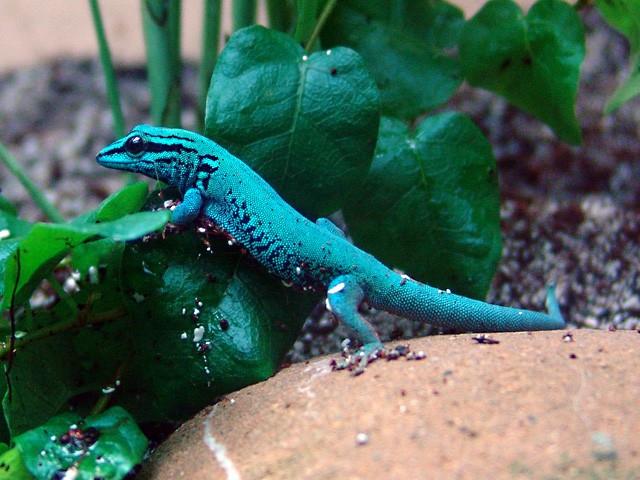
The electric blue day gecko (Lygodactylus williamsi) is a tiny, turquoise gecko found only in a small forest in Tanzania. Males are brilliant blue, females green, and the species is Critically Endangered.
The electric blue day gecko (Lygodactylus williamsi) is a tiny, turquoise gecko found only in a small forest in Tanzania. Males are brilliant blue, females green, and the species is Critically Endangered.
🧬 Field Guide Specimen: Open Electric Blue Day Gecko in the CRV Science Field Guide to log the specimen, see its place among the Reptilia lineages in the Cladogram Explorer, and test your recall in the Red List conservation game.
A Gecko That Lives on One Tree
It lives almost exclusively on a single plant species, the screwpine (Pandanus), in the Kimboza Forest. The tiny range makes it extremely vulnerable.
Trafficked as a Pet
Collectors seeking the dazzling blue males removed large numbers from the wild. Trade is banned under CITES Appendix I, but illegal collection continues, as does loss of forest to farming.
Why Blue?
The blue color is a signal in the breeding season and in territorial contests. See Madagascar Giant Day Gecko.
Electric Blue Day Gecko at a Glance
| Property | Value |
|---|---|
| Scientific name | Lygodactylus williamsi |
| Kingdom | Animalia |
| Phylum | Chordata |
| Class | Reptilia |
| Order | Squamata |
| Family | Gekkonidae |
| Field Guide group | Reptilia (Reptiles) |
| Diagnostic feature (Field Guide) | Critically endangered dwarf diurnal lizard restricted to screwpine (Pandanus) crowns in Tanzania's Kimboza Forest; territorial males display brilliant iridescent turquoise-blue dorsal scales, a black throat, and adhesive subdigital toe pads with microscopic setae. |
| IUCN Red List status | Critically Endangered (CR), assessed 2012 |
| Range | Kimboza Forest, Tanzania |
See Also
- Madagascar Giant Day Gecko — another day gecko
- Crested Gecko — another threatened gecko