Fire Salamander
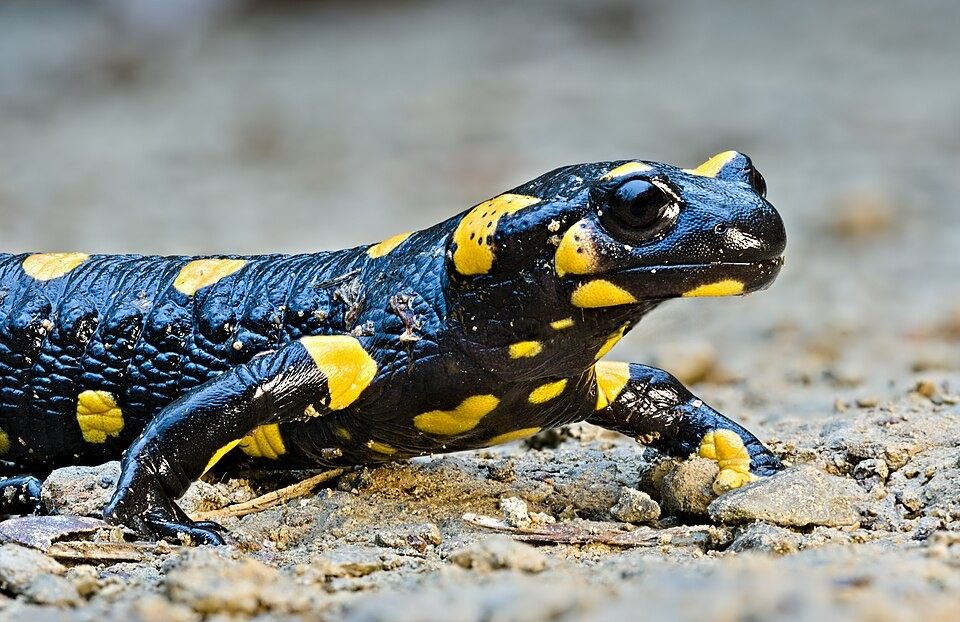
The fire salamander (Salamandra salamandra) is a glossy black salamander with yellow patches, living in damp European forests. It is threatened in some regions by an emerging fungal disease.
The fire salamander (Salamandra salamandra) is a glossy black salamander with yellow patches, living in damp European forests. It is threatened in some regions by an emerging fungal disease.
🧬 Field Guide Specimen: Open Fire Salamander in the CRV Science Field Guide to log the specimen, see its place among the Tetrapoda lineages in the Cladogram Explorer, and test your recall in the Red List conservation game.
Skin Toxins and Warning Colors
Glands in the skin release samandarin, an alkaloid neurotoxin, and the yellow on black pattern warns predators. The salamander gives birth to live larvae, which females deposit in streams, a trait known as larviparity.
A Second Chytrid: Bsal
A newly described fungus, Batrachochytrium salamandrivorans (Bsal), probably imported from Asia with the pet trade, has devastated fire salamanders in the Netherlands and Belgium since about 2010, causing declines of more than 99 percent in some populations. See Amphibian Chytrid Fungus.
Biosecurity
Several countries have restricted the import of salamanders and newts to stop the spread of Bsal, and field workers disinfect gear when working in amphibian habitats.
Fire Salamander at a Glance
| Property | Value |
|---|---|
| Scientific name | Salamandra salamandra |
| Kingdom | Animalia |
| Phylum | Chordata |
| Class | Amphibia |
| Order | Urodela |
| Family | Salamandridae |
| Field Guide group | Tetrapoda: Amphibia (Frogs, Salamanders & Caecilians) |
| Diagnostic feature (Field Guide) | Conspicuous black body with bright yellow-orange spots or stripes, prominent parotoid glands behind eyes secreting samandarin. |
| IUCN Red List status | Vulnerable (VU), assessed 2023 |
| Reproduction | Live-bearing larvae |
| Main threat in some regions | Bsal chytrid fungus |
See Also
- Amphibian Chytrid Fungus — a related fungal pathogen
- Rough-skinned Newt — another toxic salamander