Fly Agaric
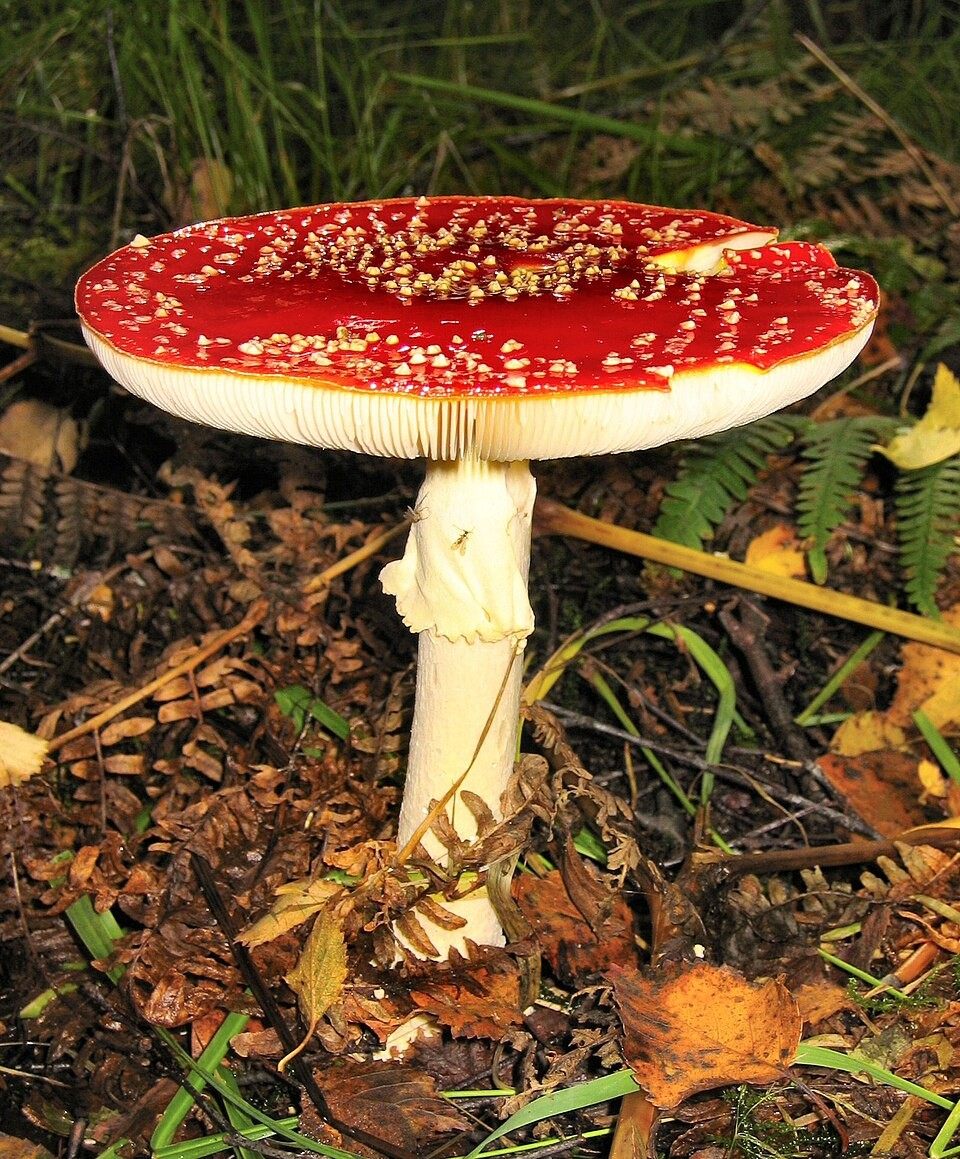
The fly agaric (Amanita muscaria) is the red mushroom with white flecks that appears in fairy-tale pictures. It grows in association with birch, pine and spruce across the Northern Hemisphere and contains psychoactive and toxic compounds.
The fly agaric (Amanita muscaria) is the red mushroom with white flecks that appears in fairy-tale pictures. It grows in association with birch, pine and spruce across the Northern Hemisphere and contains psychoactive and toxic compounds.
🧬 Field Guide Specimen: Open Fly Agaric in the CRV Science Field Guide to log the specimen, see its place among the Opisthokonta lineages in the Cladogram Explorer, and test your recall in the Red List conservation game.
A Tree Partner: Mycorrhiza
The fungus forms a partnership with tree roots, trading mineral nutrients and water for sugars. The mushroom that we see is the fruiting body, and the underground network may be extensive.
Ibotenic Acid and Muscimol
The mushroom contains ibotenic acid, which converts into muscimol, a compound that acts on GABA receptors in the brain. Poisoning causes confusion, nausea, drowsiness and hallucinations. It is rarely fatal but dangerous. Siberian peoples have used it in traditional ceremonies.
Name and Use
The name "fly agaric" comes from the old practice of soaking pieces in milk to kill flies. What is called Amanita muscaria is now understood as a complex of several species and varieties, with some yellow and orange forms.
Fly Agaric at a Glance
| Property | Value |
|---|---|
| Scientific name | Amanita muscaria |
| Kingdom | Fungi |
| Phylum | Basidiomycota |
| Class | Agaricomycetes |
| Order | Agaricales |
| Family | Amanitaceae |
| Field Guide group | Opisthokonta: Fungi (True Fungi & Lichens) |
| Diagnostic feature (Field Guide) | Iconic bright scarlet or red pileus studded with white pyramidal universal veil warts, free white gills, prominent ring skirt, and bulbous volva. |
| IUCN Red List status | Not Evaluated (NE): no global IUCN assessment |
| Partner | Birch, pine and spruce |
| Active compounds | Ibotenic acid and muscimol |